购物车里没有产品。
 fuyuhuaxue@iumrs.com
Ask a maintenance engineer what finally pushed them to replace a factory floor, and the answer is rarely “it looked worn.” It is almost always a specific, expensive failure: a coating that lifted at the edges, blistered over a moisture-prone slab, or delaminated in sheets under forklift traffic — taking the top layer of concrete with it and leaving a dusting, crumbling surface that contaminates product and slows every movement in the building. Peeling is not a cosmetic defect. It is the visible symptom of an adhesion failure, and adhesion is the one property that no amount of topcoat gloss can compensate for.
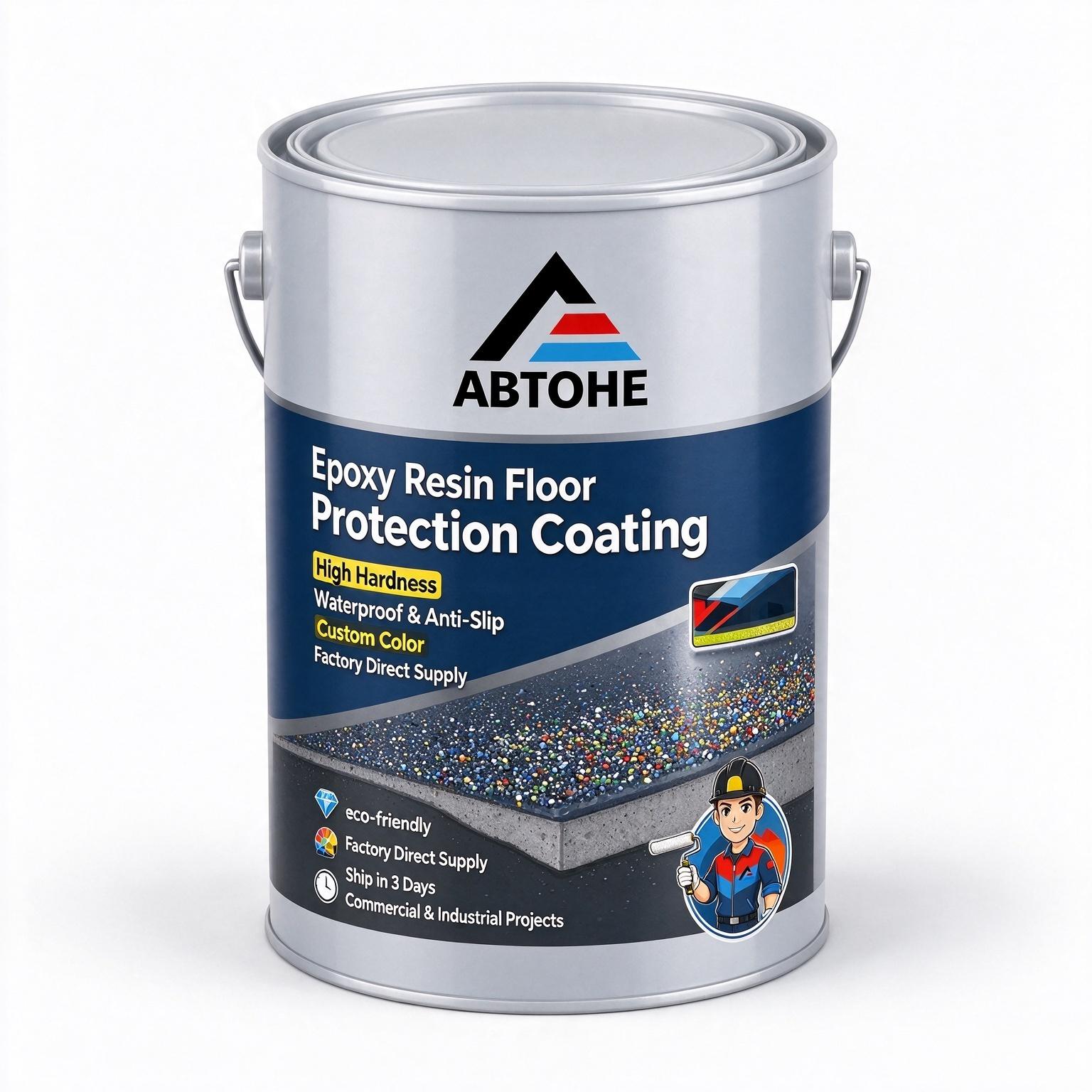
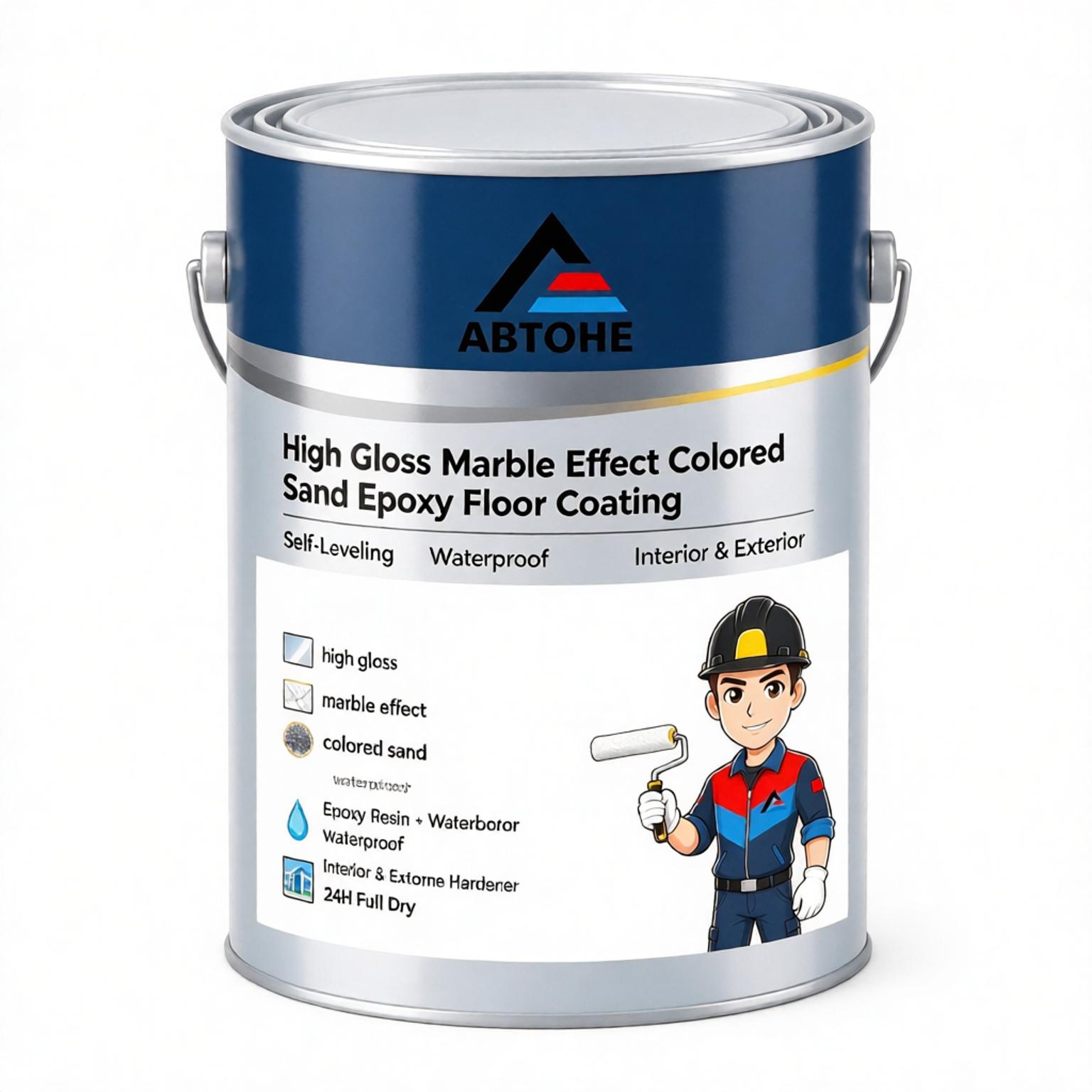
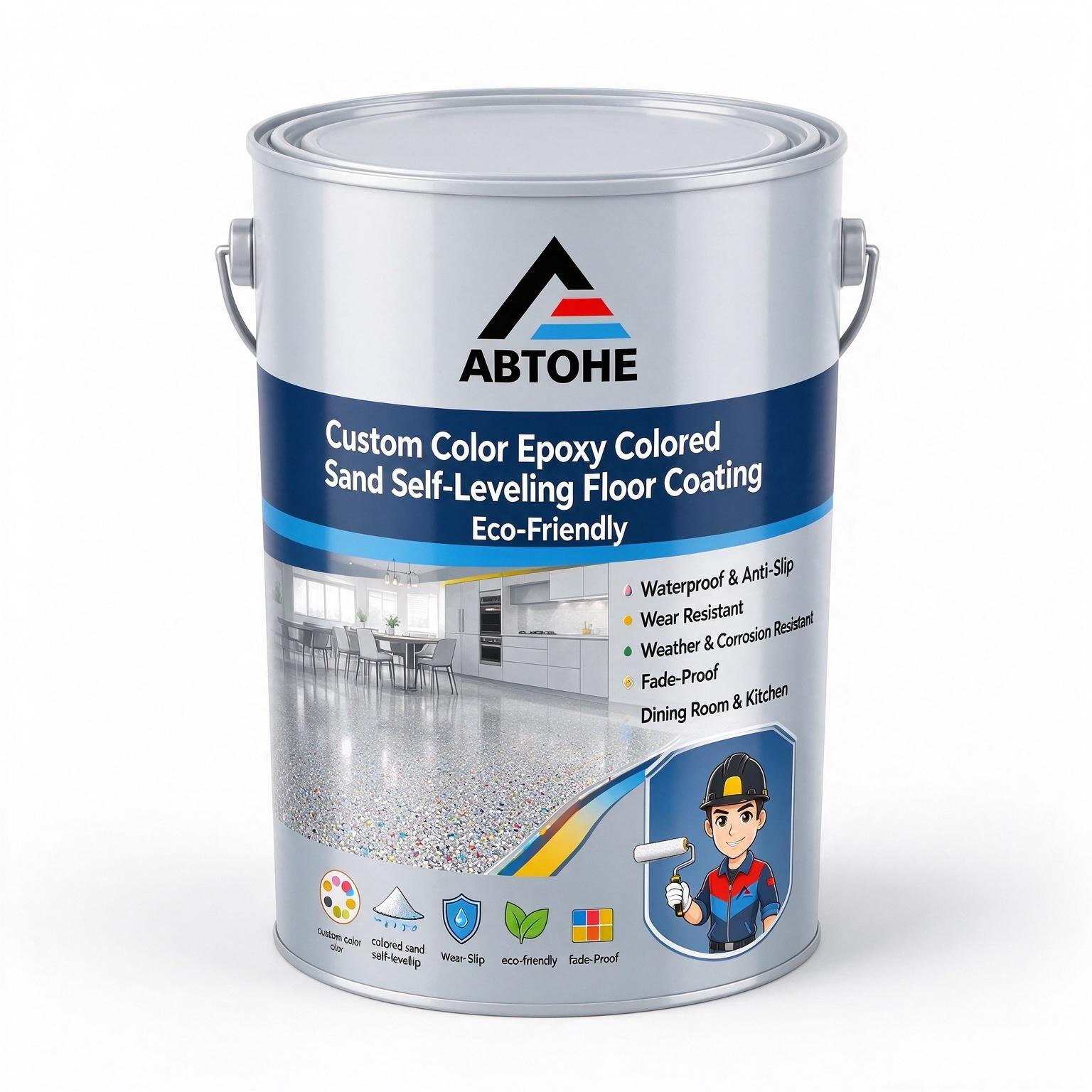
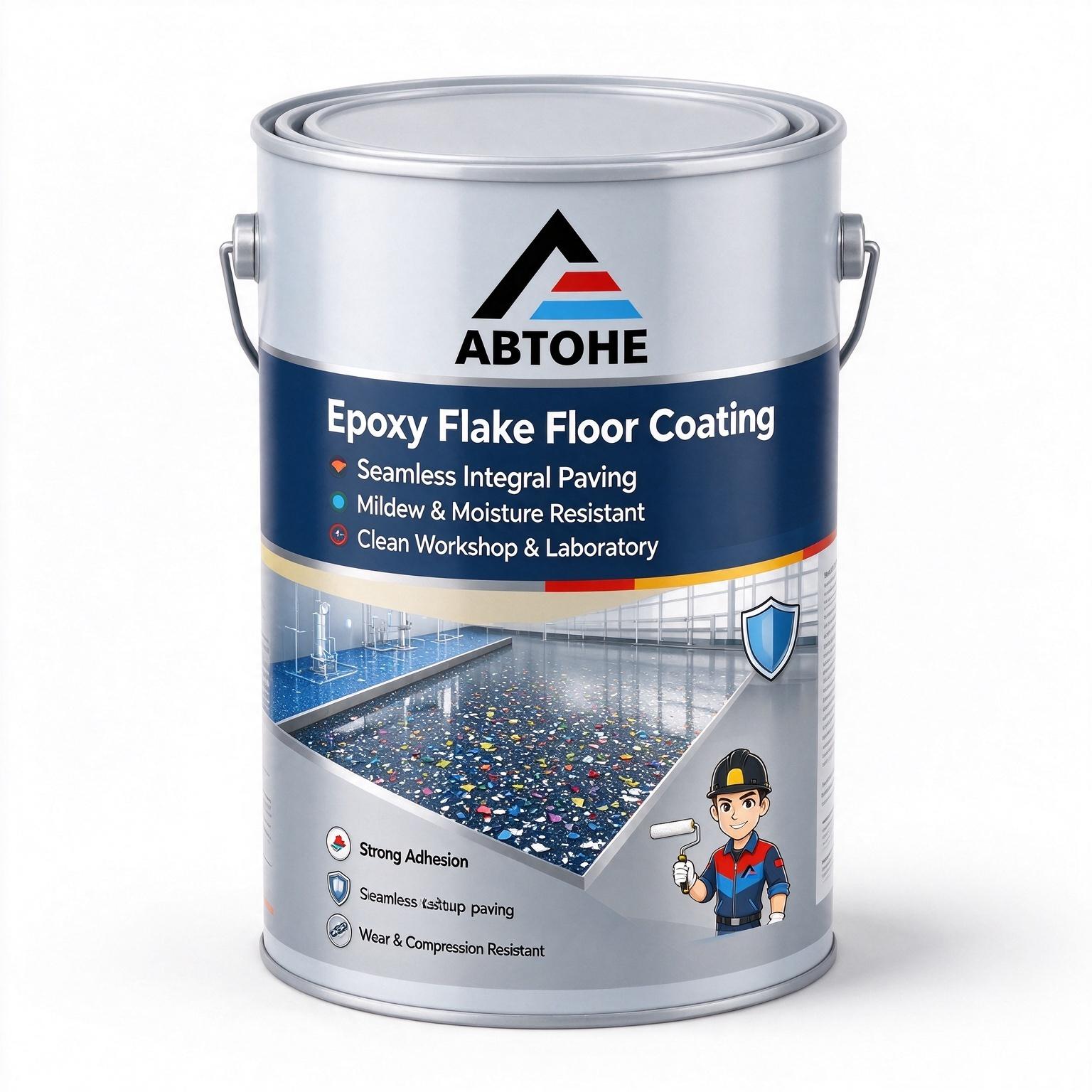
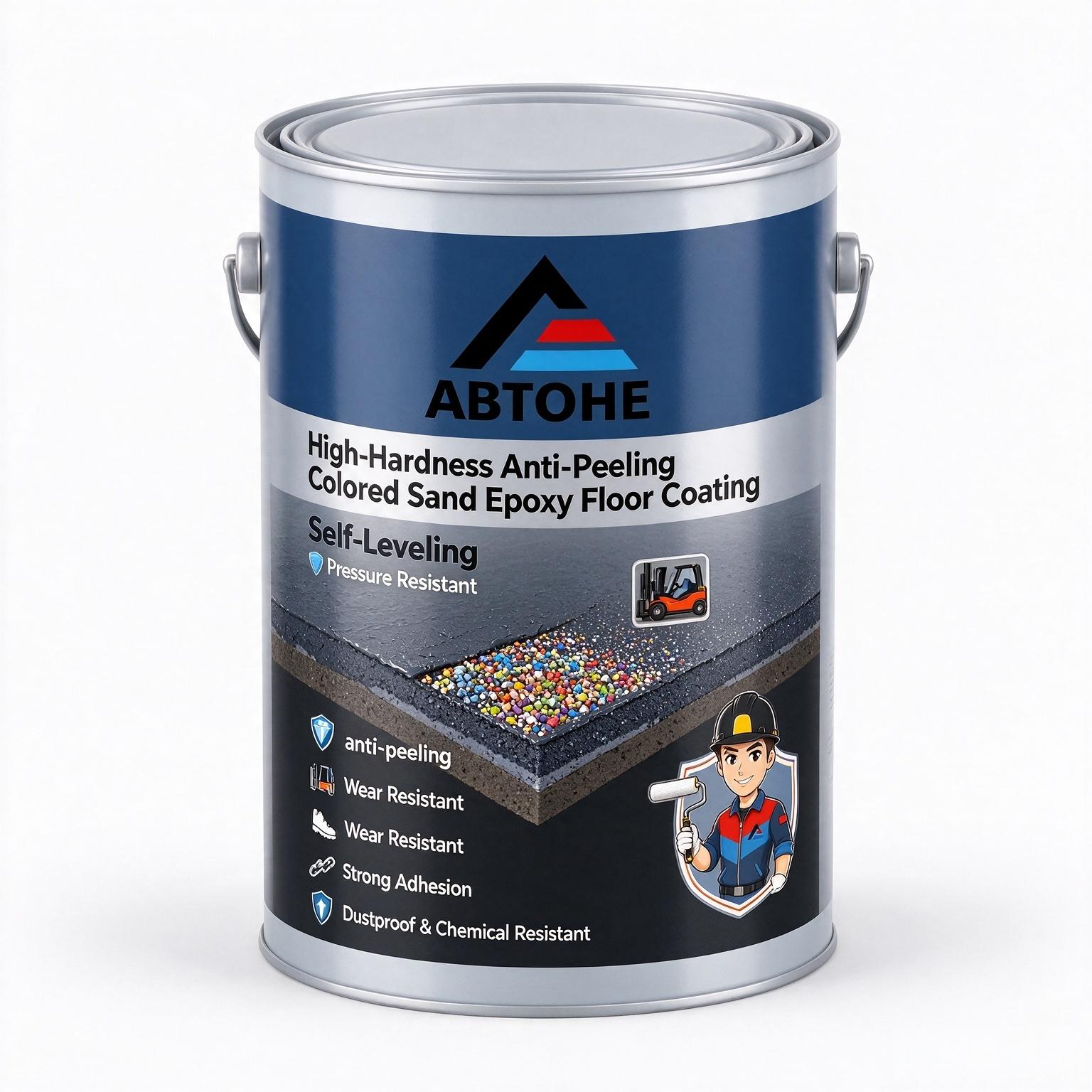
That is the problem ABTOHE’s High-Hardness Anti-Peeling Epoxy Floor Coating was engineered around. This is a two-component, self-leveling, colored-sand epoxy system formulated for factory cement floors and other hard substrates — concrete, terrazzo, tiles, and emery — with the bond strength to stay put, the compressive strength to carry heavy equipment, and the seamless, dustproof finish that industrial operations actually need. It is a floor built backwards from its failure modes: peeling first, then wear, then everything else.
Peeling Is an Adhesion Story, Not a Paint Story
Most coating failures that look like “bad paint” are actually substrate and interface problems. Concrete slabs emit moisture vapor. They carry laitance, curing compounds, oils, and dust that prevent a coating from wetting out and bonding. They move thermally. When a coating has weak adhesion or insufficient film build, traffic and thermal cycling work at the edges until the film lifts. Once water or chemical finds the gap, the failure accelerates — and the repair cost includes surface preparation of the entire area, not just the peeled patch.
ABTOHE’s system addresses this at the interface. The formulation is designed for strong adhesion to prepared hard substrates, bonding firmly both to the cement floor beneath and to the colored quartz aggregate within the film. That second bond is the one most coatings neglect. In a colored-sand system, the decorative aggregate is only as permanent as the resin that holds it; if the binder releases the sand, the floor loses its color, its texture, and its wear surface simultaneously. ABTOHE’s anti-peeling claim is specifically about this dual bond — substrate to resin, resin to aggregate — so the system holds together as a single, integrated film rather than as a coating sitting on top of a floor with decorative grit scattered across it.
For the facility, the practical result is a floor that does not lift at the edges, does not shed its color layer, and does not require the cyclical patch-and-recoat program that defines life with a weakly bonded coating.
High Hardness and Compressive Strength: Built for What Rolls Across It
Factories are not pedestrian environments. Forklifts, pallet jacks, carts, scissor lifts, and delivery vehicles apply concentrated point loads and dynamic impact that thin-film coatings cannot absorb. The failure mode is predictable: crushing at wheel paths, cracking at joints, and abrasion through the wear surface until the concrete is exposed and begins to dust.
The ABTOHE system is formulated for high wear resistance and compressive strength, capable of withstanding frequent heavy equipment and vehicle traffic. The self-leveling application builds a continuous, high-build film that distributes load across the surface rather than concentrating it at contact points, and the colored quartz aggregate contributes a hard, abrasion-resistant wear layer that resists the scouring action of grit and tires. In warehouses and industrial plants, where traffic is constant and downtime is expensive, that combination directly extends the service interval between recoats.
The self-leveling behavior matters here as well. A floor that levels under its own weight produces uniform thickness across the pour, which means uniform load-bearing capacity. Manual high-build applications often vary in thickness, creating thin zones that fail first. Uniform film thickness is not a cosmetic preference; it is a structural property of the floor system.
Seamless, Dustproof, Leak-Proof: The Hygiene and Housekeeping Dividend
Concrete dust is the quiet tax on every factory operation. It settles on product, contaminates clean areas, clogs equipment filters, and drives cleaning labor that never appears in a flooring quote. Joints and cracks are where dust originates and where cleaning never quite reaches.
A seamless epoxy floor eliminates the joints, seams, and porosity that generate and trap dust. ABTOHE’s system is dustproof and leak-proof by construction: a continuous, non-porous film that seals the substrate and provides a cleanable surface across the entire floor area. For warehouses, commercial spaces, and industrial plants where product contamination or housekeeping standards matter, this changes the operating routine. Cleaning becomes faster and more effective. Spills stay on the surface instead of migrating into the slab. The floor stops being a source of particulate and becomes a barrier against it.
The leak-proof property also protects the building itself. A sealed floor resists the penetration of water, oils, and process chemicals into the concrete, which reduces the risk of substrate deterioration, rebar corrosion, and moisture-driven coating failure from below. In effect, the coating protects the asset it is bonded to.
Chemical Resistance: Acid, Alkali, and Oil Are Not Edge Cases in a Factory
Chemical resistance is often specified as a checkbox, but in real industrial settings it is a daily requirement. Battery charging areas, maintenance bays, food and beverage washdown zones, machine shops, and vehicle parking areas all expose floors to acids, alkalis, oils, and fuels. A coating that softens, stains, or blisters under those exposures fails long before its abrasion resistance is exhausted.
ABTOHE’s epoxy system is formulated to resist acid, alkali, and oil exposure, maintaining film integrity and cleanability in environments where spills are routine rather than exceptional. Combined with the seamless, leak-proof surface, this means a spill can be cleaned rather than absorbed — reducing both the maintenance burden and the risk of substrate contamination. For factories that handle chemicals, and for parking lots exposed to automotive fluids, that resistance is a core specification rather than a premium upgrade.
Substrate Versatility: One System Across Concrete, Terrazzo, Tiles, and Emery
Retrofit projects rarely offer a perfect substrate. A factory floor may include poured concrete in the production hall, terrazzo in the office wing, tile in the washrooms and canteen, and emery-hardened sections in heavy-traffic aisles. Specifying a different coating for each surface multiplies procurement complexity and creates transition problems at every boundary.
ABTOHE’s system is suitable for hard substrates including concrete, terrazzo, tiles, and emery, which allows a single product platform to be applied across mixed-substrate facilities. The strong adhesion profile that underpins the anti-peeling performance is what makes this versatility credible: the coating bonds firmly to dense, smooth surfaces like tile and terrazzo as well as to porous cement. For facility managers planning a phased retrofit, this reduces the number of products, suppliers, and application methods involved — and produces a visually continuous floor across zones that were previously mismatched.
Decorative and Functional at the Same Time
Industrial flooring has historically forced a choice between performance and appearance. Colored-sand epoxy systems dissolve that trade-off. ABTOHE’s coating offers rich colors and customizable patterns, combining decorative and functional aspects in a single system. The color is carried through the film by the aggregate, not applied as a fragile surface tint, so the appearance holds up as the floor wears.
That has practical value beyond aesthetics. Color-coded zones can define walkways, forklift lanes, storage areas, and hazard zones without additional signage or tape. Patterned floors can distinguish production areas from circulation routes. In commercial spaces and showrooms attached to industrial facilities, a colored-sand floor reads as a finished, designed surface rather than an unfinished slab. The decorative layer and the wear layer are the same layer — which is why the appearance does not degrade faster than the performance.
Where the System Belongs
The application profile is broad because the performance envelope is broad. Industrial plants need abrasion resistance, compressive strength, and chemical resistance under continuous equipment traffic. Warehouses need a seamless, dustproof, easy-clean surface that handles forklifts and pallet jacks. Parking lots need oil and fluid resistance, waterproofing, and load bearing. Commercial spaces need a durable floor that also looks intentional. The ABTOHE system is specified for all of these, plus any environment requiring high wear resistance, dustproofing, and compression resistance.
The two-component format, with the resin identified by CAS No. 38891-59-7 and EINECS No. 231-072-3, provides the traceability that industrial buyers and import compliance teams require. Packaging is structured for project logistics: single-item selling units with a package size of 50 × 35 × 28 cm and a gross weight of 22.0 kg, suitable for contractor handling and multi-bucket pours.
The Manufacturer Behind the Formulation
ABTOHE is based in Guangdong, China, a region with a mature epoxy resin and coatings manufacturing cluster and established export infrastructure. The brand’s portfolio spans self-leveling epoxy resins, wear-resistant floor paints, and colored-sand decorative systems, which means this anti-peeling factory coating is part of an integrated flooring platform rather than an isolated SKU. That integration matters for specifiers managing complex facilities: a single supplier can support the production hall, the warehouse aisles, the parking structure, and the commercial front-of-house with compatible systems.
The company’s formulation heritage in high-clarity epoxy resins — supplied across construction, fiber and garment, footwear and leather, packing, and woodworking applications — reflects a depth in adhesion chemistry and cure control that directly underpins the anti-peeling performance of the flooring system. A coating that bonds to concrete, terrazzo, tile, emery, and colored quartz is a coating built by a manufacturer that understands interfaces, not just surfaces.
The Floor That Stays Bonded
Every failed factory floor tells the same story in reverse: it started with a coating that did not bond well enough, wore through faster than expected, or could not handle what rolled across it. ABTOHE’s High-Hardness Anti-Peeling Epoxy Floor Coating is formulated to interrupt that story at the first chapter — with strong adhesion to the substrate and to the colored aggregate, high compressive and wear resistance for heavy traffic, a seamless dustproof and leak-proof surface, and chemical resistance to acid, alkali, and oil.
For the maintenance engineer who has already paid for one delamination repair, it is the specification that prevents the second. For the facility owner comparing bids, it is the line item where the lowest price and the lowest total cost of ownership finally point in the same direction. The floor does not need to be replaced because it peeled. It peels because it was never built to stay bonded. This one is.