购物车里没有产品。
 fuyuhuaxue@iumrs.com
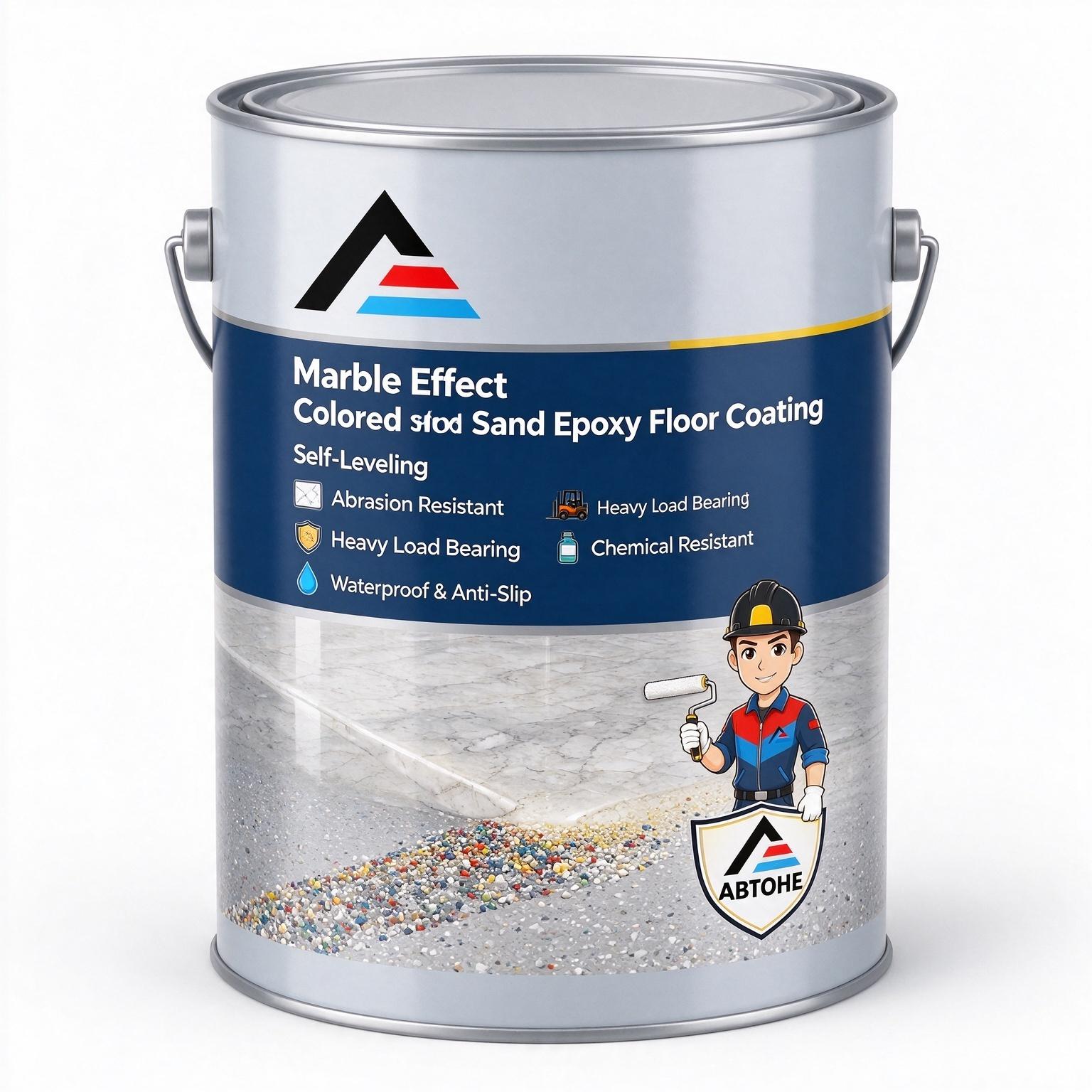
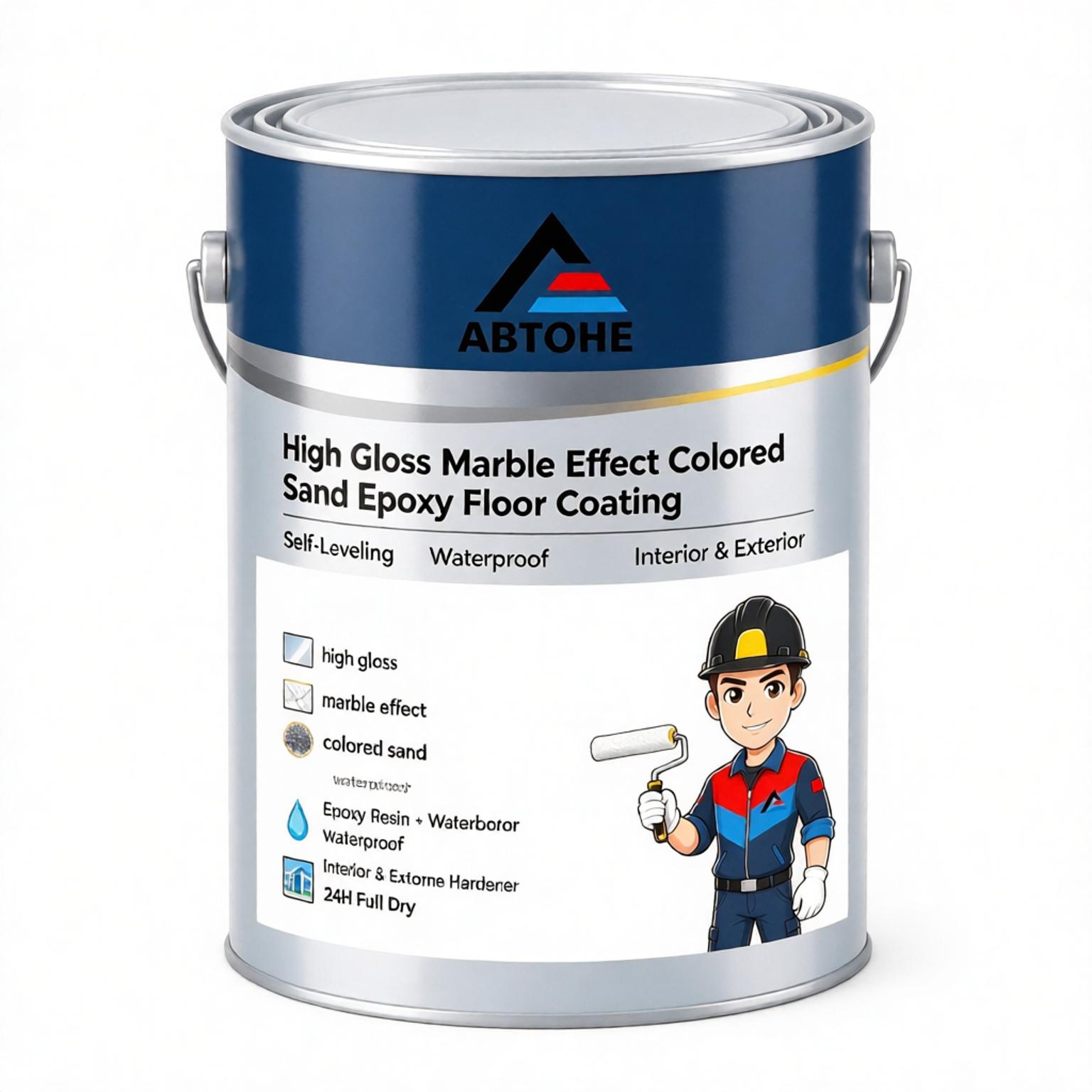
There is a particular kind of floor specification meeting that separates experienced facility managers from first-time buyers. The first-timer opens with aesthetics: “We want something that looks like polished marble.” The veteran opens with the load schedule: “We have forklifts, chemical washdowns, and a fire code officer who reads the submittals line by line.” The smartest projects satisfy both in a single system—which is exactly the gap that ABTOHE’s Marble Effect Epoxy Floor Coating, model S80003A, was formulated to close.
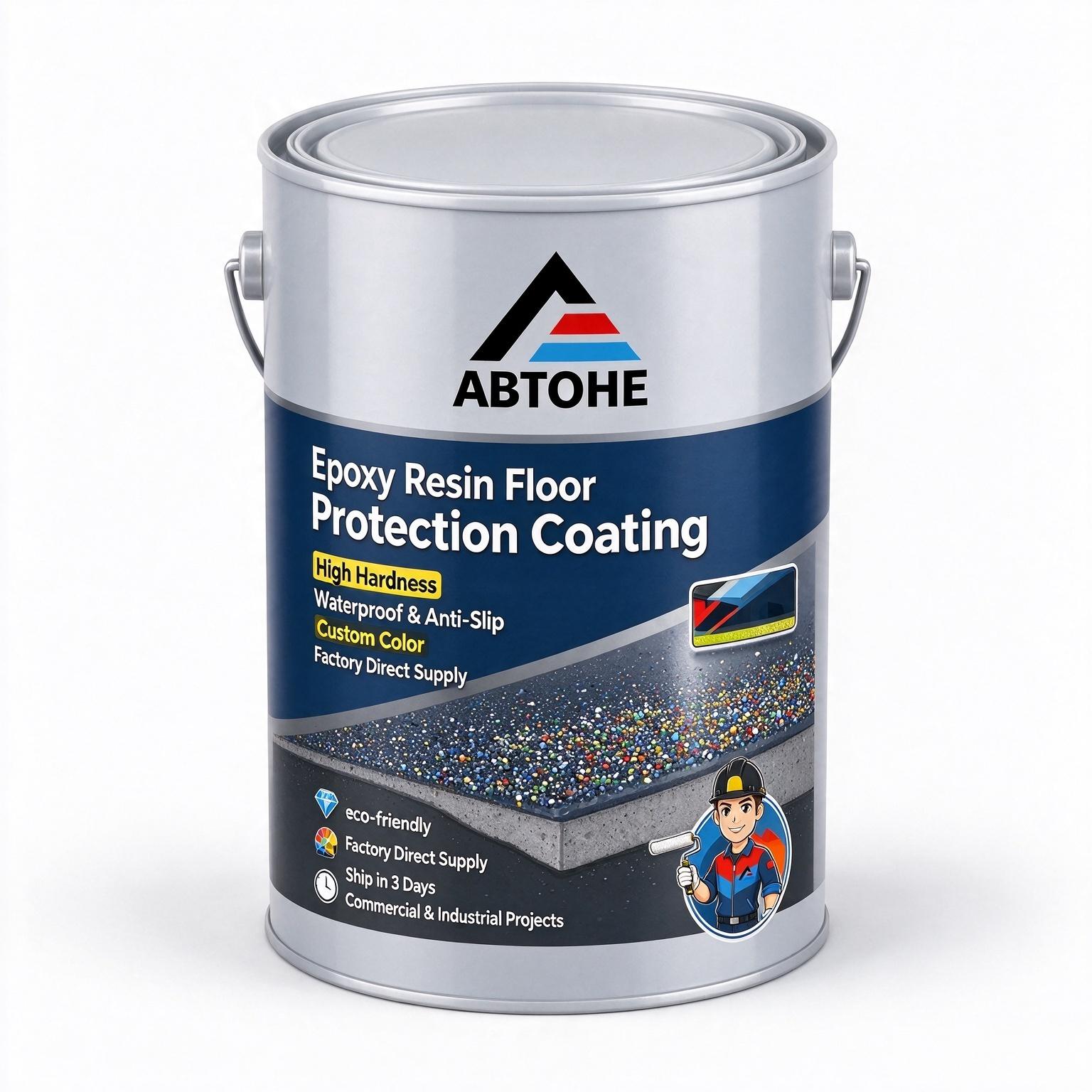
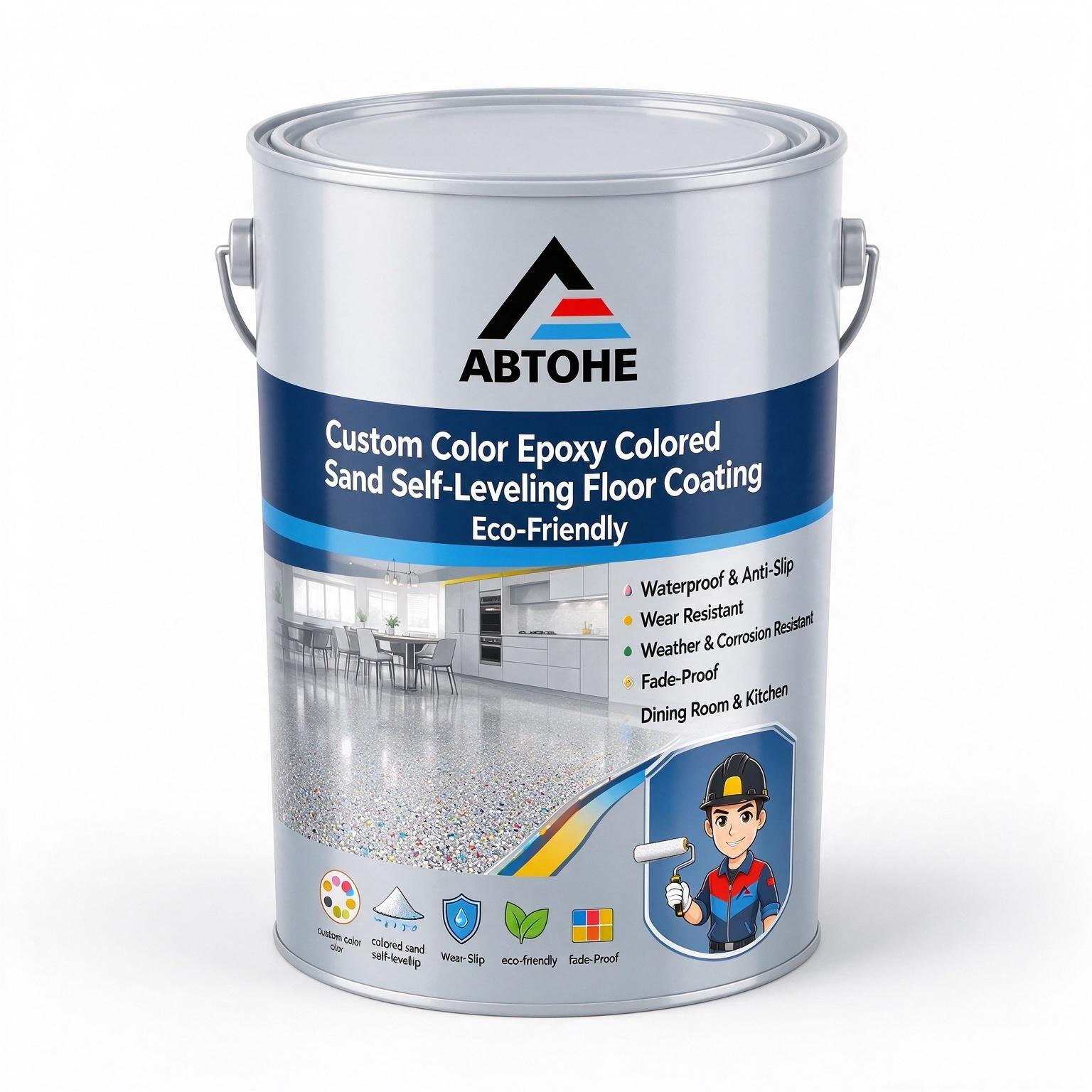
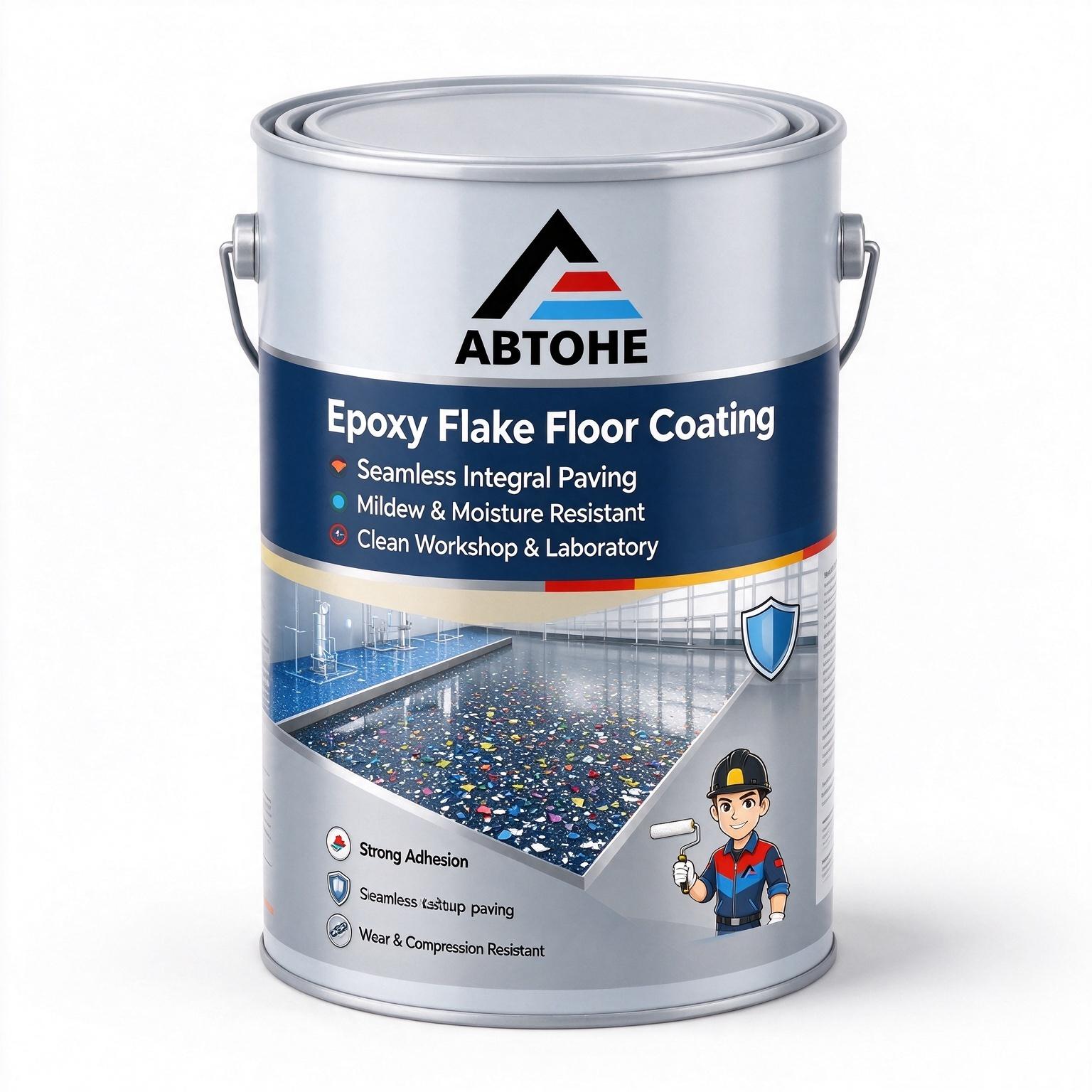
This is not a decorative topping that hopes to survive an industrial environment. It is a heavy-duty epoxy colored-sand self-leveling floor coating, built on an epoxy resin and lightweight ceramic sand matrix, applied by trowel, and engineered for abrasion resistance, heavy load bearing, chemical resistance, anti-slip performance, fire resistance, and waterproofing. It happens to look like marble. That order of priorities—performance first, appearance as a byproduct of good chemistry—is what makes it usable in places where a purely decorative floor would be a liability.
The Chemistry Behind the Marble: Epoxy Resin Plus Lightweight Ceramic Sand
Most “marble effect” floors in the market are thin-film decorative systems: a colored epoxy basecoat, a metallic or pigment additive, and a clear topcoat. They photograph beautifully and perform adequately in low-traffic residential settings. Put them in a parking garage, and the story changes quickly. Thin films abrade through at tire paths. Chemical exposure from de-icing salts, hydraulic fluid, and battery acid attacks the finish. Slip resistance degrades as the gloss wears. The floor that looked like marble on day one looks like a maintenance problem by year three.
ABTOHE S80003A takes a different structural approach. The system combines epoxy resin with lightweight ceramic sand to build a thick, aggregate-reinforced film that carries load rather than merely covering concrete. The ceramic sand fraction provides the mechanical backbone: hard, inert particles that resist abrasion, distribute point loads, and create the textured surface profile that delivers anti-slip performance. The epoxy resin binds the aggregate into a continuous, waterproof matrix that resists chemical attack and seals the substrate against moisture migration. The result is a floor with the visual depth of stone and the duty rating of an industrial coating.
The trowel application method is central to this performance. Unlike a self-leveling pour that relies on flow to achieve thickness, trowel-applied systems allow the applicator to build film thickness deliberately, work the aggregate into uniform distribution, and compact the material against the substrate for maximum adhesion. For projects where the floor must handle heavy-duty loads—forklifts, pallet jacks, rail transit maintenance equipment, biopharmaceutical carts—that control over thickness and density is not a detail. It is the difference between a floor that bears load and one that delaminates under it.
Five Performance Claims, One Specification
The product advantages read like a checklist, but each one answers a real failure mode that facility owners have already experienced.
Abrasion resistance addresses the slow erosion of the surface under repeated traffic. Ceramic sand aggregate is significantly harder than the resins and fillers used in conventional coatings, so the wear surface resists the scouring action of grit, tires, and equipment casters. In a parking garage or industrial plant, this directly extends the recoat interval.
Heavy-duty load resistance addresses point loading and impact. A trowel-built, aggregate-reinforced film distributes compressive stress across a wider area than a thin film, reducing the risk of cracking, crushing, and substrate exposure at forklift wheel paths and equipment feet. For rail transit systems and industrial plants, where dynamic loads are routine, this is the specification that matters most.
Chemical resistance addresses spills, washdowns, and process exposure. The cured epoxy matrix resists a broad range of acids, alkalis, solvents, and oils—critical in biopharmaceutical facilities, where cleaning agents are aggressive and contamination control is regulated, and in garages, where automotive fluids are a daily reality.
Anti-slip performance addresses liability and safety. The ceramic sand texture provides mechanical grip even when the surface is wet, which is why the system is suitable for outdoor concrete, basements, and parking areas where moisture is unavoidable.
Fire resistance and waterproofing address the two silent failure modes of concrete floors: moisture vapor transmission, which destroys coatings from below, and fire spread, which turns a flooring choice into a code compliance issue. A sealed, waterproof epoxy system blocks moisture migration and contributes to the fire performance profile that commercial and transit projects require.
Together, these properties explain why the same product appears in a residential garage and a biopharmaceutical clean zone. The duty cycle differs; the chemistry does not.
The Marble Effect as a Design Tool, Not a Compromise
The aesthetic dimension deserves its own treatment because the “marble effect” label is often misunderstood. ABTOHE’s colored-sand system achieves its stone-like appearance through the distribution of colored ceramic aggregate within the epoxy matrix, not through a printed film or a surface appliqué. The visual result is depth: color variation that reads as veining, a surface that reflects light with the subtle irregularity of natural stone, and a finish that does not look like a decal.
That matters commercially. Office buildings, retail environments, and residential interiors increasingly specify seamless floors that read as premium without the cost and maintenance of actual stone. Polished marble requires sealing, stains, and is slippery when wet. A marble-effect epoxy floor delivers the visual language of stone with anti-slip texture, chemical resistance, and waterproofing built in. For architects and interior designers, it is a way to specify a continuous, joint-free surface across large areas—no grout lines, no seams, no transition strips—while satisfying the durability requirements that stone cannot meet in wet or high-traffic zones.
The colored-sand format also gives specifiers a practical palette. Color is carried by the aggregate rather than solely by pigment, which produces a more stable, UV-resistant appearance and allows the floor to be matched to brand colors, wayfinding schemes, or architectural finishes. For multi-zone facilities—a parking garage, a lobby, and a service corridor in the same building—a single system platform can deliver visual continuity with zone-appropriate performance.
Where S80003A Belongs: The Application Map
The application list is unusually broad for a heavy-duty coating, and that breadth is the point.
Rail transit systems demand floors that withstand dynamic loads, chemical exposure from maintenance fluids, and stringent fire and safety requirements. A trowel-applied, aggregate-reinforced epoxy with anti-slip texture and fire resistance fits the duty profile of depots, maintenance bays, and station back-of-house areas.
Biopharmaceutical facilities demand cleanability, chemical resistance to aggressive cleaning agents, and moisture control. A seamless, waterproof, chemically resistant epoxy surface supports washdown protocols and contamination control without the joints and porosity of tile.
Industrial plants demand abrasion resistance and load bearing under continuous traffic. The ceramic sand matrix provides the wear surface; the trowel application provides the thickness.
Office buildings demand appearance and low maintenance. The marble effect delivers a premium visual without the sealing regimen of natural stone.
Parking garages demand waterproofing, chemical resistance to de-icing salts and automotive fluids, anti-slip performance, and load bearing. This is arguably the system’s strongest use case: a single coating that addresses all four failure modes that destroy garage floors.
Garages, outdoor concrete, basements, and residential interiors round out the map. Outdoor concrete benefits from the waterproof, UV-stable finish. Basements benefit from moisture blocking. Residential garages benefit from chemical resistance and easy cleaning. The same product, different duty cycles.
The Manufacturer and the Supply Chain
ABTOHE operates from Guangdong, China—a region with a mature epoxy resin and coatings manufacturing cluster, established export infrastructure, and deep formulation expertise. The brand’s product line spans self-leveling epoxy resins, wear-resistant floor paints, and decorative systems, which means the colored-sand marble effect coating is not an isolated product but part of an integrated flooring platform. That integration matters for specifiers: a single supplier can support a project that requires a seamless decorative floor in the lobby, a heavy-duty wear-resistant coating in the warehouse, and a waterproof anti-slip system in the parking structure.
Packaging and delivery are structured for project procurement: single-item selling units, specification sheets with model numbers and application data, and the documentation—product advantages, application guidance, and material safety information—that submittal packages require. For contractors, the trowel application method is familiar and does not demand specialized spray equipment, which lowers the barrier to adoption and reduces mobilization cost.
The Floor That Does Not Force a Choice
The oldest false trade-off in flooring specification is the one between appearance and performance. Decorative floors are assumed to be fragile; industrial floors are assumed to be ugly. ABTOHE S80003A rejects that trade-off at the formulation level: an epoxy resin and lightweight ceramic sand matrix that delivers abrasion resistance, heavy load bearing, chemical resistance, anti-slip texture, fire resistance, and waterproofing, finished in a marble effect that reads as premium in offices, residences, and retail environments.
For the facility manager who opens with the load schedule, it is a coating that survives the job site. For the designer who opens with the mood board, it is a surface that carries the concept. For the owner who signs the maintenance budget, it is a floor that delays the next recoat cycle and reduces the cleaning burden in between. That is what a genuinely engineered floor looks like: stone on the surface, structure underneath, and a specification that holds up long after the grand opening photographs are filed away.