购物车里没有产品。
 fuyuhuaxue@iumrs.com
There is a moment in every commercial flooring project when the specification stops being about chemistry and starts being about the calendar. The concrete is prepped, the crew is scheduled, the client has signed off on the color — and then someone asks the question that has sunk more projects than any coating failure: when does the material actually arrive? A floor coating that performs beautifully but shows up three weeks late is not a high-performance product. It is a schedule risk.
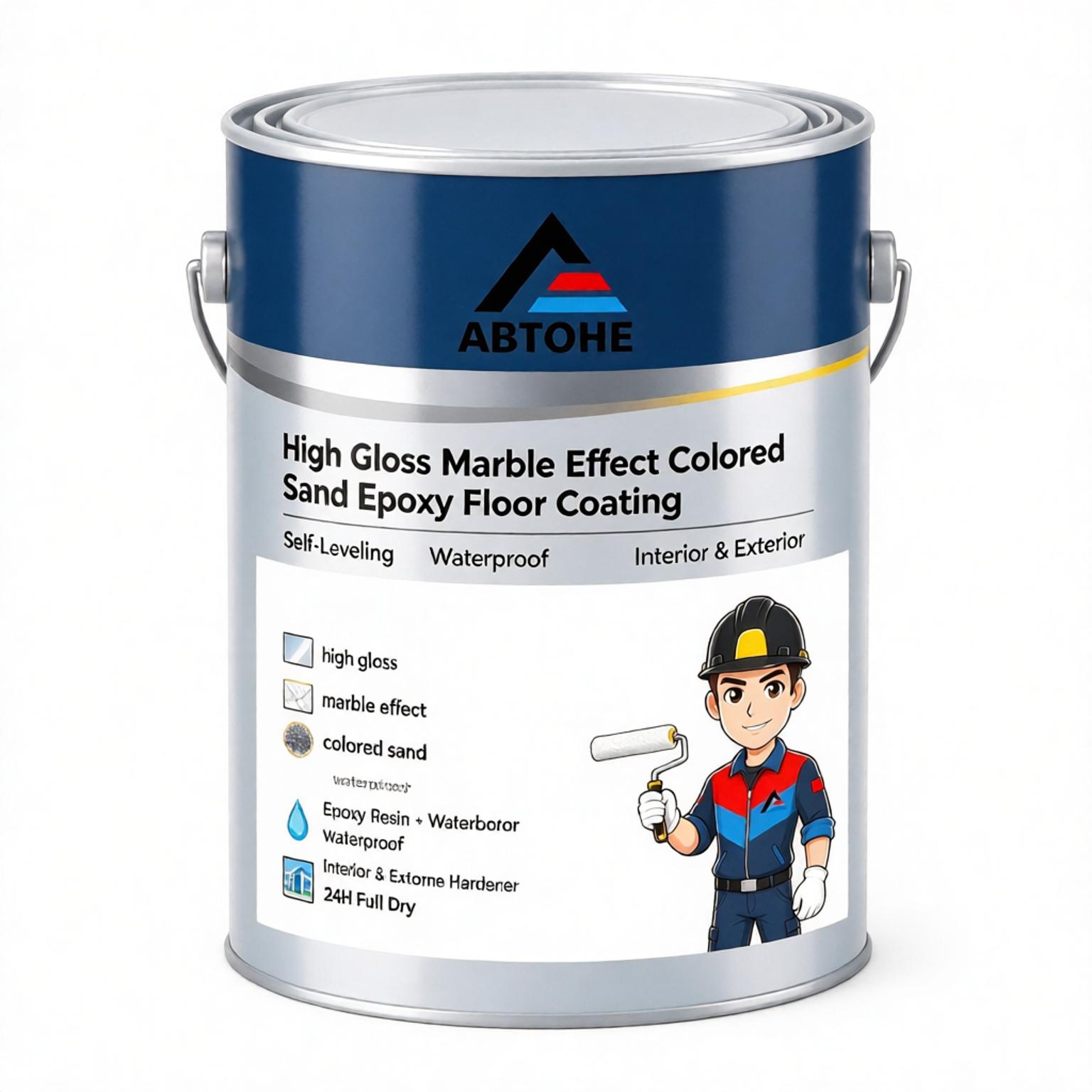
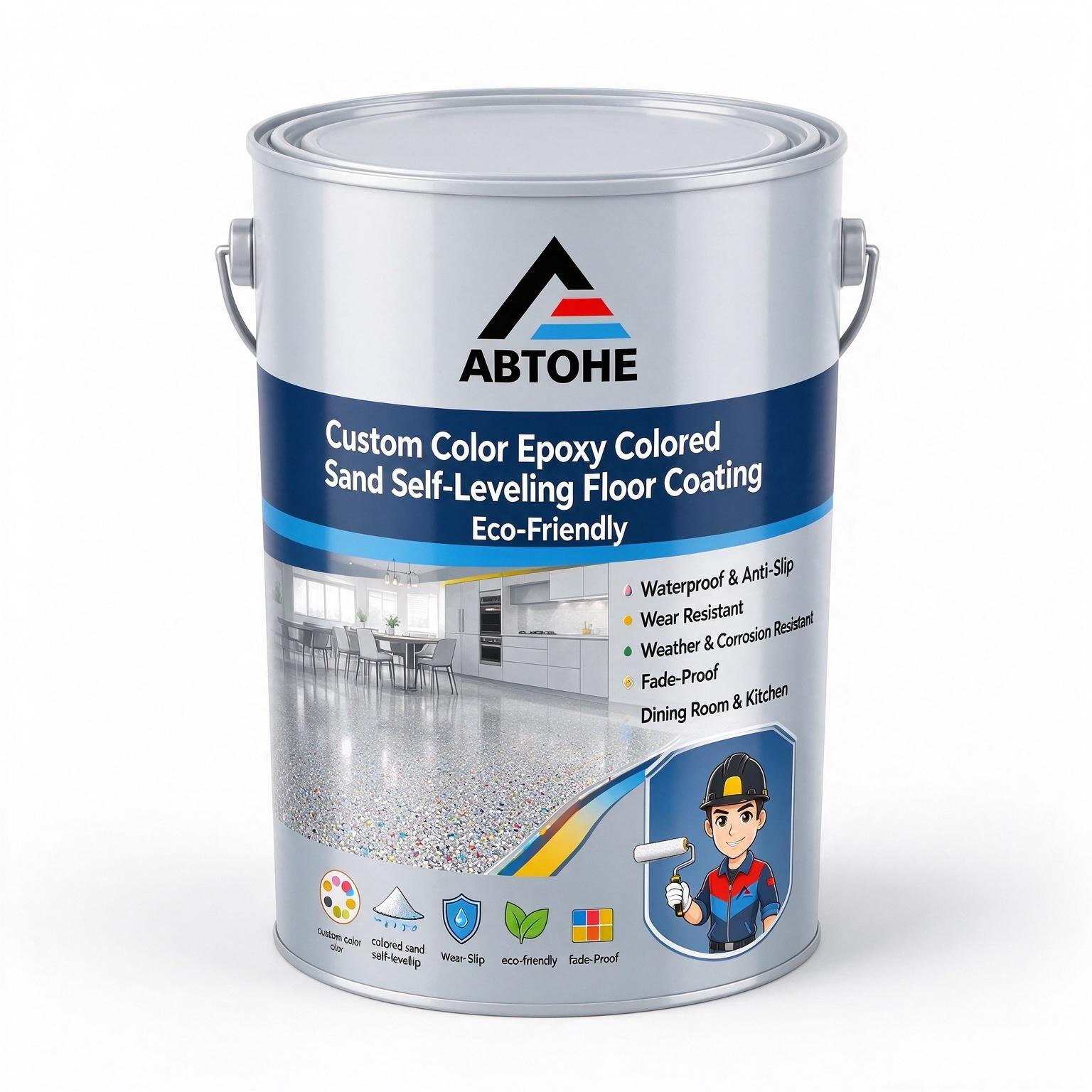
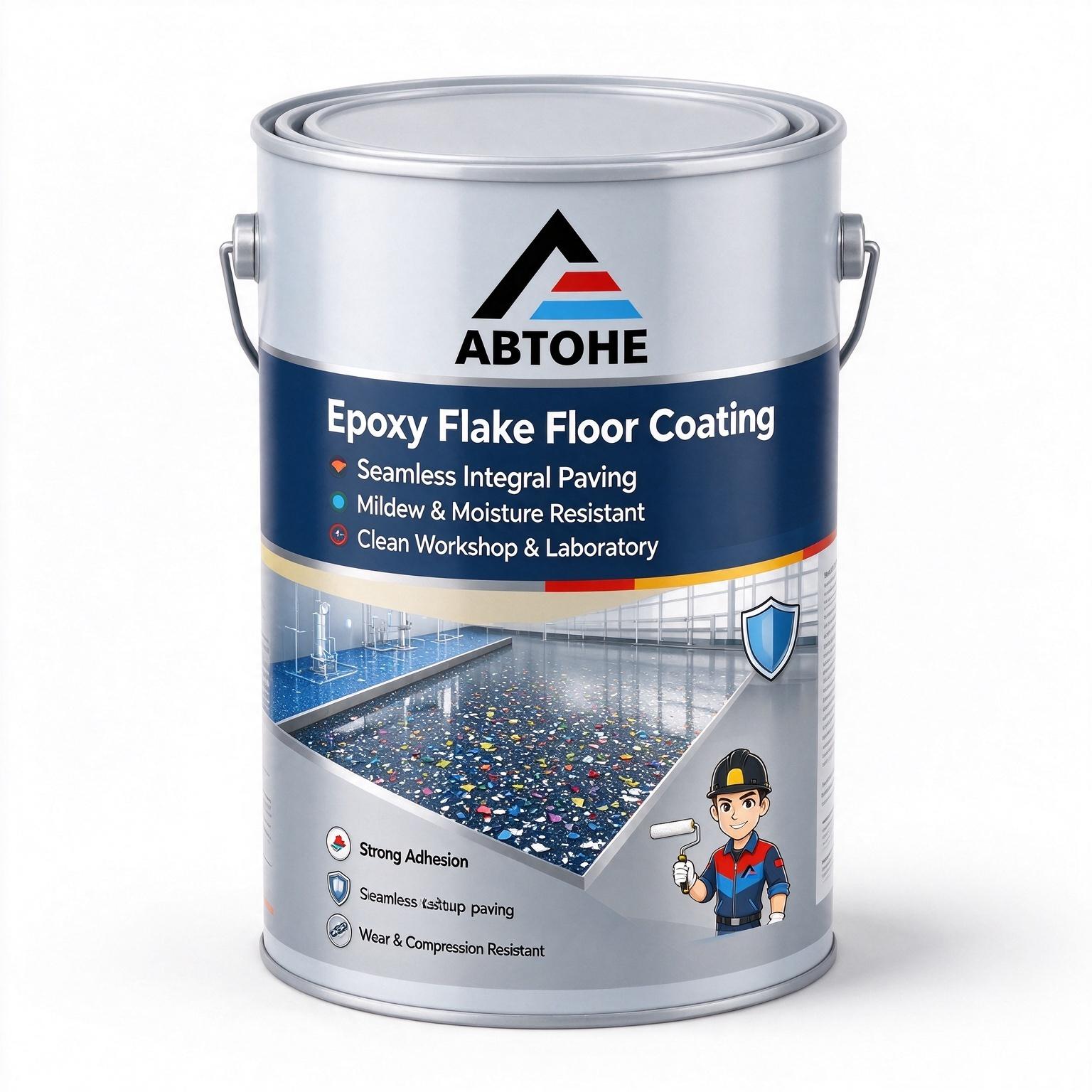
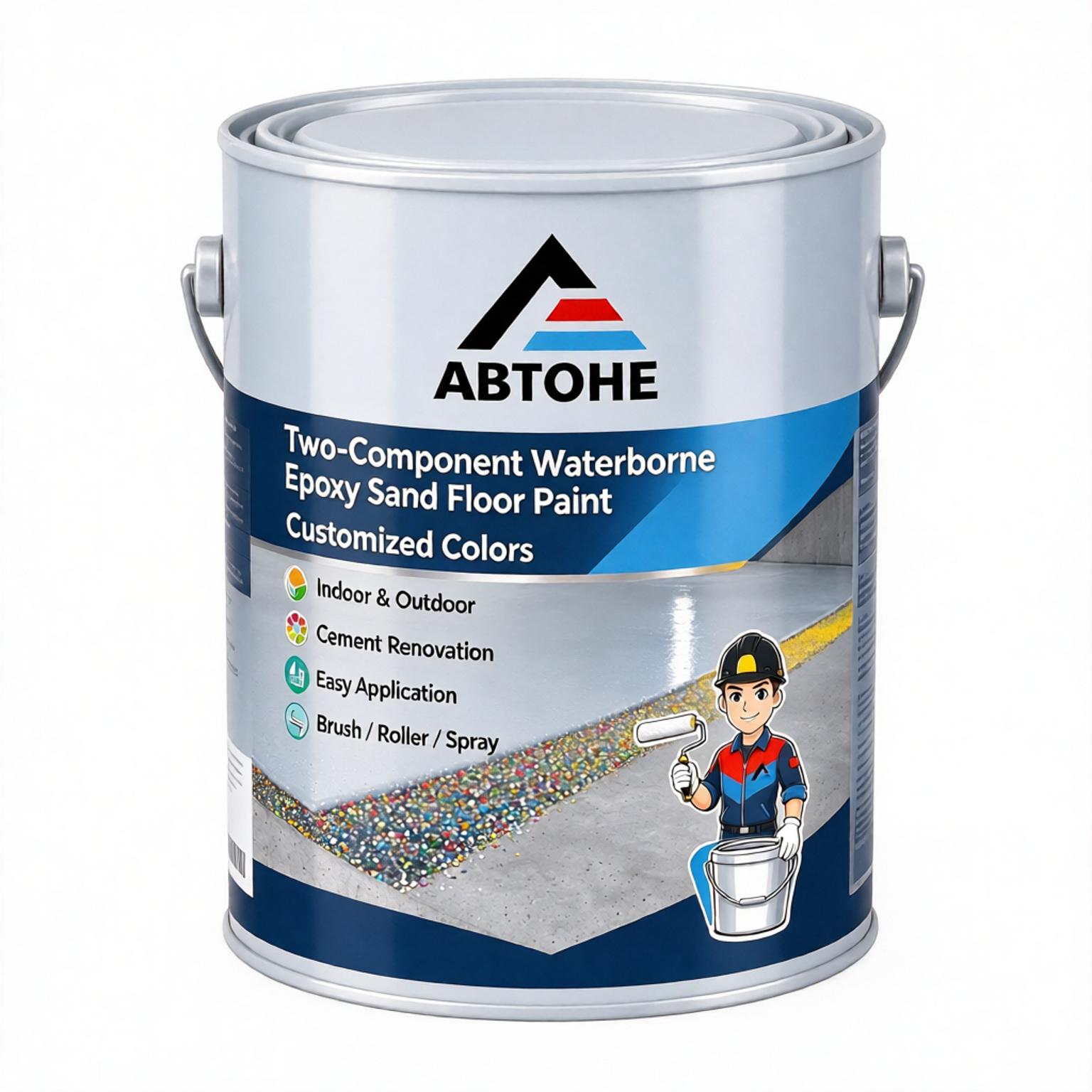
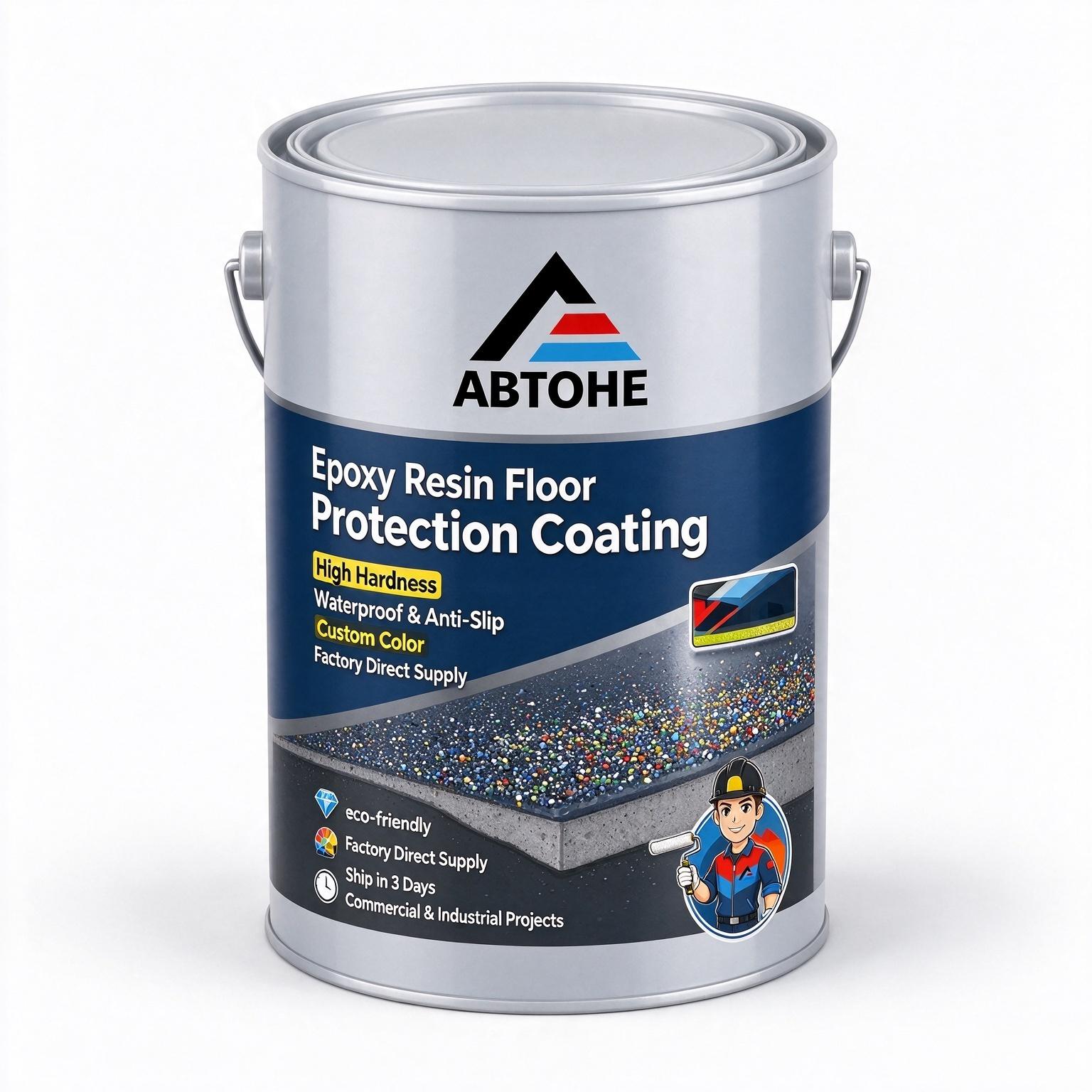
That tension between technical performance and supply-chain reality is where ABTOHE’s epoxy resin floor protection coating makes its case. This is a high-hardness, colored epoxy floor coating for concrete surface finishing in commercial, industrial, and construction projects — supplied direct from the factory, customizable in color and packaging, and dispatched within three days of confirmed order details. It is a product built for the way projects are actually procured: on a deadline, against a budget, with a client who wants to see the floor finished rather than hear about the resin.
The Product: Epoxy Resin, Curing Agent, Colored Floating Sand
Start with what the coating actually is, because the formulation explains the performance. The material consists of three main components: epoxy resin, curing agent, and colored floating sand. Applied by brush, with trowel and defoaming roller as construction tools, the system cures into a firm, attractive colored surface bonded to properly prepared concrete.
The colored floating sand is the element that distinguishes this coating from a plain epoxy floor paint. The aggregate carries color through the film and contributes a textured wear surface, which produces three practical outcomes. First, the color is distributed through the coating rather than applied as a surface tint, so it holds up as the floor wears. Second, the aggregate provides the anti-slip texture that matters in warehouses, workshops, garages, and any area where moisture or spills could turn a glossy floor into a hazard. Third, the sand-reinforced film builds thickness and hardness, which is where the high-hardness claim comes from — a dense, filled film resists abrasion and point loading better than a thin unfilled coating.
The epoxy resin and curing agent form the matrix that binds the aggregate and bonds to the substrate. Cured properly, that matrix delivers the waterproofing, chemical resistance, and adhesion that the commercial and industrial duty cycle requires. The defoaming roller is not an incidental tool: releasing entrapped air during application prevents pinholes and bubbles that would otherwise compromise both the appearance and the waterproof integrity of the film.
High Hardness, Anti-Slip, Waterproof, Eco-Friendly: Four Claims, Four Failure Modes
The feature list reads like a checklist, but each property answers a specific way that floors fail in commercial and industrial settings.
High hardness addresses abrasion and point loading. Warehouses, workshops, and production areas subject floors to constant traffic — forklifts, pallet jacks, carts, equipment feet — and a soft coating crushes, scratches, and wears through at the traffic paths. A high-hardness film distributes that load and resists the scouring action of grit and wheels, extending the interval between recoats and protecting the concrete beneath.
Anti-slip performance addresses liability and safety. The colored-sand texture provides mechanical grip even when the surface is wet, which matters in garages exposed to rain and snowmelt, in workshops where coolant and oil spill, and in retail and showroom spaces where polished floors and wet weather are a dangerous combination. A floor that looks premium but sends customers slipping is not a finished floor.
Waterproofing addresses the substrate. A continuous epoxy film seals the concrete against liquid penetration, preventing the moisture-driven deterioration that shortens the life of both the coating and the slab. In ground-level commercial spaces, basements, and garages, that barrier is what keeps the floor from blistering from below.
Eco-friendly formulation addresses the occupied-building reality. Commercial and industrial projects rarely happen in empty buildings — retail spaces, showrooms, offices, and warehouses are often partially operational during installation. A lower-odor, eco-friendly formulation reduces the ventilation burden and allows work to proceed with less disruption, which is often the difference between a project that gets approved and one that keeps getting deferred.
Where the Coating Belongs: The Project Map
The application profile is deliberately broad because the performance envelope supports it. The coating is designed for warehouses, workshops, garages, showrooms, retail spaces, production areas, and other project environments — and the common thread across those settings is not a single industry but a single requirement: a durable, colored, cleanable surface on prepared concrete.
In warehouses and production areas, the value is hardness, abrasion resistance, and a seamless, dust-free surface that handles equipment traffic and simplifies housekeeping. In workshops and garages, the value is chemical resistance to oils and fluids, anti-slip texture, and waterproofing under vehicle traffic. In showrooms and retail spaces, the value is appearance — a custom-colored, clean decorative surface that supports the brand environment rather than defaulting to industrial gray. In commercial construction projects, the value is a single coating specification that can be applied across back-of-house and front-of-house zones with color continuity and consistent performance.
That versatility matters for buyers because it reduces the number of products, suppliers, and application methods a project has to manage. A distributor can stock one platform and serve multiple customer segments. A contractor can specify one system across a mixed-use building. A project buyer can consolidate the purchase order and the color standard.
Custom Color: Specification, Not Selection
ABTOHE offers custom color service according to project requirements, allowing buyers to select a suitable color for different working areas, brand styles, and interior designs. That capability deserves more than a passing mention, because in commercial and industrial flooring the color decision is rarely decorative.
Color defines zones. A production area, a walkway, a storage bay, and a hazard zone can be differentiated by floor color without additional signage or tape — a visual management technique that improves safety and navigation. Color supports brand identity. A showroom or retail space whose floor matches the brand palette reads as intentional rather than improvised. Color supports maintenance. Lighter floors show cleanliness and reflect light; darker floors hide scuffs and reduce glare. And color supports continuity. A single custom shade applied across multiple areas produces a unified environment, which is exactly what commercial clients expect when they approve a finish schedule.
Because ABTOHE manufactures directly, the custom color is not a special-order exception with a long lead time. It is part of the standard production conversation — discussed alongside packaging options, order quantities, and application requirements before production begins.
The Three-Day Dispatch: Speed as a Specification
Here is where the product proposition becomes genuinely distinctive. Standard product orders can be arranged for dispatch within three days after order details are confirmed.
For anyone who has managed a flooring project, that number requires no explanation. Material lead time is one of the largest variables in project scheduling. A coating that arrives in three days instead of three weeks changes the entire critical path: the concrete can be prepped with confidence, the crew can be booked without a cushion, and the client can be given a completion date that holds. For contractors, faster dispatch means less capital tied up in inventory and fewer schedule penalties. For distributors, it means faster inventory turns and better service levels to their own customers. For project buyers, it means the flooring package stops being the item that delays handover.
The three-day dispatch is a function of direct manufacturing. ABTOHE is a factory, not a trading intermediary — the production line, the quality control, and the dispatch decision sit in the same operation. That vertical structure is what allows stable product supply, professional communication, and flexible order support for distributors, contractors, flooring applicators, and project buyers. It is also what makes custom color and packaging discussion feasible before production rather than as an afterthought.
Global Shipping and Export Coordination
The factory supports global shipping for customers in different countries and regions, with a team that coordinates product preparation, export packaging, and shipping arrangements according to the destination and order plan. For international buyers, that coordination is not a convenience — it is the difference between a product that can be imported and one that cannot.
Export packaging must protect a 20 kg liquid coating through handling and transit. Documentation must satisfy customs and compliance requirements. Shipping arrangements must align with the buyer’s project schedule, not just the factory’s dispatch calendar. ABTOHE’s packaging and delivery structure reflects this: single-item selling units, a package size of 33 × 33 × 37 cm, and a single gross weight of 20.0 kg — a practical, shippable unit that can be handled, stored, and mixed without specialized equipment.
The Factory-Direct Advantage
The product description makes a point that is worth repeating plainly: ABTOHE is a direct manufacturer. That matters in three ways.
Pricing. Factory-direct supply removes intermediary margins, which allows competitive pricing on project-scale orders. For distributors and contractors bidding against fixed budgets, that margin difference can determine whether a project is won.
Communication. Direct manufacturer communication means technical questions reach the people who formulate the product. Application requirements, substrate conditions, cure schedules, and custom color feasibility can be discussed before production rather than filtered through a sales layer.
Flexibility. Packaging options, order quantities, and application requirements can all be discussed and adjusted. A distributor building a private-label line, a contractor needing a specific pack size, or a project buyer needing a custom color for a phased rollout can all be accommodated within the production conversation.
The Floor as a Delivered Promise
A floor coating is not fully specified until it is delivered, applied, and cured. Every property on the data sheet — high hardness, anti-slip, waterproof, eco-friendly, custom color — depends on the material arriving on schedule, in the right quantity, in the right shade, with the documentation and packaging that the project requires.
ABTOHE’s epoxy resin floor protection coating is built around that complete chain. Epoxy resin, curing agent, and colored floating sand, applied by brush and finished with trowel and defoaming roller, delivering a firm and attractive colored surface on prepared concrete. Custom color matched to the project. Factory-direct pricing and communication. Global shipping coordination. And dispatch within three days of confirmed order details.
For the distributor, it is a product line that turns inventory faster. For the contractor, it is a schedule that holds. For the project buyer, it is a floor that improves the visual condition of concrete surfaces while protecting them under real commercial and industrial duty. And for the client who walks into the finished space, it is simply a floor that looks right — with no reason to know, or care, how quickly it arrived. That is what a factory-direct specification is supposed to deliver: performance you can see, and a supply chain you never have to think about.