购物车里没有产品。
 fuyuhuaxue@iumrs.com
There is a quiet revolution happening in the way specifiers think about stone floors. For decades, the default answer to “we want a marble look” was marble — or its engineered cousin, porcelain, or terrazzo, or polished concrete dressed up with a sealer that needs renewing every season. Each of those choices carries a hidden operating cost: stone needs sealing, polishing, and careful protection from acids; tile brings grout lines that trap soil and demand scrubbing; polished concrete is unforgiving of spills and slick when wet. The floor looks luxurious, but it behaves like a diva.
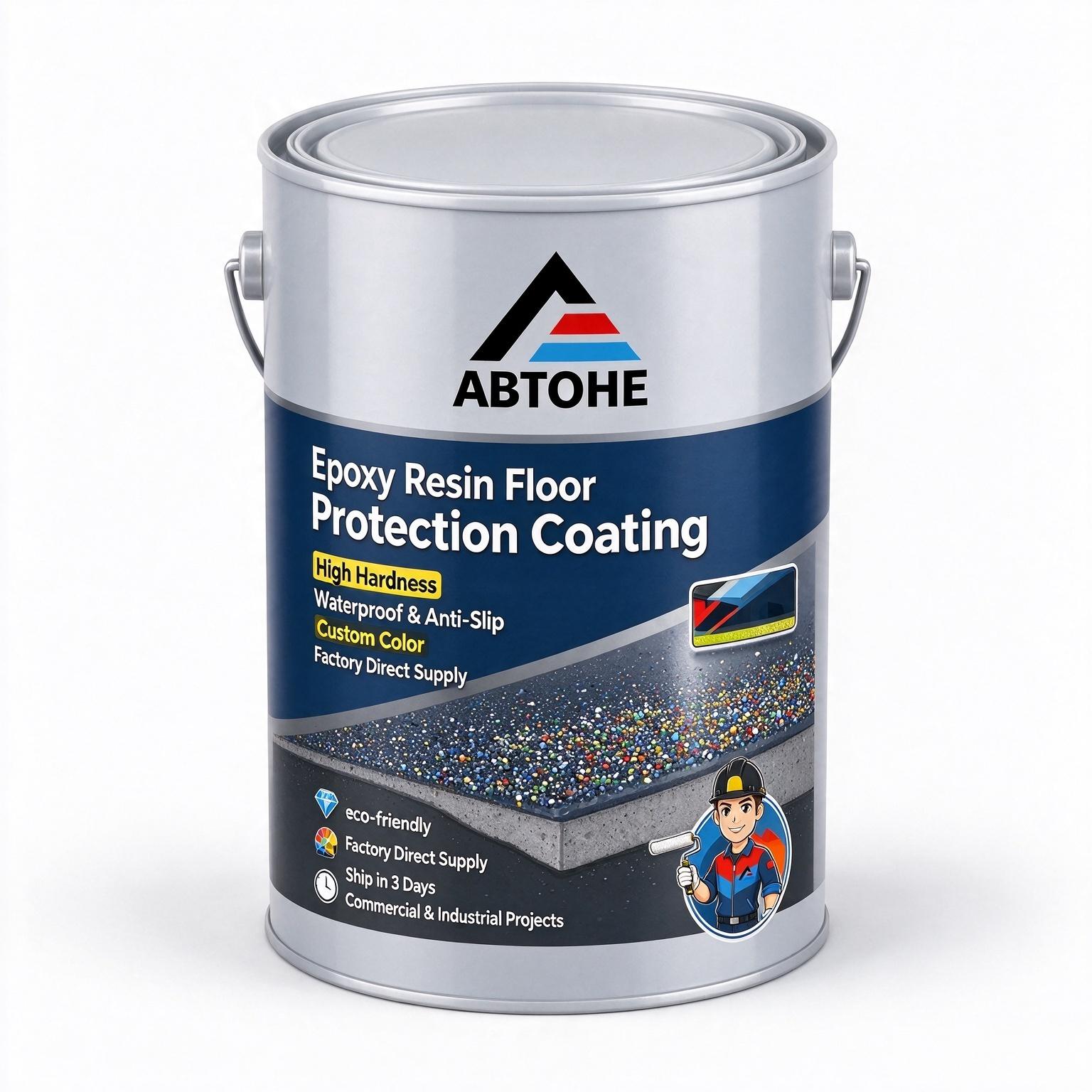
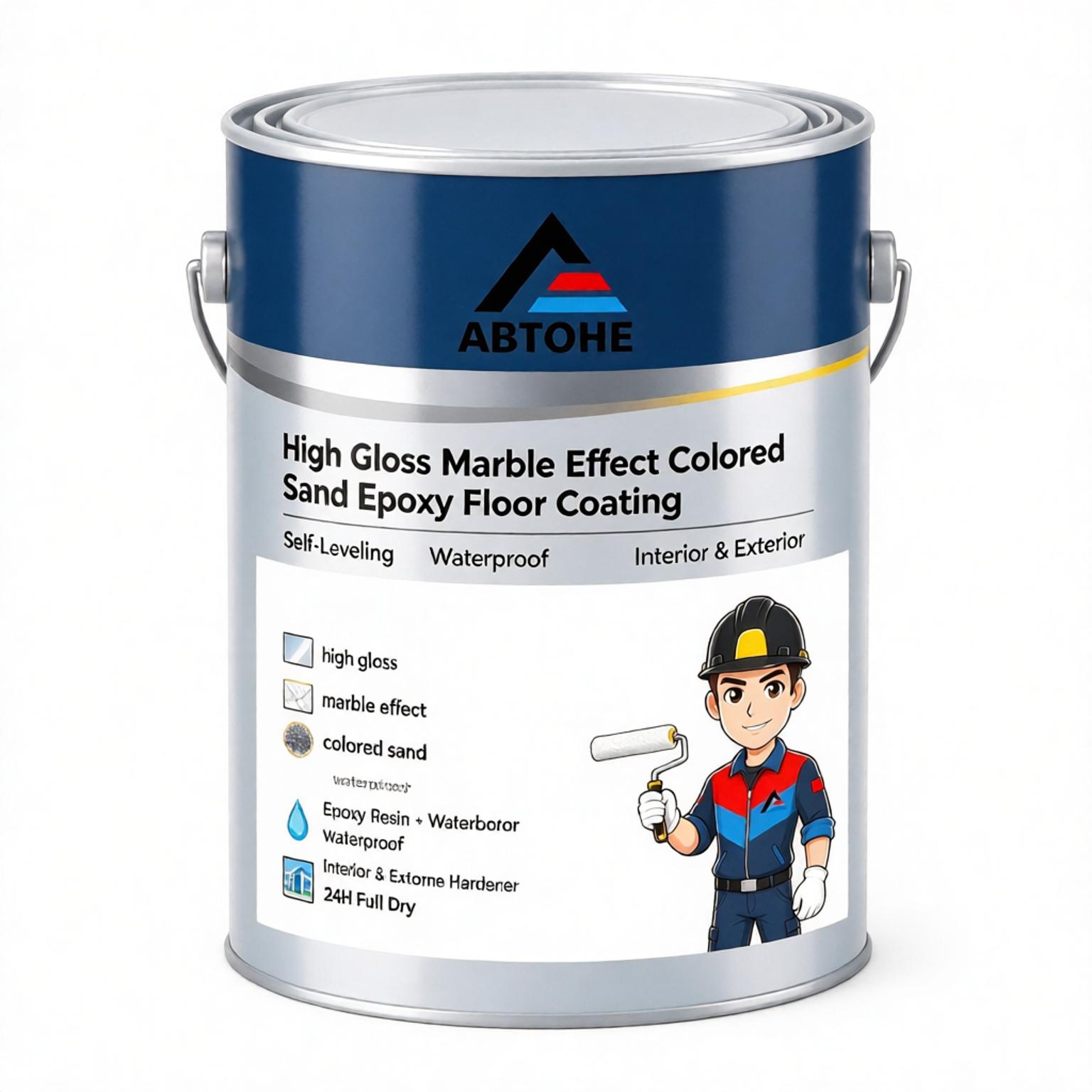
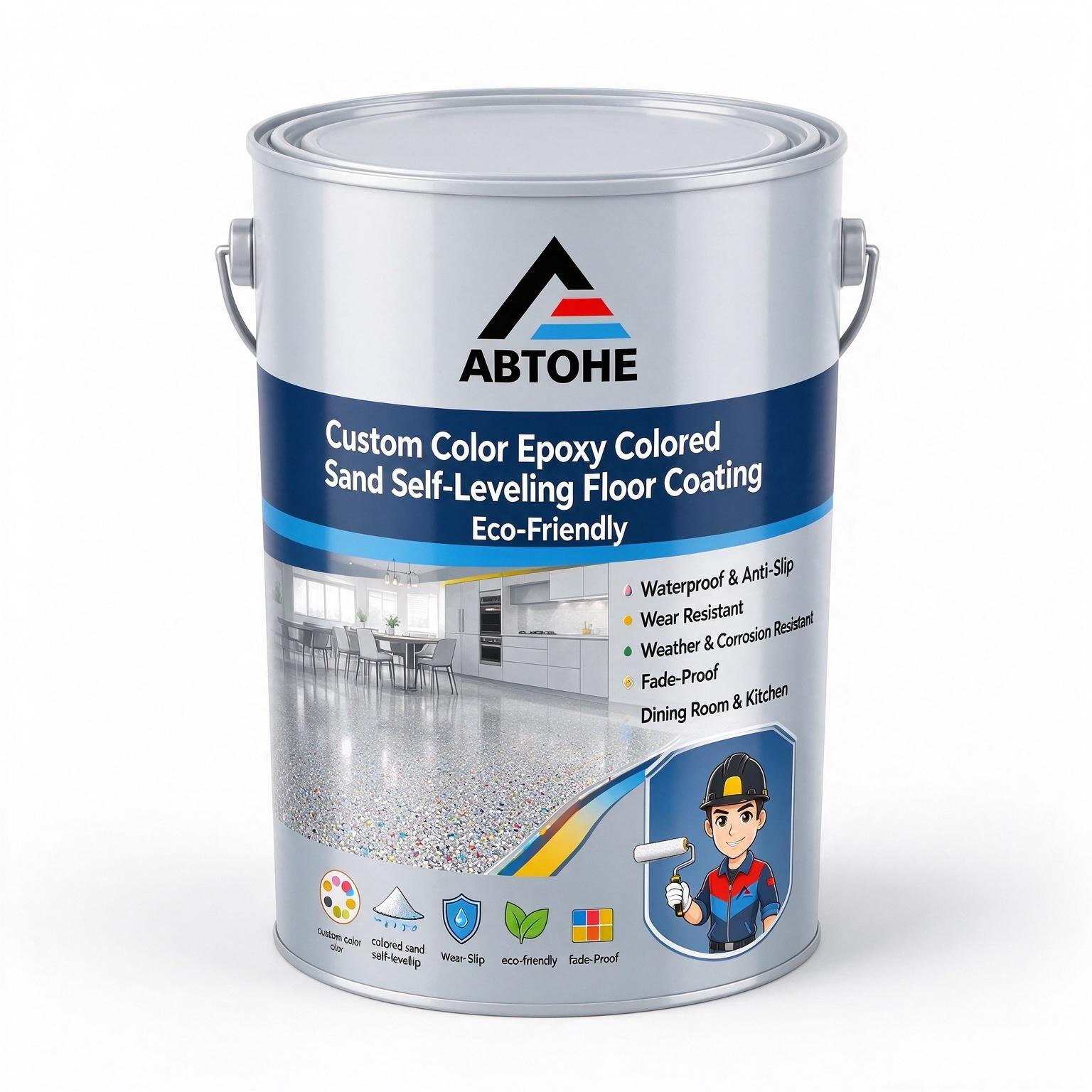
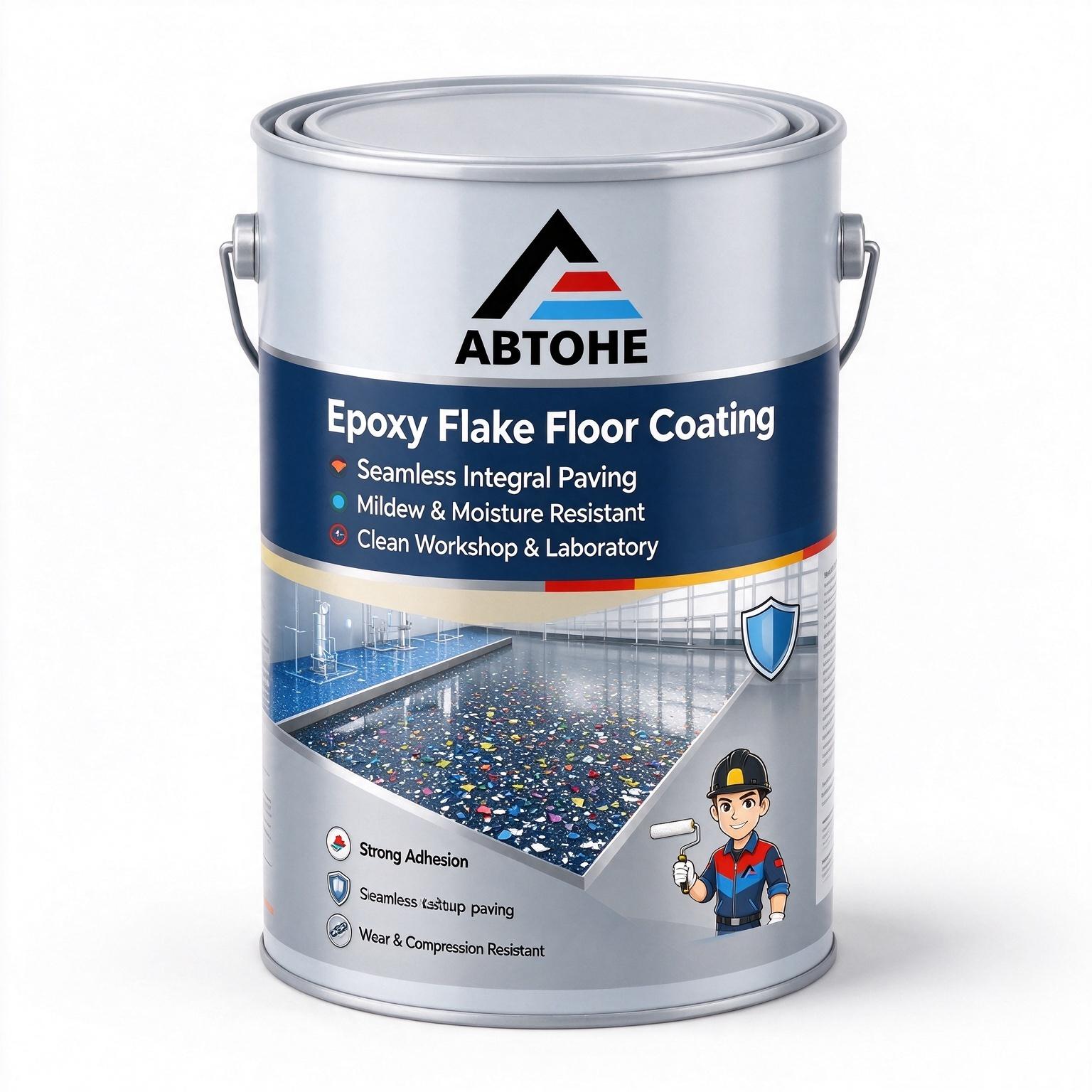
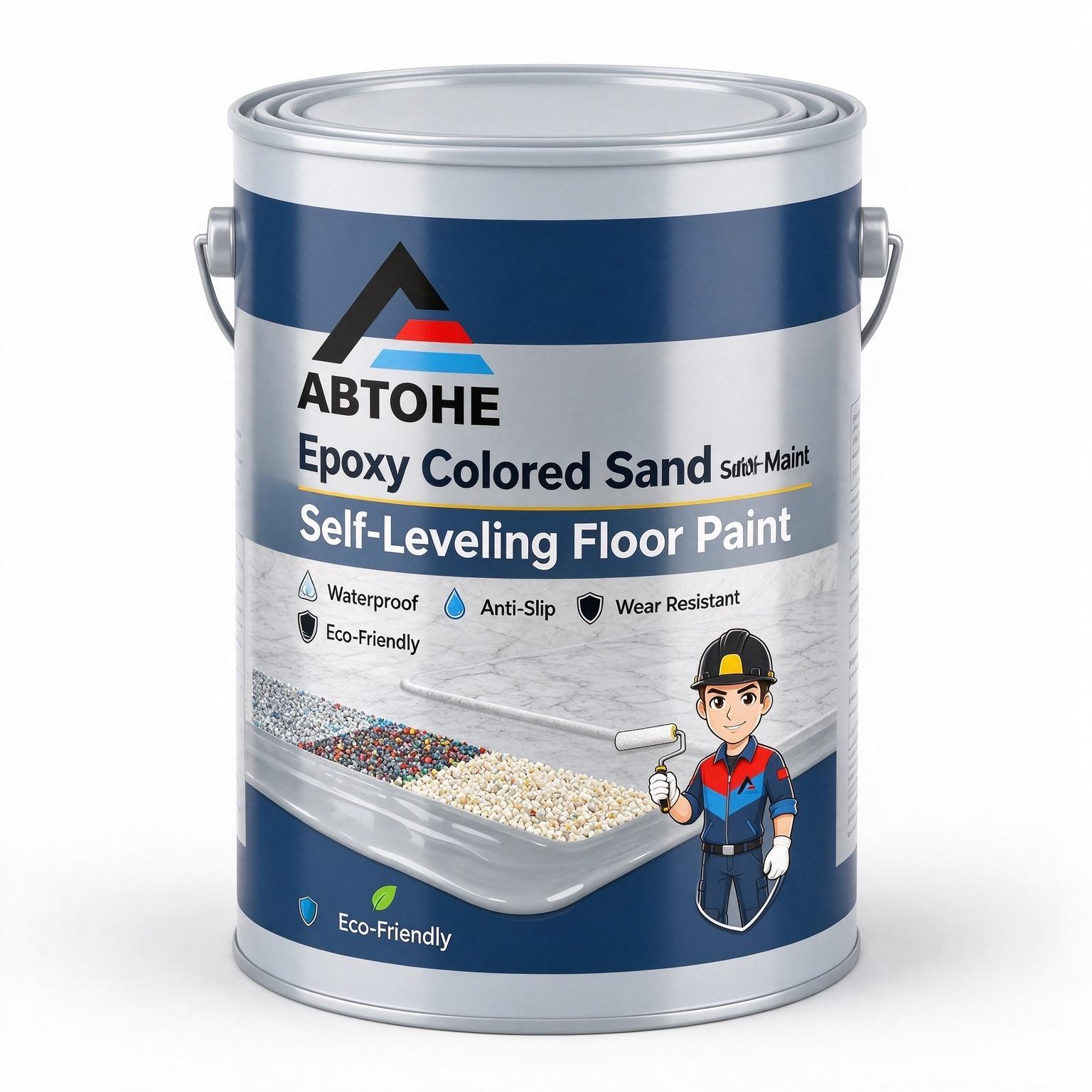
The alternative that has gained real traction is a different category altogether: an epoxy colored-sand system that reproduces the visual depth of stone while delivering the mechanical properties of an industrial coating — waterproof, anti-slip, wear-resistant, and completely seamless. ABTOHE’s imitation marble colored-sand self-leveling floor paint is built precisely for that overlap. It is eco-friendly, low-odor, trowel-applied, and engineered to look like stone while performing like a coating — which is a far more useful combination than it first appears.
Imitation Marble Without the Marble Maintenance
The phrase “imitation marble” is often used loosely. In most decorative epoxy systems, the effect comes from metallic pigments or mica powders suspended in a clear resin, producing a cloudy, swirling pattern that reads as abstract rather than mineral. ABTOHE’s approach is different in both material and method. The system is built on colored sand — graded aggregate carrying the color through the film — applied by trowel and compacted into the resin matrix.
That distinction matters at the surface level. Because the color is carried by the aggregate rather than sitting as a thin pigment layer on top, the appearance has depth and variation that resemble natural stone rather than a printed pattern. The trowel application lets the applicator control the distribution of color and texture, so the finished floor reads as a continuous mineral surface with subtle veining and tonal movement. And because the resin matrix is continuous, there are no grout lines, no seams, and no joints — the three places where real stone floors collect dirt, stain, and require the most maintenance.
The practical consequence is a floor that delivers marble aesthetics with none of marble’s care regimen. There is no annual sealing cycle. There is no acid sensitivity that turns a lemon juice spill into a permanent etch mark. There is no polishing program. The floor is waterproof by construction, which means spills sit on the surface to be wiped away rather than soaking into a porous slab.
Waterproof, Anti-Slip, Wear-Resistant: The Three Properties That Define Usable Floors
Aesthetics sell the specification; performance justifies it. ABTOHE’s colored-sand system is formulated around three properties that matter in every real environment.
Waterproof performance protects both the floor and the building. A continuous epoxy film blocks liquid penetration into the substrate, preventing the moisture-driven failures that shorten coating life and damage the slab beneath. In basements, ground-floor retail, and wet areas, that barrier is the difference between a floor that lasts and one that blisters from below.
Anti-slip performance comes from the ceramic-sand texture built into the wear surface. Unlike a high-gloss marble floor, which becomes hazardous the moment it is wet, the colored-sand system provides mechanical grip even under moisture. For commercial kitchens, bathrooms, entryways, garages, and any indoor space where spills are possible, that texture is a safety specification rather than a comfort feature.
Wear resistance comes from the hardness of the aggregate and the thickness of the trowel-built film. The surface resists abrasion from foot traffic, carts, and cleaning equipment, and the color is carried through the film depth rather than applied as a surface tint, so the appearance holds as the floor wears. In high-traffic commercial interiors, that translates into a floor whose visual quality does not degrade faster than its physical integrity.
Eco-Friendly by Formulation, Not by Marketing
The “eco-friendly” label in the coatings market is frequently applied to products that simply have a lower solvent content than their predecessors. ABTOHE’s system goes further in two respects that specifiers can verify.
First, it is formulated as a no-odor system. That is a practical benefit during application — no evacuation of adjacent spaces, no lingering solvent smell in occupied buildings — and a signal of formulation discipline. Low-odor epoxies are typically built on low-volatility hardeners and carefully selected resin components, which also tend to produce better indoor air quality outcomes after cure.
Second, the system is a high-solids epoxy that cures to a durable film with a long service life. The most sustainable floor is the one that does not need to be replaced. A waterproof, wear-resistant, seamless surface that resists staining and simplifies cleaning reduces the consumption of cleaning chemicals, water, and replacement materials over its service life. That lifecycle argument is increasingly what green-building procurement teams actually evaluate, beyond the VOC number on the data sheet.
The Cure Profile: Why Timing Is a Specification, Not a Detail
Contractors evaluate coatings on a different axis than facility owners: schedule. ABTOHE’s system publishes a clear cure profile at 25°C, and each number maps to a real planning decision.
Surface dry at 2–3 hours means the floor can tolerate light foot traffic and the application can proceed to subsequent stages within a single shift. For multi-coat systems and time-sensitive commercial fit-outs, that window determines whether a project finishes on schedule.
Gel time of approximately 35 minutes defines the working window for each mixed batch. A 35-minute gel time is well matched to trowel application: long enough for an applicator to place and compact the material, short enough that the batch sets predictably without sagging or aggregate settlement. It also supports batch-by-batch application without waste.
Practical cure at 2–3 days indicates when the floor can accept normal service loads. For commercial spaces, that is a return-to-service timeline measured in a long weekend rather than a multi-week shutdown — which, for retail and hospitality projects, is often the single most valuable property of the coating.
Coverage of approximately 1.6 kg/㎡ provides a reliable basis for material estimation. Combined with the 20 kg/barrel packaging, it allows contractors to calculate barrel counts per project area accurately, reducing both over-ordering and mid-job shortages.
The Application Method: Trowel, Gear Cutter, Defoaming Roller
ABTOHE specifies the tools precisely — gear cutter, trowel, and defoaming roller — because the application method is integral to the finished product. The gear cutter distributes material at controlled thickness; the trowel compacts the colored sand into the resin and shapes the surface; the defoaming roller releases entrapped air to prevent pinholes and bubbles that would compromise both appearance and waterproofing.
This is a system designed for trained applicators, and that is a feature rather than a limitation. Trowel-applied colored-sand floors achieve a density and aggregate uniformity that pour-and-roll systems cannot match, and the resulting surface is more consistent in color, texture, and wear performance across the whole area. For contractors, the method is familiar, requires no specialized spray equipment, and reduces mobilization cost. For owners, it produces a floor whose quality depends on craftsmanship rather than on the variables of spray conditions.
Customization: Color as a Design Language
ABTOHE offers customized colors to complement any environment, and this is not a minor convenience. In commercial interiors, floor color is a design decision that interacts with lighting, brand identity, and wayfinding. A floor system that can be matched to a palette — warm stone tones for hospitality, cool grays for retail, deep mineral shades for showrooms — allows the floor to function as part of the interior architecture rather than as a default finish.
The colored-sand format supports this flexibility because color is carried by the aggregate. Multi-tone blends, subtle veining effects, and zone-specific color coding can all be achieved within a single system, allowing one product platform to serve lobbies, corridors, washrooms, and back-of-house areas with visual continuity.
The Manufacturer: 25 Years of Building Paint
ABTOHE brings over 25 years of experience in building paint to this product category, and the operational infrastructure behind the brand reflects that maturity. Samples are available for evaluation before specification. Bulk orders are welcomed, with a short production cycle that supports project schedules. OEM and custom design services allow distributors, contractor networks, and design brands to build proprietary floor systems without operating a resin plant. Packaging is solid and shipping is fast — the unglamorous logistics that determine whether a project starts on time.
The product is manufactured in Jiangxi, China, and supplied in 20 kg barrels with a short production cycle and competitive pricing. For buyers comparing suppliers, the combination of a 25-year formulation heritage, sample availability, custom design support, and responsive after-sales communication is often more decisive than any single performance number on the data sheet. A floor is a long-term relationship, and the supplier behind it matters as much as the chemistry.
The Floor That Looks Like Stone and Works Like a Coating
The appeal of marble is not complicated: it looks permanent, natural, and expensive. The problem with marble is equally simple: it requires permanent care. ABTOHE’s epoxy colored-sand self-leveling floor paint resolves that tension by delivering the visual language of stone through a colored aggregate system, while supplying the performance properties that stone cannot — waterproofing, anti-slip texture, wear resistance, seamless continuity, and chemical-resistant cleanability.
It is eco-friendly and no-odor in formulation. It cures on a predictable schedule — surface dry in 2–3 hours, practical service in 2–3 days. It applies by trowel, gear cutter, and defoaming roller with coverage around 1.6 kg/㎡, packaged in 20 kg barrels. It is available in customized colors, backed by 25 years of building-paint experience, and supported by sampling, OEM, and custom design services.
For the designer, it is a floor that carries a concept. For the contractor, it is a system with a dependable working profile. For the owner, it is a surface that looks like the most expensive floor in the building and behaves like the most practical one. That is the rare combination that the imitation marble category has been promising for years — and this is what it looks like when it is actually delivered.