 fuyuhuaxue@iumrs.com
In a hospital ward, the floor hears everything. It hears the soft shuffle of slippers at 3 a.m., the urgent roll of a crash cart, the squeak of a cleaning mop at shift change. In a clinic, it hears the nervous tap of a patient’s shoe in the waiting area, the scrape of an examination stool, the constant traffic of staff moving between rooms. These are not spaces that tolerate compromise. Every surface must serve a purpose, and the floor—often overlooked in design conversations—is among the hardest-working elements in the entire facility. It is a barrier against moisture, a foundation for infection control, a contributor to patient safety, and, whether administrators realize it or not, a daily visual cue about the standard of care.
For years, healthcare flooring has been dominated by a handful of options: vinyl sheet, tile and grout, linoleum, and polished concrete. Each has its advocates, and each has its failure modes. Vinyl seams lift and harbor moisture. Grout lines darken and resist disinfection. Linoleum requires periodic stripping and waxing. Concrete cracks and dusts. The search for a surface that is seamless, waterproof, slip-resistant, impact-tolerant, easy to clean, and calm enough for a healing environment has led many specifiers toward a specific solution: 100% solids epoxy floor coatings. And among the color options available, beige—soft, warm, and understated—has emerged as a particularly thoughtful choice for hospital wards and clinic interiors.
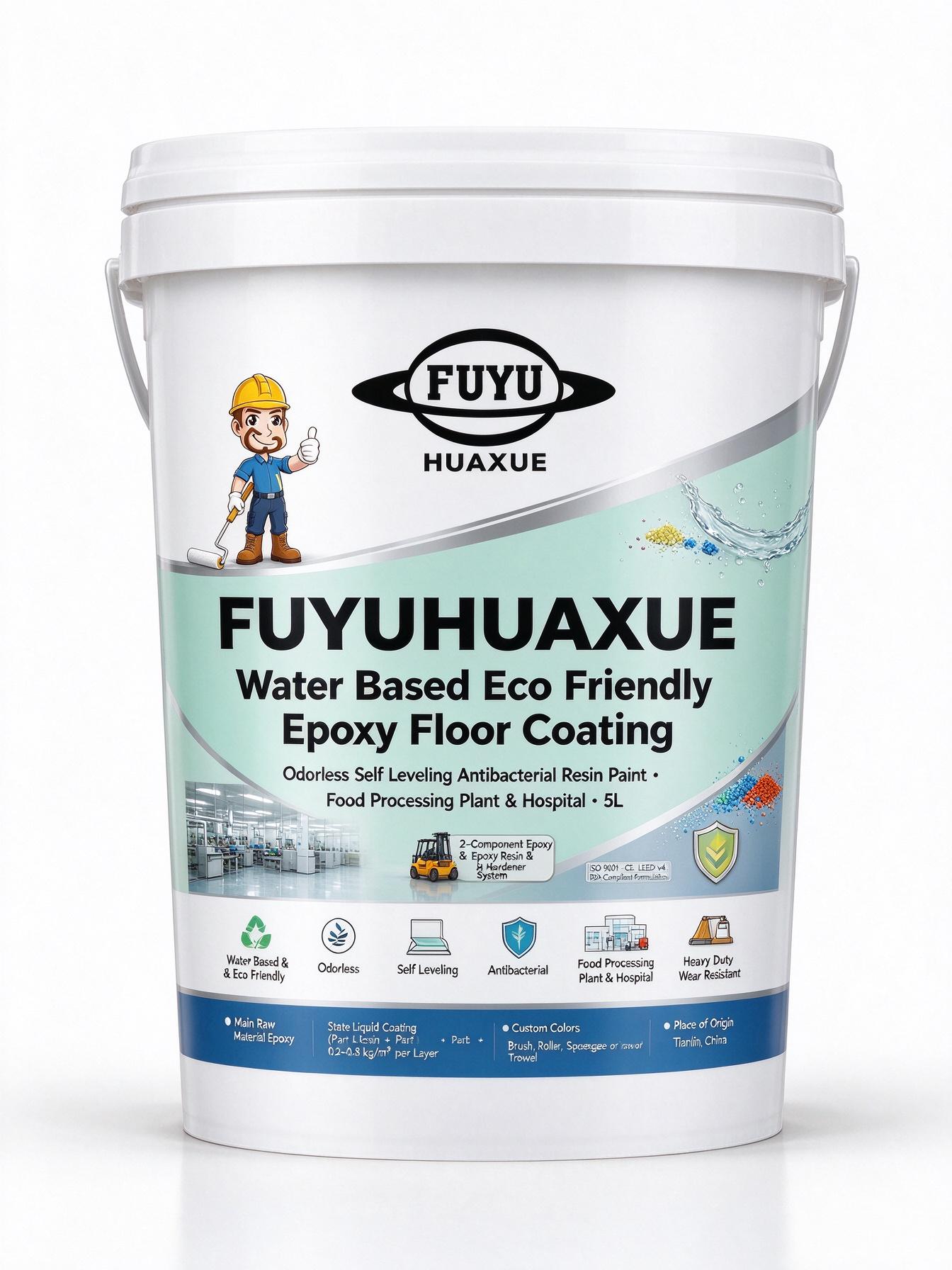
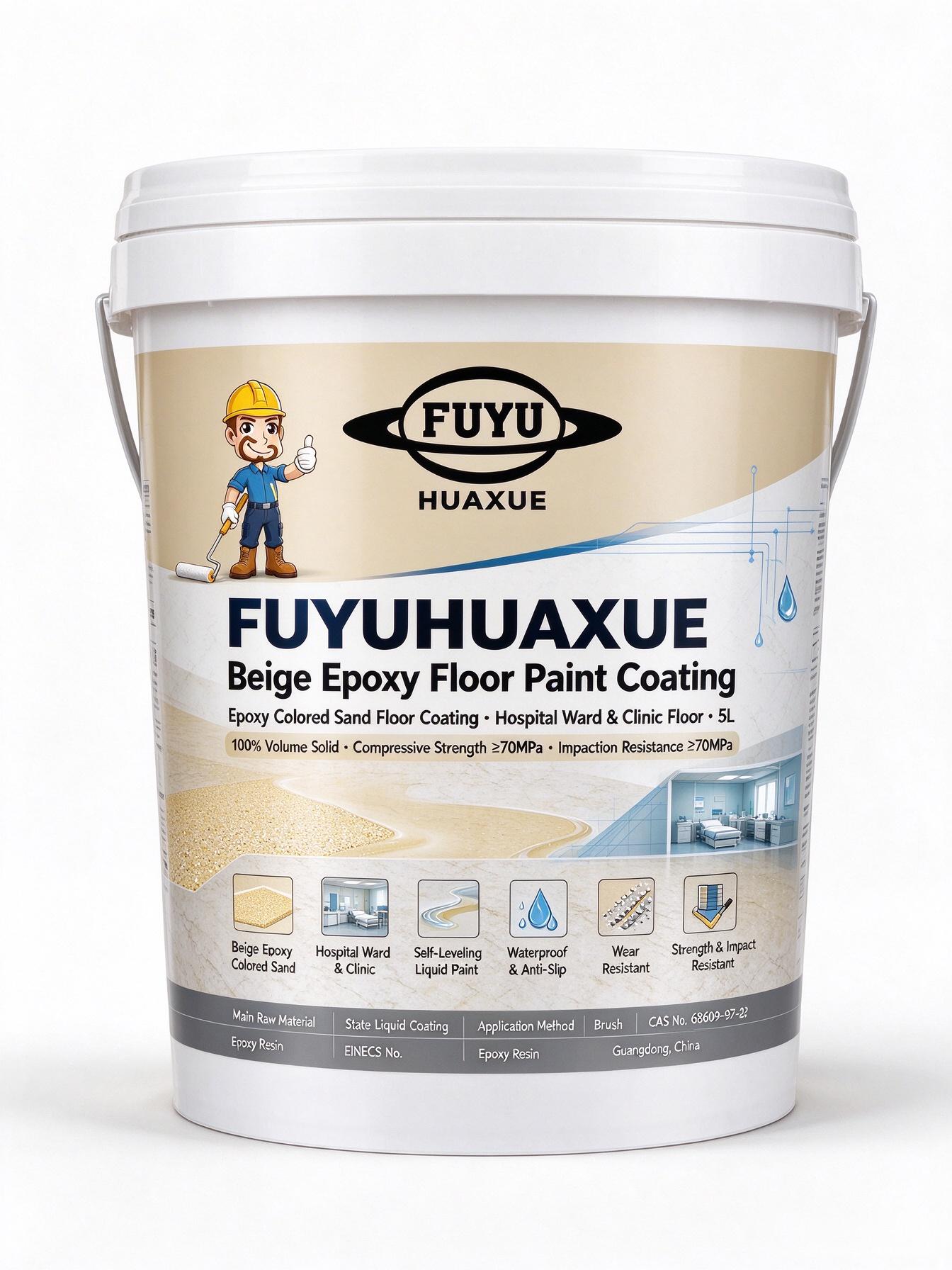
FUYUHUAXUE, a manufacturer based in Guangdong, China, has developed a beige epoxy floor paint coating specifically positioned for hospital ward and clinic floors. The product, also known as epoxy colored sand floor paint, is a liquid coating with a 100% volume solids content, a compressive strength of at least 70 MPa, and an impact resistance of at least 70 MPa. It is applied by brush, cures into a seamless film, and is engineered to be waterproof, anti-slip, wear-resistant, and resistant to stains. Its milky white base and customizable beige tone offer a modern, clean aesthetic that feels less clinical than stark white or gray, while still meeting the practical demands of a healthcare environment.
Why Beige? The Psychology of a Healing Surface
Color in healthcare design is not decoration. It is communication. A beige floor signals warmth and calm without drawing attention to itself. It is neutral enough to coordinate with almost any wall color, cabinetry, or medical equipment, yet it avoids the institutional chill of pure white or the industrial feel of gray concrete. In patient wards, where anxiety is often high and sleep is precious, a soft beige floor can reduce visual glare and create a quieter, more homelike atmosphere. In clinics, where first impressions matter, beige communicates cleanliness and professionalism without feeling sterile.
The milky white base of the FUYUHUAXUE formulation adds a subtle luminosity that helps corridors and rooms feel brighter, which is particularly valuable in spaces with limited natural light. The beige tone can be customized to match a facility’s palette, and the epoxy colored sand component introduces a fine, stone-like texture that masks scuffs, wheel marks, and the everyday soil that accumulates in high-traffic areas. A solid-color floor shows every footprint; a beige epoxy floor with a subtle sand effect maintains its appearance far longer, reducing the perceived need for frequent deep cleaning and preserving the facility’s visual standards.
The Technical Case: 100% Solids, 70 MPa, and the Meaning of Durability
The chemistry behind this coating is straightforward but consequential. The product references CAS No. 68609-97-2 and is based on epoxy resin with the molecular formula (C₁₁H₁₂O₃)ₙ. It is a two-component system—resin and curing agent—that cures in place to form a hard, thermoset film. The 100% volume solids content means there is no solvent to evaporate; what is applied is what remains. This has two immediate benefits in a healthcare setting: low odor during installation and minimal contribution to indoor air quality concerns. Hospitals cannot shut down entire wards for a week, and clinics cannot afford prolonged downtime. A 100% solids epoxy system allows work to proceed with less disruption and faster return to service than solvent-heavy alternatives.
The mechanical specifications are equally relevant to the healthcare environment. A compressive strength of ≥70 MPa indicates the coating can withstand the concentrated point loads of beds, wheelchairs, mobile diagnostic equipment, and cleaning machines without crushing or deforming. An impact resistance of ≥70 MPa means the floor can absorb the dropped instruments, the accidental kick of a cart, and the daily percussion of a busy ward without cracking or chipping. These are not abstract numbers; they translate directly into fewer repairs, lower maintenance costs, and a floor that remains intact—and therefore hygienic—throughout its service life.
The waterproof and anti-slip properties address two of the most persistent safety concerns in healthcare flooring. Waterproofing protects the substrate from moisture intrusion, which can lead to mold growth, concrete deterioration, and adhesive failure in conventional flooring systems. In wards and clinics, where spills are routine and cleaning is frequent, a waterproof membrane is not a luxury; it is a prerequisite for long-term performance. The anti-slip surface, meanwhile, reduces the risk of falls—a critical metric in healthcare facilities, where patient mobility is often compromised and staff are moving quickly under pressure.
Seamless Hygiene: The Infection Control Argument
Infection prevention is a system-wide effort, and the floor is part of that system. Pathogens do not respect the visual cleanliness of a surface; they colonize the microscopic crevices of grout, the seams of vinyl welds, and the porous pockets of untreated concrete. Once established, biofilms can be difficult to remove and can persist even after routine cleaning. A seamless epoxy floor eliminates these reservoirs. There are no grout lines to scrub, no seams to harbor moisture, and no differential wear between materials. The surface is monolithic, non-porous, and cleanable with standard hospital disinfectants. Because the film is continuous, there are no edges where dirt collects, no cracks where bacteria can hide, and no transition strips that can lift and trap debris.
The brush application method is particularly important in this context. While the self-leveling liquid paint distributes itself evenly across large floor areas, the brush is used for edges, corners, doorways, and cove bases—the places where conventional flooring most often fails. By carrying the epoxy film into these junctions, the system creates an unbroken hygienic barrier from wall to wall. This attention to detail is what separates a truly seamless floor from one that merely looks seamless until you inspect the perimeter.
Wear Resistance and the Cost of Ownership
Healthcare flooring decisions are rarely based on purchase price alone. The relevant metric is cost of ownership across the service life of the ward or clinic. A floor that requires frequent waxing, stripping, and burnishing consumes labor hours and chemicals. A floor that cracks and stains requires patching and premature replacement. A floor that loses its appearance quickly undermines the facility’s visual standards and can affect patient perception of cleanliness.
The FUYUHUAXUE beige epoxy coating is engineered for wear resistance. The epoxy chemistry enhances floor strength and resistance to stains, and the 100% solids film does not thin or degrade with repeated cleaning. Standard mopping is sufficient for routine maintenance; there is no wax program to manage, no stripping chemical to store, and no periodic burnishing to schedule. In a hospital ward, where environmental services teams are already stretched, this simplicity is a meaningful operational advantage. In a clinic, where every square meter of space is used intensively, a floor that maintains its appearance with minimal intervention allows staff to focus on patients rather than on floor care.
Application: Self-Leveling Efficiency with Brush-Finished Details
The product is described as a self-leveling liquid paint, meaning it flows and distributes itself evenly across the substrate after application, creating a smooth, uniform finish without the trowel marks and variations that can occur with manually applied coatings. This is particularly valuable in large wards and open clinic areas, where consistency of finish is both an aesthetic and a functional requirement. A smooth floor is easier to clean, easier to move equipment across, and less likely to harbor soil in surface irregularities.
At the same time, the brush application method allows contractors to address the details that self-leveling alone cannot reach. Edges, corners, column bases, door frames, and cove junctions are brushed by hand, ensuring that the epoxy film is continuous and well-bonded in the areas most vulnerable to wear and moisture. This combination—self-leveling for the field, brush for the perimeter—reflects a practical understanding of how floors actually perform in healthcare settings.
A Beige Floor as a Clinical Decision
It is tempting to think of a floor as a background element, something that supports the real work of healing without participating in it. But in a hospital ward or clinic, the floor is part of the care environment. It affects slip risk, infection control, indoor air quality, maintenance labor, and the emotional tone of the space. A beige epoxy floor coating from FUYUHUAXUE—with its 100% solids chemistry, ≥70 MPa compressive and impact strength, waterproof and anti-slip surface, and seamless, easy-to-clean finish—addresses these factors simultaneously. It is not merely a coating. It is a quiet, durable, hygienic foundation for the daily work of healthcare. And in a space where every detail matters, the floor beneath the patient’s feet deserves the same consideration as the equipment at the bedside.