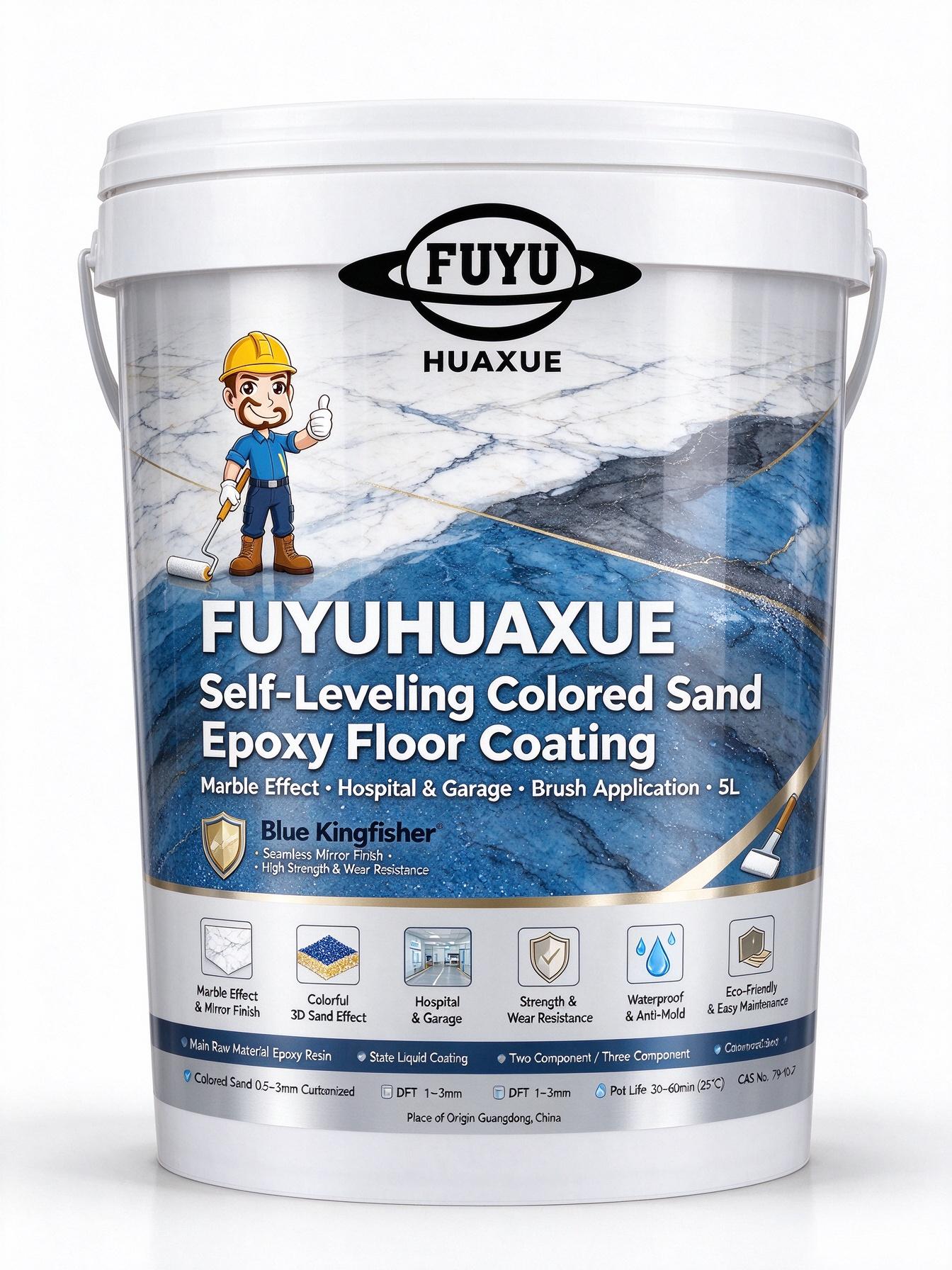
 fuyuhuaxue@iumrs.com
Ask anyone who has spent time in a hospital what they remember about the corridors, and they will rarely mention the color of the walls or the artwork. They will remember the sound—the constant, rolling rhythm of gurneys and wheelchairs, the quick footsteps of nurses, the low hum of conversation outside a patient’s room. The corridor is the artery of the hospital. It carries patients to surgery, staff to emergencies, families to waiting rooms, and cleaning crews through the night. It is the one space that never sleeps, never closes, and never stops being used. And yet, for decades, its floor was treated as an afterthought—a surface to be covered rather than engineered.
That assumption is now being challenged. Hospital administrators, infection-control specialists, and facility managers are recognizing that the corridor floor is not merely a walking surface. It is a contributor to patient safety, a component of infection prevention, a factor in operational efficiency, and a daily visual statement about the standards of the institution. The search for a floor that is simultaneously wear-resistant, slip-resistant, seamless, hygienic, and presentable has led many specifiers toward a specific solution: seamless epoxy colored sand coatings, applied by troweling, formulated with a water-based chemistry, and engineered for the unique demands of the hospital corridor.
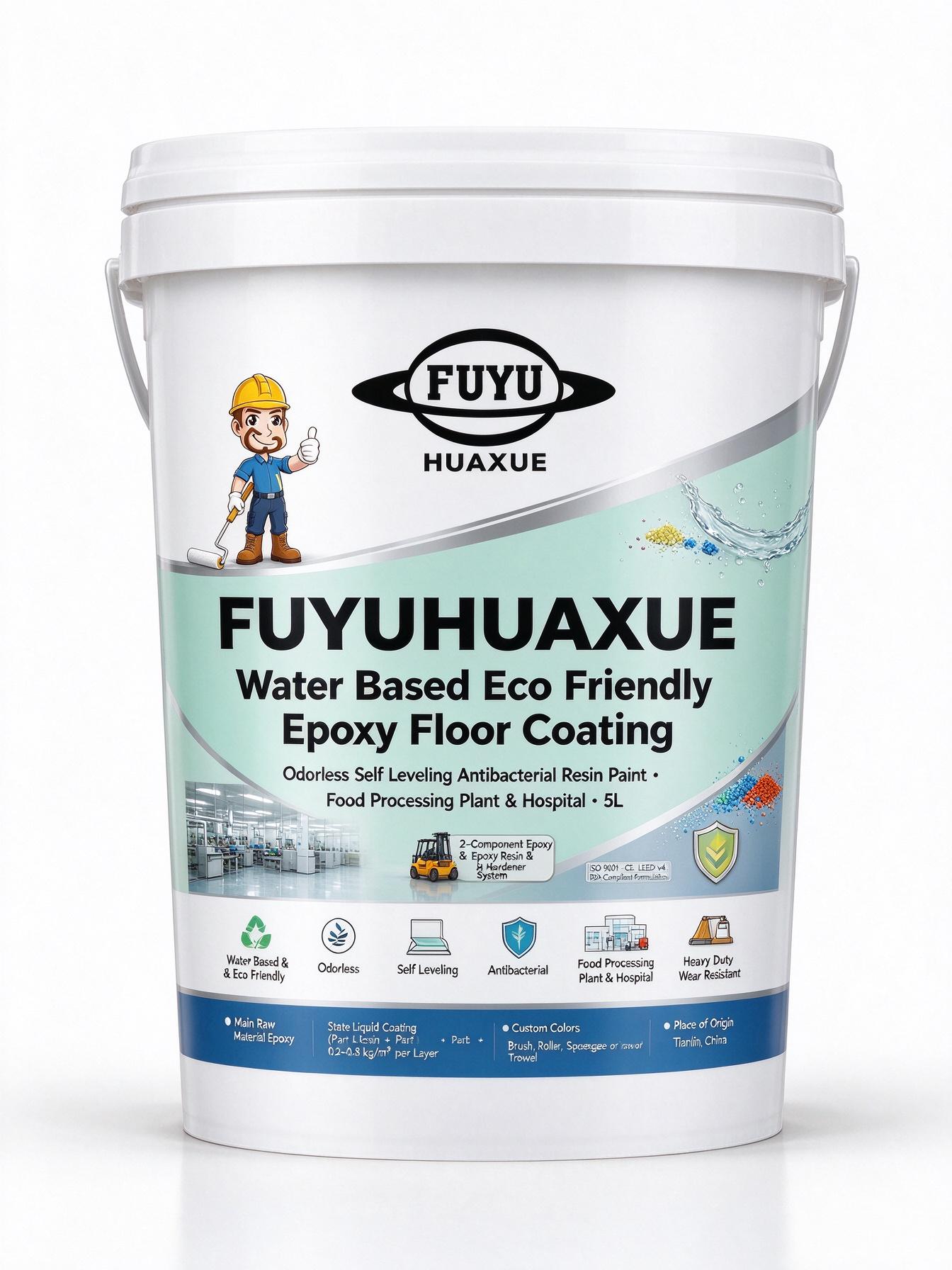
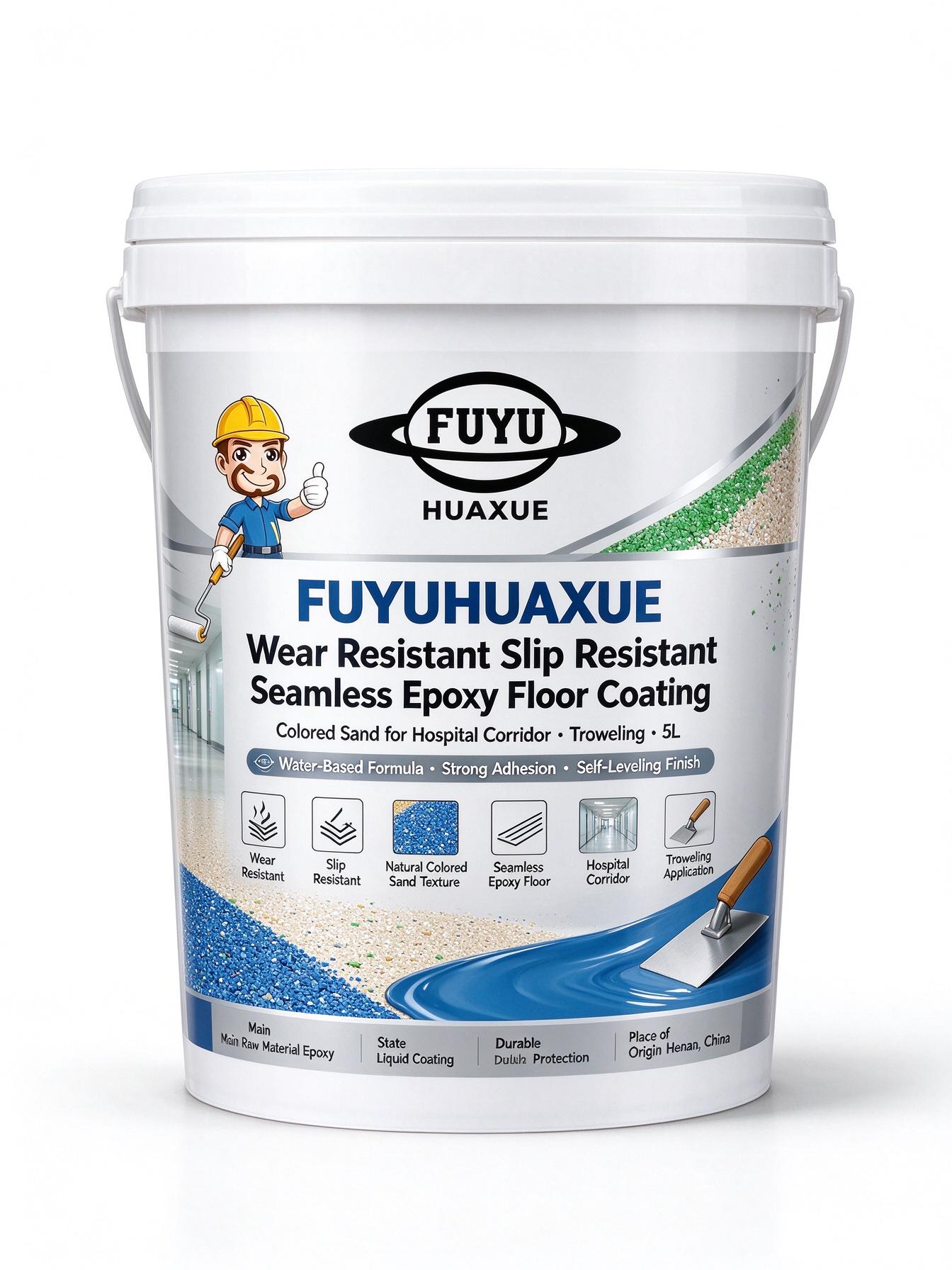
FUYUHUAXUE, a manufacturer based in Henan, China, has developed a wear-resistant, slip-resistant seamless epoxy floor coating with colored sand specifically positioned for hospital corridor applications. The product, also known as epoxy colored sand floor paint, is a liquid coating applied by troweling, featuring a water-based formula that is eco-friendly and non-toxic, strong adhesion to concrete substrates, a natural colored sand texture, a self-leveling finish, and durable protection that outlasts traditional coatings. It is not simply a floor finish. It is a system designed for the one part of the hospital that never stops working.
The Corridor as a Clinical Environment
Hospital corridors are not ordinary hallways. They are clinical spaces where patients are transported, medications are moved, equipment is wheeled, and emergencies unfold. A floor that fails in this environment does not merely look bad; it creates risks. Cracks and seams harbor pathogens. Slippery surfaces cause falls. Worn coatings generate dust that can compromise sterile fields. Porous materials absorb spills and resist disinfection. Every defect in the corridor floor is a potential infection-control failure, a liability exposure, or a disruption to patient care.
This is why the specification of a corridor floor must begin with performance, not appearance. The floor must resist the concentrated point loads of hospital beds and mobile diagnostic equipment. It must withstand the abrasion of wheeled traffic and the chemical attack of hospital-grade disinfectants. It must provide reliable traction even when wet, because spills are routine and patients are often unsteady on their feet. It must be seamless and non-porous, because grout lines and seams are reservoirs for bacteria. And it must be easy to clean, because environmental services teams are already stretched and every minute spent scrubbing a floor is a minute not spent on patient care.
The FUYUHUAXUE epoxy colored sand system addresses these demands through a combination of attributes that is difficult to match. The troweled application creates a dense, continuous film that bonds firmly to the concrete substrate, eliminating the seams and joints that compromise conventional flooring. The colored sand aggregate adds a natural texture that contributes to slip resistance while masking scuffs and daily soil. The water-based formula is eco-friendly and non-toxic, supporting indoor air quality in occupied buildings. And the durable protection ensures that the floor maintains its performance and appearance over a service life that justifies the investment.
Wear Resistance: The Battle Against Constant Traffic
The wear resistance of a corridor floor is tested every hour of every day. Gurneys with metal wheels. Wheelchairs with rubber tires. Cleaning carts loaded with supplies. Mobile imaging equipment. The occasional dropped instrument or overturned medication cart. Over the course of a year, a busy hospital corridor may see tens of thousands of wheeled passages, each one leaving a microscopic mark on the surface. A coating that cannot withstand this traffic will show visible wear within months—polished paths where the finish has been abraded, dark tire marks that resist cleaning, and eventually cracks and delamination that require repair.
The FUYUHUAXUE epoxy system is engineered for wear resistance. The dense, hardened structure of the cured film resists abrasion and scratching, maintaining its integrity under continuous traffic. The colored sand aggregate is integrated throughout the coating, not applied as a surface layer, so the pattern and texture do not wear away. The strong adhesion to the substrate prevents peeling and delamination, even in high-traffic areas where lesser coatings would begin to lift at the edges.
For facility managers, this wear resistance translates directly into cost savings. A floor that does not need to be recoated every few years is a floor that protects the capital budget. A floor that maintains its appearance without frequent deep cleaning is a floor that reduces labor costs. And a floor that remains intact and seamless is a floor that continues to support infection-control protocols throughout its service life.
Slip Resistance: Safety as a Design Requirement
Slip and fall accidents are among the most common causes of injury in healthcare facilities. Patients with compromised mobility, staff moving quickly under pressure, and visitors unfamiliar with the environment are all at risk. A wet floor—from a spilled drink, a leaking IV, or a recent cleaning—can turn a corridor into a hazard zone. The consequences of a fall in a hospital are particularly severe: patients may suffer fractures, head injuries, or complications that extend their stay and undermine their recovery.
The FUYUHUAXUE epoxy colored sand system provides reliable slip resistance through the natural texture of the colored sand aggregate. Unlike smooth, high-gloss epoxy floors that can become dangerously slick when wet, the colored sand finish creates a micro-textured surface that maintains traction even in the presence of moisture. This is not a temporary surface treatment that wears away with traffic; it is an inherent property of the cured film, ensuring that the floor remains safe throughout its service life.
For hospital administrators, this slip resistance is a meaningful contribution to risk management. A single fall can result in significant liability, reputational damage, and—most importantly—patient harm. A floor that reduces the risk of falls is a floor that supports the hospital’s broader safety culture.
Seamless Hygiene: The Infection-Control Argument
Infection prevention is a system-wide effort, and the floor is part of that system. Pathogens do not respect the visual cleanliness of a surface; they colonize the microscopic crevices of grout, the seams of vinyl welds, and the porous pockets of untreated concrete. Once established, biofilms can be difficult to remove and can persist even after routine cleaning. In a hospital corridor, where patients with compromised immune systems are constantly present, the stakes are particularly high.
The seamless nature of the FUYUHUAXUE epoxy system eliminates these reservoirs. The troweled application creates a continuous, non-porous film that covers the entire floor area, including edges, corners, and cove bases. There are no grout lines to scrub, no seams to harbor moisture, and no transition strips that can lift and trap debris. The surface is dense and smooth, preventing stain and oil penetration and allowing thorough cleaning with standard hospital disinfectants.
The water-based formula is an additional advantage in this context. Water-based epoxies are typically lower in volatile organic compounds (VOCs) than solvent-based alternatives, reducing odor during application and contributing to healthier indoor air quality. In a hospital, where patients may be sensitive to chemical fumes and where ventilation systems are often shared across departments, this is a meaningful consideration. The eco-friendly, non-toxic formulation supports green building standards and aligns with the broader trend toward responsible material selection in healthcare construction.
Natural Texture and Aesthetic Calm
Hospital corridors are not typically associated with aesthetic refinement, but the visual environment of a healthcare facility has a measurable effect on patient experience and staff morale. A floor that looks clean, calm, and well-maintained contributes to a sense of order and competence. A floor that looks worn, stained, or patched sends a different message—one of neglect and decline.
The colored sand effect of the FUYUHUAXUE system adds a natural texture that elevates the appearance of the corridor without drawing attention to itself. The sand aggregate creates subtle variations in color and pattern, mimicking the look of natural stone or terrazzo while masking scuffs, tire marks, and everyday soil. This means the floor maintains its appearance longer and requires less frequent deep cleaning—a practical advantage in a facility where environmental services teams are already stretched.
The color of the sand can be customized to match the hospital’s design palette, supporting wayfinding and creating a calming atmosphere. Soft beiges, warm grays, and subtle blues are popular choices for healthcare environments because they reduce visual glare and promote a sense of tranquility. The self-leveling finish ensures a smooth, even surface that reflects light gently, brightening the corridor without the harsh glare of a high-gloss floor.
Durable Protection and the Cost of Ownership
Hospital flooring decisions are rarely based on purchase price alone. The relevant metric is cost of ownership across the service life of the corridor. A floor that requires frequent recoating, deep cleaning, and repair consumes labor hours, materials, and operational disruption. A floor that cracks or delaminates requires patching and premature replacement, often at inconvenient times and significant expense. A floor that loses its appearance quickly undermines the facility’s visual standards and can affect patient perception of cleanliness and care.
The FUYUHUAXUE epoxy system is engineered for durable protection. The strong adhesion to the substrate ensures that the coating remains bonded even under heavy traffic and repeated cleaning. The dense, hardened film resists abrasion, impact, and chemical attack. The seamless, non-porous surface is easy to clean and does not harbor bacteria. And the colored sand texture maintains its appearance without the need for waxing, stripping, or burnishing—eliminating the labor and chemical costs associated with conventional flooring maintenance programs.
For hospital administrators, this durability translates into predictable maintenance costs, reduced downtime, and a floor that continues to perform as specified throughout its service life. For facility managers, it means fewer callbacks, fewer repairs, and more time to focus on the many other demands of running a healthcare facility.
Application and Practicality
The FUYUHUAXUE epoxy colored sand system is supplied as a liquid coating applied by troweling. The troweled application allows for precise control of thickness and finish, and it is particularly effective for creating a dense, seamless surface in high-traffic areas. The self-leveling finish ensures that the material flows evenly across the substrate, filling minor irregularities and creating a smooth, professional look without extensive manual leveling.
The product is manufactured in Henan, China, and is available under the FUYUHUAXUE brand name. It is suitable for building coating applications and is positioned specifically for hospital corridors where wear resistance, slip resistance, and seamless hygiene are paramount. The water-based formula is eco-friendly and non-toxic, supporting indoor air quality and green building standards. The natural colored sand texture adds a unique aesthetic effect that enhances the space while providing practical slip resistance and soil masking.
For contractors, the system offers predictable application characteristics and reliable adhesion to prepared concrete substrates. For facility managers, it offers a floor that performs as specified from day one and continues to do so for years. And for patients, visitors, and staff, it offers a corridor that is safe, clean, calm, and quietly supportive of the healing environment.
The Bottom Line: A Floor That Supports the Work of Healing
The hospital corridor is the hardest working room in the building. It carries the weight of patients, staff, equipment, and expectation. It operates twenty-four hours a day, seven days a week, without pause or complaint. The floor beneath it must be equally resilient—wear-resistant, slip-resistant, seamless, hygienic, and presentable. It must withstand the mechanical and chemical demands of a clinical environment while contributing to the safety and comfort of the people who use it.
The FUYUHUAXUE wear-resistant, slip-resistant seamless epoxy colored sand floor coating meets these demands with a combination of attributes that is difficult to match. Its water-based formula is eco-friendly and non-toxic. Its strong adhesion ensures durability. Its natural colored sand texture adds aesthetic refinement and slip resistance. Its self-leveling finish delivers a smooth, professional appearance. And its durable protection outlasts traditional coatings, reducing maintenance costs and operational disruption.
In a space where every detail matters—where the floor is part of the care environment, not just a surface beneath it—this is the kind of flooring that hospitals need. It is not merely a coating. It is a quiet, durable, hygienic foundation for the daily work of healing. And in a hospital corridor, that is exactly what a floor should be.