 silicone@silic0ne.com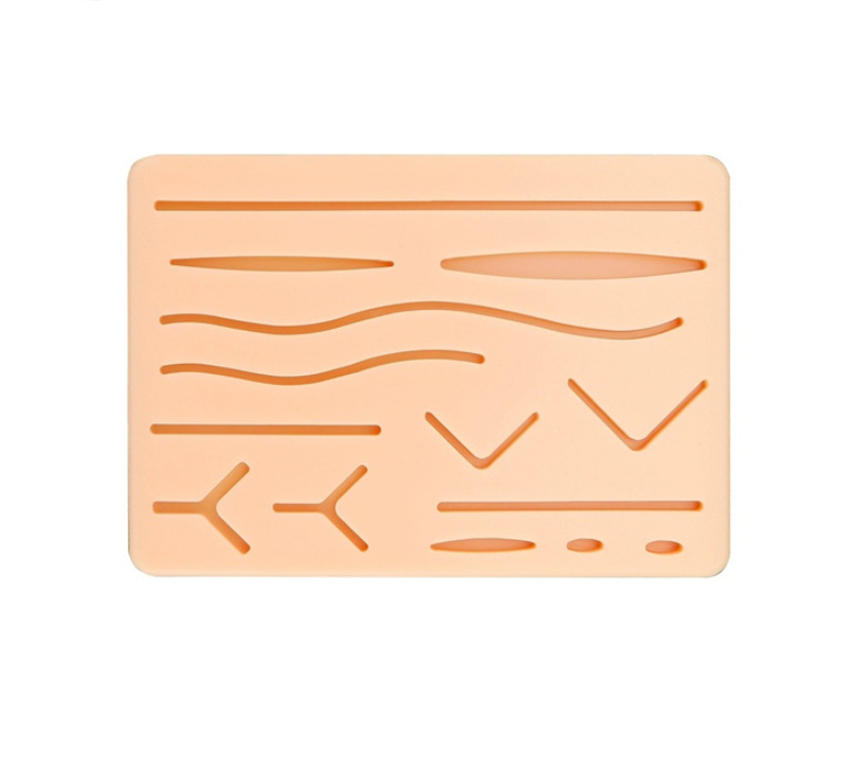
In the high-stakes world of surgery, precision is not just a skill—it is a responsibility. The journey from medical textbook to operating room is paved with countless hours of practice, and for decades, aspiring surgeons have honed their craft on anything from pig skin to rubber mats. But as medical education evolves, so too must the tools we use. Enter the next generation of surgical training: the Three-Color Silicone Suture Practice Pad, a medical skin model engineered not just for practice, but for perfection.
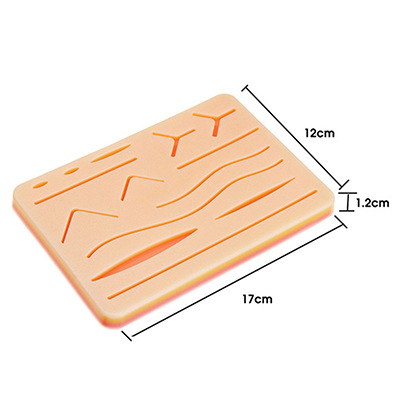
At [silic0ne], we understand that exporting medical training equipment to regulated international markets requires more than just a functional product—it demands excellence in design, safety in materials, and a pathway to compliance. Our 17*12*1.2cm three-layer skin model, crafted from high-quality liquid platinum silicone, is setting a new benchmark for what a “simple practice pad” can achieve. Here is why our model is not just another tool, but a strategic asset for medical institutions worldwide.
The Science of Simulation: Beyond Skin Deep
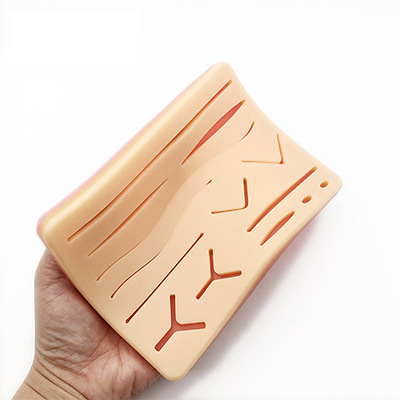
The most critical feedback any trainee receives is tactile. If a practice pad does not feel real, the transference of skills to a living patient is compromised. This is where our three-layer design transcends the competition.
Anatomical Accuracy in a Compact Design
Human skin is not a uniform surface; it is a complex system of layers, each with distinct textures and resistance levels. Our pad replicates this through a tri-laminate structure:
- The Epidermis Layer: A tough, yet flexible outer surface that simulates the friction and tension of real skin.
- The Dermis (Fat) Layer: A soft, forgiving middle layer that provides the “give” necessary for practicing deeper stitches and knot tying.
- The Muscle/Tissue Layer: A durable base that anchors sutures realistically, preventing tearing when tension is applied.
This multi-layer approach is crucial. According to recent studies in surgical education, simulation pads that combine resistance with elasticity—much like our silicone model—are highly effective in building undergraduate medical students’ confidence and competence. When a trainee runs a needle through our pad, they experience the same “pop” through the dermis and the same resistance in the subcutaneous layer that they would encounter in a living patient.
Material Matters: The Liquid Platinum Advantage
Not all silicone is created equal. In the world of medical simulation, material choice is the difference between a disposable piece of plastic and a long-term educational investment.
Food-Grade Safety Meets Surgical Durability
Our pads are manufactured using 100% liquid platinum silicone, the same material standard used in food-grade applications and high-end medical devices. This offers distinct advantages for export markets concerned with user safety and environmental impact:
- Non-Toxic & Odorless: Unlike pads made from PVC or recycled rubber, our model contains no phthalates or volatile organic compounds. It is safe for close-contact use in classrooms and labs.
- Hypoallergenic: Platinum-cured silicone is biocompatible, meaning it will not cause allergic reactions or skin irritations for users during prolonged handling.
Anti-Tear Engineering
One of the biggest frustrations in suture training is when a pad splits or tears after a few uses, rendering it useless. Our advanced composite material is specifically engineered for high-tension resistance. Even when students aggressively pull knots tight—a common habit of beginners—the silicone holds firm. This “anti-rip” quality ensures that a single pad can withstand dozens of suture cycles, making it an economically sound choice for cash-strapped training centers.
Designed for Versatility: From Classroom to Certification

A great training tool must adapt to the curriculum, not the other way around. Our silicone skin model is designed to grow with the student.
A Canvas for Complex Trauma Training
The 17*12cm surface area provides ample space for a variety of incision types. Whether the lesson plan calls for simple interrupted sutures, vertical mattresses, or advanced flap techniques like Z-plasty, our pad accommodates them all. Users can cut new wounds into the pad to simulate specific trauma patterns, allowing instructors to customize challenges for each student.
The “Multi-Wound” Advantage
Pre-cut wound modules are a popular feature in modern suture pads. Our model can be manufactured to include various incision types—linear, curved, and triangular—allowing students to practice different closure techniques on a single pad. This variety ensures that learners are not just memorizing hand motions but are actually problem-solving different wound geometries.
The Export Advantage: Built for Regulatory Success

For international buyers, particularly those in the European Union, North America, and developed Asian markets, the quality of the product is only half the story. The other half is compliance. As a supplier, [silic0ne] recognizes that for our partners to successfully distribute our products, the pathway to certification must be clear.
ISO 13485: The Language of Medical Device Quality
While our suture pads are classified as training manikins (generally considered “low-risk” medical devices or educational aids), they are manufactured in facilities that understand the rigor of medical device quality management systems. International certification often hinges on the manufacturer’s ability to demonstrate consistency. The requirements of standards like ISO 13485—which mandate strict document control, design verification, and risk management—are built into our production ethos.
- Traceability: Every batch of our pads can be traced back to its raw material lot, ensuring that if a issue is ever identified, it can be contained and resolved swiftly.
- Process Validation: Our manufacturing processes for liquid silicone injection are validated to ensure that every pad meets the same specifications for thickness (1.2cm), weight (180g), and layer adhesion.
CE and Beyond
For export to the European market, our product’s material composition and design support compliance with the relevant sections of the Medical Device Regulation (MDR) for non-invasive, non-measuring educational tools. Certifications such as CE (for general safety) and adherence to REACH standards (for chemical safety) are the benchmarks we aim for, ensuring that our partners can import with confidence, knowing the product will clear customs and satisfy local health authorities.
Practicality in Packaging and Logistics

Exporting is not just about paperwork; it is about physical logistics. We have designed our packaging to protect the product while maximizing shipping efficiency.
Retail-Ready Presentation
Each silicone pad is individually wrapped in a non-woven fabric bag to prevent dust accumulation and scratching. This bag is then housed in a sturdy, branded box measuring 20*13*3cm. This “premium unboxing” experience is vital for distributors who sell to hospitals and universities, as it reflects the quality of the contents inside.
Optimized Freight Consolidation
Shipping costs are a major factor in international trade. Our master carton configuration—50 boxes per carton (41.5*34.5*24cm) with a total gross weight of just 12kg—is optimized for air and sea freight. This modular design minimizes wasted volume in shipping containers, allowing our international partners to order in bulk without freight costs spiraling out of control.
The Customization Factor
One size rarely fits all in medical education. Different markets have different teaching emphases. Some universities prefer thicker pads for advanced dissection practice, while others want ultra-thin models for basic introductory classes.
Our product is not a static commodity. Because we control the manufacturing process from the liquid silicone stage, we offer thickness customization. Whether you need a 0.8cm pad for basic knot-tying workshops or a 2.0cm pad for deep-tissue trauma simulation, we can adjust the parameters to meet your market’s specific demands.
Why Choose Our Three-Layer Model?

In a crowded market of suture trainers, standing out requires proof of performance. Here is a summary of the value proposition we offer to international distributors and medical institutions:
- Realistic Haptic Feedback: The three-layer (Skin/Fat/Muscle) structure provides a genuine feel, improving the hand-eye coordination of students.
- Superior Material Science: Liquid platinum silicone is safer, more durable, and more realistic than standard PVC or rubber alternatives.
- Export-Ready Quality: Designed with the principles of ISO 13485 in mind, facilitating smoother regulatory approval in target markets.
- Efficient Logistics: Smart packaging and carton sizing reduce shipping costs and ensure product arrives in pristine condition.
- Sustainability: Durability means less waste. A single reusable pad replaces hundreds of single-use practice materials like synthetic leather or foam.
Conclusion
The future of surgical education is hands-on, ethical, and realistic. As the demand for high-quality medical training soars across the globe—from North America to Southeast Asia—the tools used in the classroom must keep pace. The [silic0ne] Three-Color Silicone Suture Pad is more than a piece of silicone; it is a training platform. It is a testament to how thoughtful design, premium materials, and an understanding of international regulatory landscapes can combine to create a product that truly empowers the next generation of surgeons.
We are not just manufacturing pads; we are partnering with educators to build a safer future for healthcare. For distributors and institutions looking for a reliable, certifiable, and superior training solution, the choice is clear.
Contact [silic0ne] today to discuss wholesale partnerships, customization options, and how we can support your path to market with a product that meets the highest standards of medical simulation.
Contact me for custom procurement.:silicone@silic0ne.com