购物车里没有产品。
 fuyuhuaxue@iumrs.com
There is a particular kind of disappointment that follows a kitchen or dining room renovation. The cabinets are right, the lighting is right, the countertops are exactly what the render promised — and then you look down. The tile grout has already darkened in the high-traffic path between the sink and the table. The engineered wood has a water ring near the dishwasher. The polished concrete looks beautiful but feels cold underfoot and shows every crumb. The floor, which is the largest uninterrupted surface in the room, is the one element that quietly undermines everything above it.
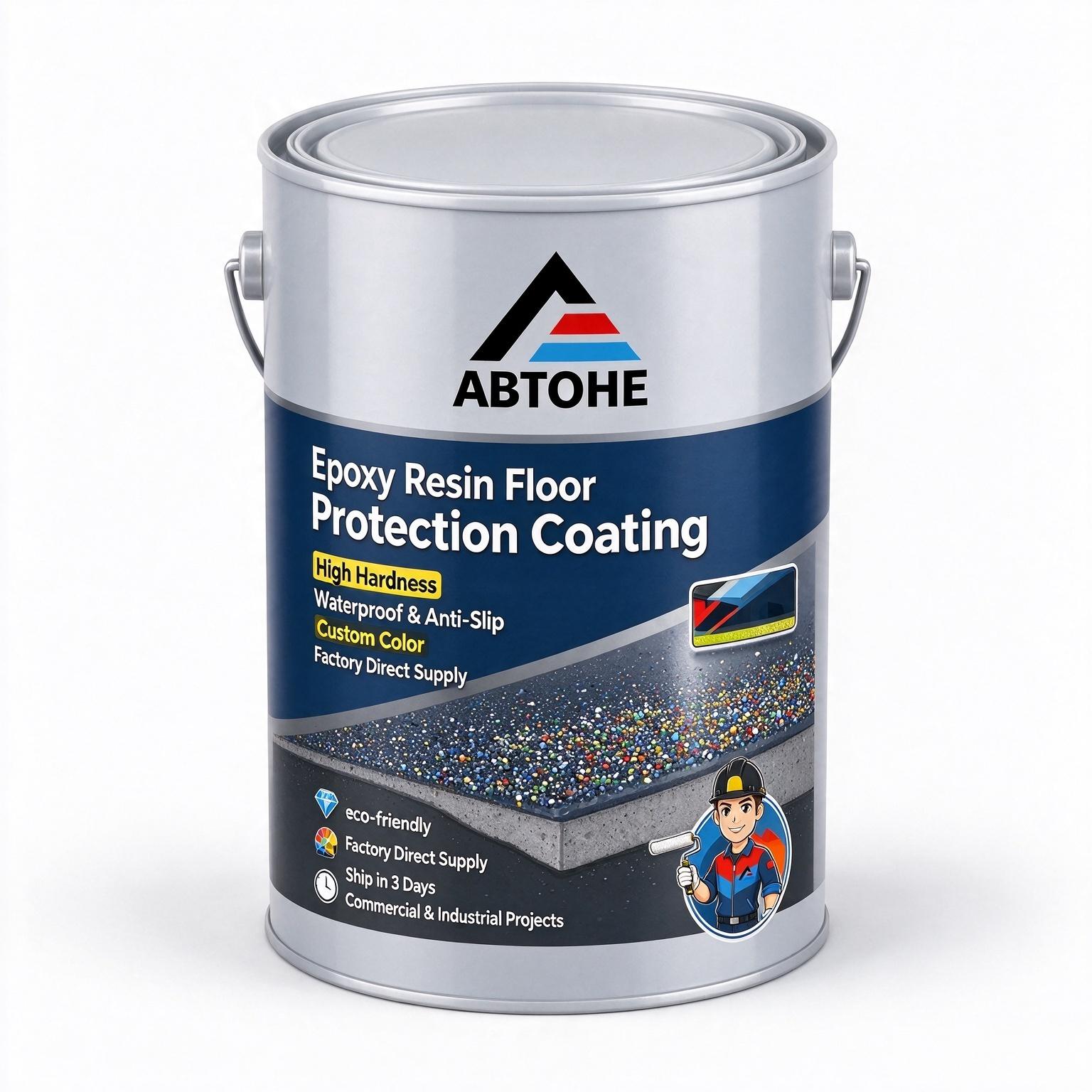
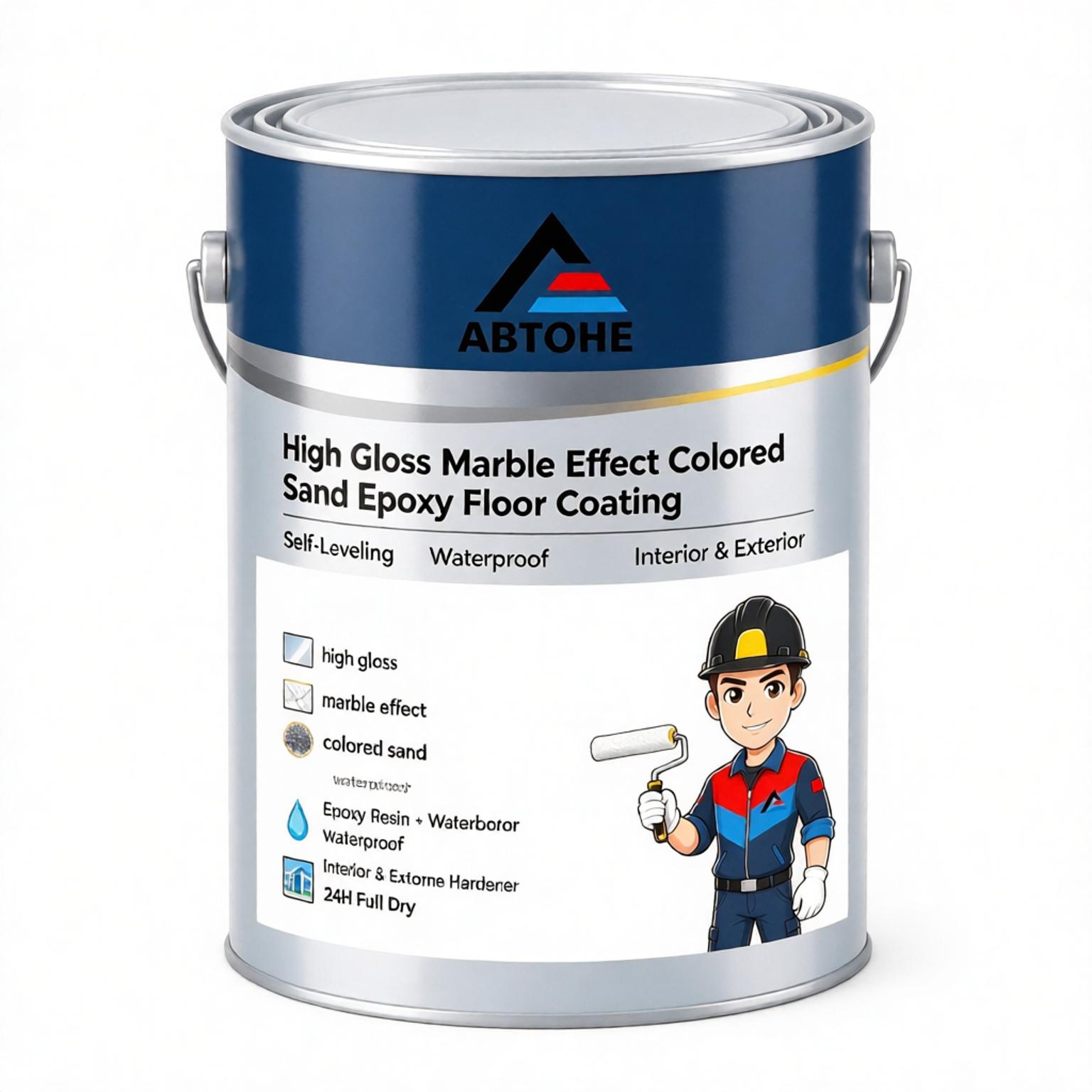
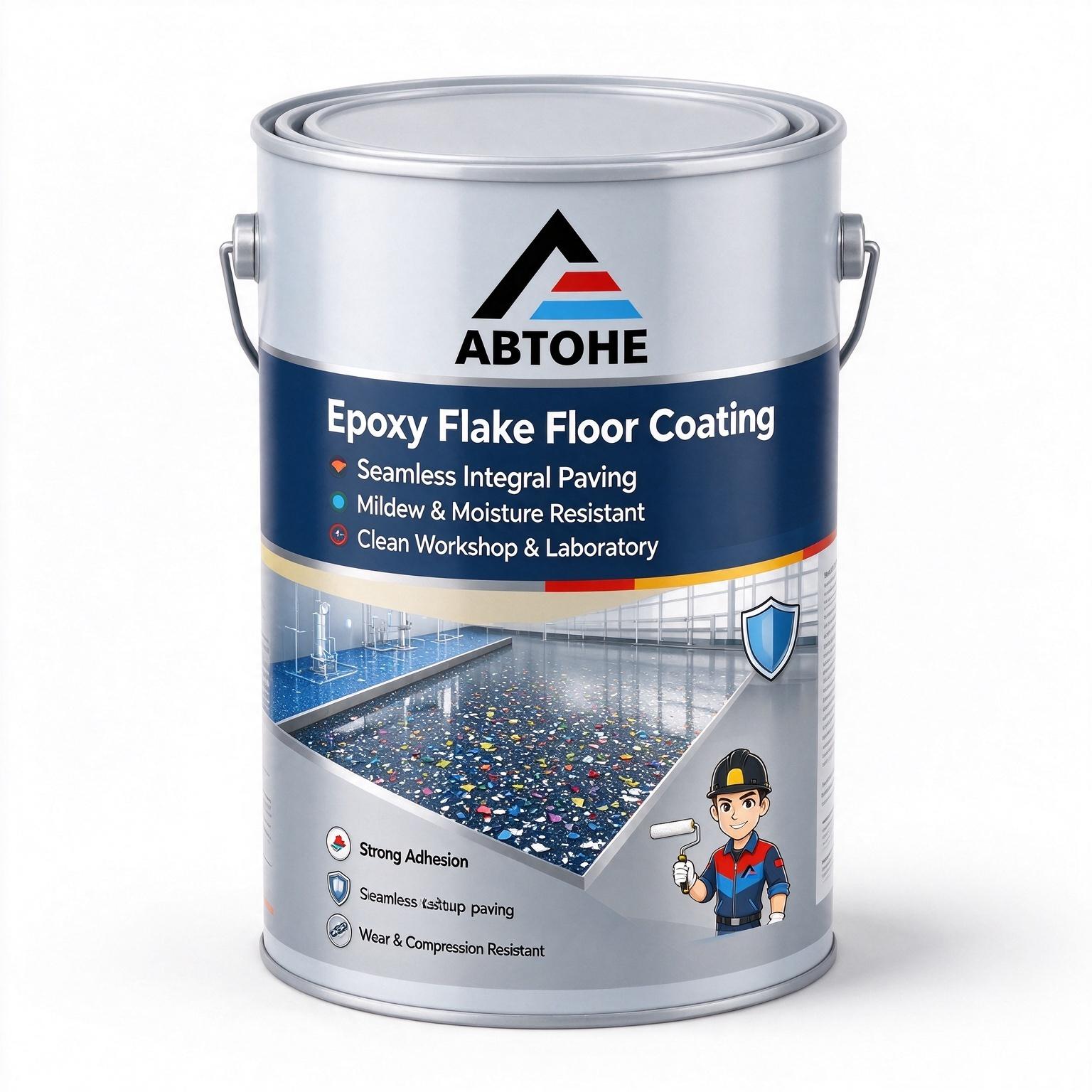
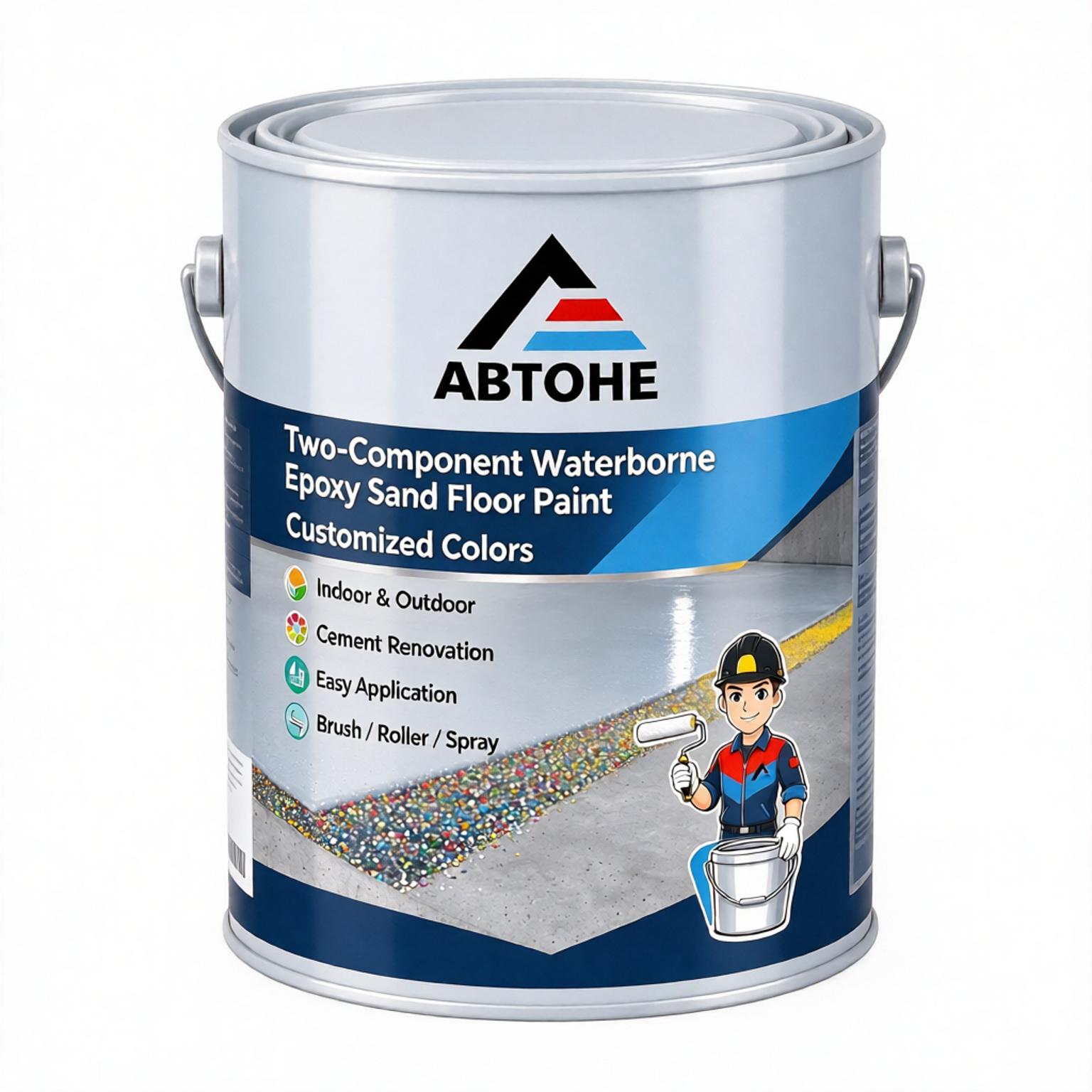
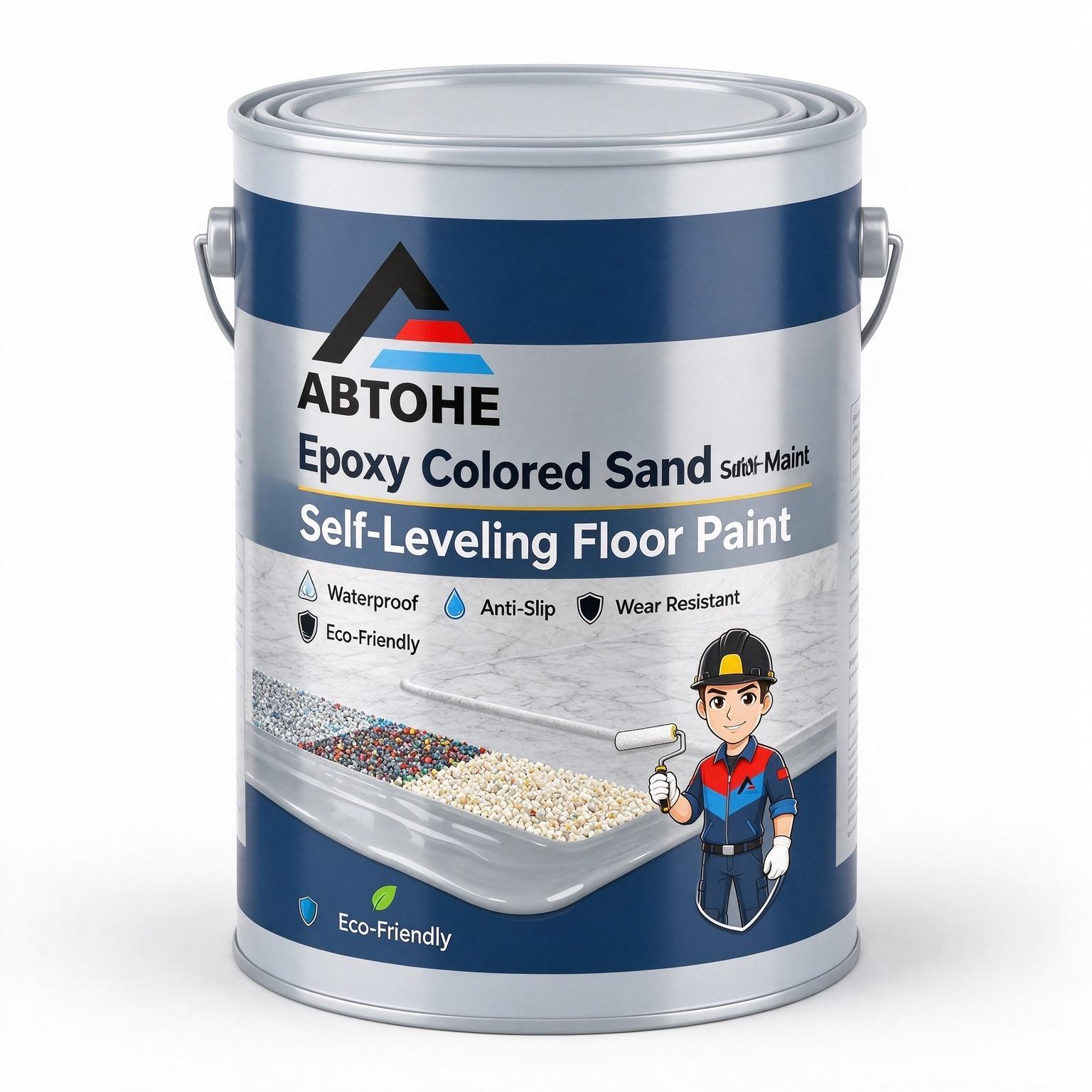
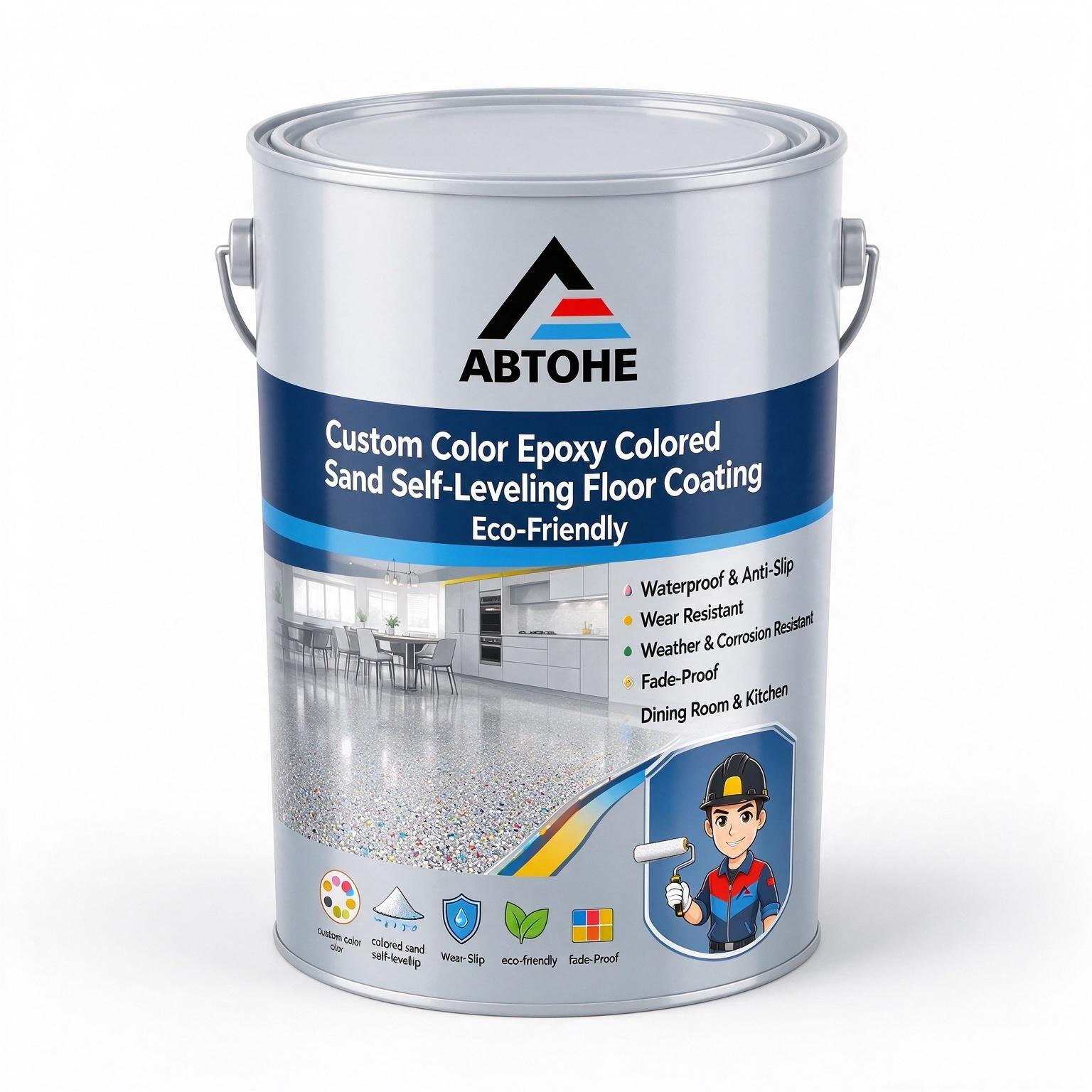
That gap between how a kitchen looks and how it actually lives is what the modern epoxy floor category was built to close. ABTOHE’s custom-color eco-friendly epoxy colored sand self-leveling floor coating — a liquid epoxy system supplied in 25 kg units, identified by CAS No. 25036-25-3 and EINECS No. 45789-03 — is a specification designed for exactly this problem: a seamless, waterproof, anti-slip, wear-resistant surface that can be color-matched to the room rather than imposed on it. It is not a garage coating pressed into domestic service. It is a colored-sand epoxy system engineered for floors, walkways, and interior landscape projects where appearance and durability have to coexist.
Why the Kitchen and Dining Room Are the Hardest Rooms in the House
Designers talk about kitchens and dining rooms in terms of light, flow, and material warmth. Facility-minded people talk about them differently: they are high-traffic, high-moisture, high-spill, high-abrasion environments that happen to be inside a home or a hospitality venue.
Consider the actual duty cycle. Water splashes from the sink and dishwasher. Oil spatters from the hob. Wine, coffee, and citrus juice hit the floor and sit there until someone notices. Chairs are dragged back and forth a dozen times per meal. In a restaurant or canteen, those loads multiply by hundreds of covers per day, and cleaning happens with aggressive chemicals on a schedule. A floor in this room must be waterproof, stain-resistant, slip-resistant when wet, and hard enough to resist abrasion from foot traffic and furniture — while still looking like something a guest would notice for the right reasons.
Most conventional materials solve only part of that list. Tile is waterproof but grout is not, and grout lines become the dirtiest part of the room within months. Laminate and engineered wood are warm but vulnerable to standing water. Polished concrete is durable but unforgiving and slippery when wet. Natural stone is beautiful but requires sealing and reacts badly to acids. Each choice forces a trade-off, and the trade-off is always visible in the same place: the floor.
The Colored Sand Difference: Color That Lives Inside the Floor
The phrase “colored sand epoxy” describes a specific construction, not a marketing flourish. In ABTOHE’s system, color is carried by graded aggregate suspended uniformly through the epoxy matrix, then applied by self-leveling pour to form a continuous film. The color is not a thin tint sitting on the surface; it is distributed through the depth of the wear layer, held in a uniform suspended structure that cures to a flat, seamless surface.
That construction produces three properties that matter in a kitchen or dining room.
First, stable color retention. Because the pigment is carried by the aggregate within the film rather than applied as a surface coating, the color resists fading and wear-through. The product specification describes it as fade-proof with stable color retention, which in practice means the floor in year five looks like the floor in year one — an important consideration in a room where flooring is replaced rarely and disruption is high.
Second, a flat, seamless surface. The self-leveling behavior allows the material to flow and level under its own weight, producing a continuous film with no joints, grout lines, or seams. In a kitchen, that means no place for crumbs, spills, or cleaning residue to collect. In a dining room, it means a surface that reads as one continuous plane — which is precisely the visual quality that makes a room feel designed rather than assembled.
Third, custom color as a design tool. ABTOHE offers customized and various colors, allowing the floor to be matched to cabinetry, wall finishes, brand identity (in hospitality settings), or a specific palette. A warm sand tone for a rustic dining room, a cool gray for a modern kitchen, a deep mineral shade for a restaurant floor — the system can be specified rather than selected from a limited stock range.
Waterproof and Anti-Slip: The Two Properties That Decide Whether the Floor Works
In a kitchen, waterproofing is not a premium feature. It is the baseline requirement. A continuous epoxy film seals the substrate against liquid penetration, which means spills stay on the surface to be wiped away instead of soaking into the floor structure. That protects the substrate from moisture damage, prevents the swelling and delamination that destroy wood-based floors, and denies mold and mildew the damp conditions they need. For dining rooms attached to kitchens — the open-plan layout that dominates modern residential and hospitality design — that continuous waterproof barrier extends across the entire space, eliminating the transition strip where water usually finds its way.
Anti-slip performance is the safety counterpart. A high-gloss floor looks spectacular in photographs and becomes hazardous the moment someone carries a wet plate across it. The colored-sand construction provides mechanical texture through the aggregate, delivering grip even when the surface is wet. That matters in kitchens, where spills are routine, and in dining rooms, where chairs, children, and serving staff move constantly. The specification describes the surface as anti-slip and durable — a combination that is easy to claim and harder to engineer, because slip resistance and cleanability usually pull in opposite directions. A properly graded colored-sand surface resolves that tension: enough texture for grip, smooth enough to mop and sanitize.
Wear Resistance and Corrosion Resistance: Built for Real Cleaning Regimens
Kitchens are cleaned more aggressively than any other room in a building. Degreasers, descalers, sanitizers, and acidic cleaners are applied routinely, and a floor that cannot tolerate them will stain, soften, or lose its finish within a year.
ABTOHE’s system is formulated for wear resistance and corrosion resistance, with the specification citing excellent weather and corrosion resistance alongside wear-resistant, anti-slip, and durable performance. In practice, that means the cured film resists the chemical exposure of a working kitchen while maintaining its surface integrity under foot traffic, furniture movement, and equipment. The wear resistance also extends the recoat interval, which matters in commercial dining rooms where closing for floor maintenance is expensive and in residential kitchens where the disruption is simply unwelcome.
The high bonding strength to the resin base is the property that holds all of this together. A coating that does not bond firmly will eventually lift at the edges, blister over moisture, or delaminate under thermal cycling — and once that begins, the floor must be repaired rather than maintained. Strong adhesion to the prepared substrate is what allows the system to function as a seamless integral surface rather than as a film sitting on top of the floor.
Eco-Friendly Formulation: A Kitchen Is Not a Factory
The eco-friendly positioning of this system deserves attention because a kitchen is an occupied, food-adjacent environment. Application odor, residual emissions, and indoor air quality matter in ways they do not in an unoccupied warehouse.
ABTOHE’s product is described as eco-friendly, which in the epoxy category typically reflects lower odor and reduced solvent content relative to traditional solvent-based systems. For residential clients, that means the renovation does not require the family to vacate for an extended period. For restaurants and hospitality operators, it means the floor can be installed in a phased schedule with less disruption to service and less ventilation burden. For specifiers working on green-building or health-focused projects, it aligns the flooring choice with the indoor environmental quality criteria that increasingly appear in project requirements.
It is worth being precise here: eco-friendly is a formulation property, not a license to skip preparation or cure time. The system is a liquid epoxy that requires correct mixing, proper substrate preparation, and adequate cure before service. The environmental benefit is in the emissions profile and the service life — a floor that lasts longer and requires less chemical cleaning over its life has a lower environmental burden than one that must be replaced and scrubbed aggressively.
Where the System Belongs: Beyond the Dining Room
The product specification lists flooring, walkways, and landscape projects as its application range, and that breadth is worth understanding because it reflects the system’s performance envelope rather than a limitation to domestic interiors.
Dining rooms and kitchens — residential and commercial — are the headline application, where waterproofing, anti-slip performance, chemical resistance, and custom color converge.
Walkways benefit from the wear resistance and weather resistance of the system. An epoxy colored-sand surface can handle foot traffic and exterior exposure while maintaining color stability, making it suitable for covered walkways, corridors, and circulation routes in hospitality and landscape settings.
Landscape projects use colored-sand epoxy for decorative hardscape elements, pathways, and feature surfaces where color consistency and fade resistance matter. The stable color retention and seamless finish allow the material to function as a design element rather than merely a utilitarian surface.
In each case, the common requirement is the same: a continuous, waterproof, wear-resistant surface with color that holds and texture that grips. The room changes; the engineering does not.
Specification and Logistics: What Buyers Need to Know
For contractors, specifiers, and distributors evaluating the system, the practical details are as important as the performance claims.
The product is identified by CAS No. 25036-25-3 and EINECS No. 45789-03, with epoxy as the main raw material and the molecular formula listed as epoxy. Those identifiers matter for import documentation, material safety review, and project submittals — the paperwork that determines whether a product can actually be used on a job.
It is supplied as a liquid coating applied by self-leveling method, which means it flows and levels under its own weight to produce a uniform, seamless film. Application requires proper substrate preparation, correct mixing, and controlled placement; self-leveling is a property of the material, not a substitute for applicator skill.
Packaging is a single-item selling unit with a package size of 65 × 35 × 35 cm and a gross weight of 25.0 kg, which is a practical contractor unit for mixing and placement. The minimum order quantity is 1000 KG, positioning the product for project-scale procurement — residential developments, hospitality fit-outs, commercial kitchen programs, and landscape contracts — rather than single-room retail purchase. That MOQ reflects the reality of epoxy flooring: it is specified at project level, where color consistency across a large area matters and where material must arrive in sufficient quantity for a continuous pour.
ABTOHE manufactures in Hebei, China, a region with established coatings and chemical production infrastructure. For buyers, the combination of traceable identifiers, project-scale packaging, custom color capability, and eco-friendly formulation provides the documentation and flexibility that specification work demands.
The Floor That Makes the Room Work
A kitchen or dining room is judged by how it feels when it is full — of people, of plates, of noise, of light. The floor is the surface that carries all of it. When it is right, no one notices it. When it is wrong, it is the first thing that shows: darkened grout, water stains, a slip near the sink, a color that has faded out of step with the cabinetry.
ABTOHE’s custom-color eco-friendly epoxy colored sand self-leveling coating is engineered to be the surface that no one has to think about. It bonds firmly to the substrate. It cures to a flat, seamless, uniform surface with color suspended through the film. It resists water, wear, and chemical exposure. It provides grip when wet. It holds its color. And it can be specified in the shade that belongs in the room rather than the shade that happened to be in stock.
For the homeowner, it is a floor that survives real life. For the restaurateur, it is a floor that survives service. For the specifier, it is a system with traceable identifiers, project-scale packaging, and a performance profile that matches the duty cycle of the hardest-working rooms in the building. The dining room is where people gather. The floor beneath it should be the one thing that never asks for attention.