购物车里没有产品。
 fuyuhuaxue@iumrs.com
Every building owner eventually faces the same unwelcome conversation. The cement floor in the basement, the back hallway, the garage, the stairwell, or the exterior walkway has reached the age where it no longer looks like a floor — it looks like a liability. It dusts underfoot, stains from every spill, cracks at the corners, and refuses to hold a cheap hardware-store coating for more than a season. The renovation is necessary. The problem is everything that comes with it: the solvent smell that clears the building, the multi-day cure window that shuts down the space, the specialized spray equipment, the contractor mobilization fees, and the disruption that turns a weekend project into a two-week negotiation.
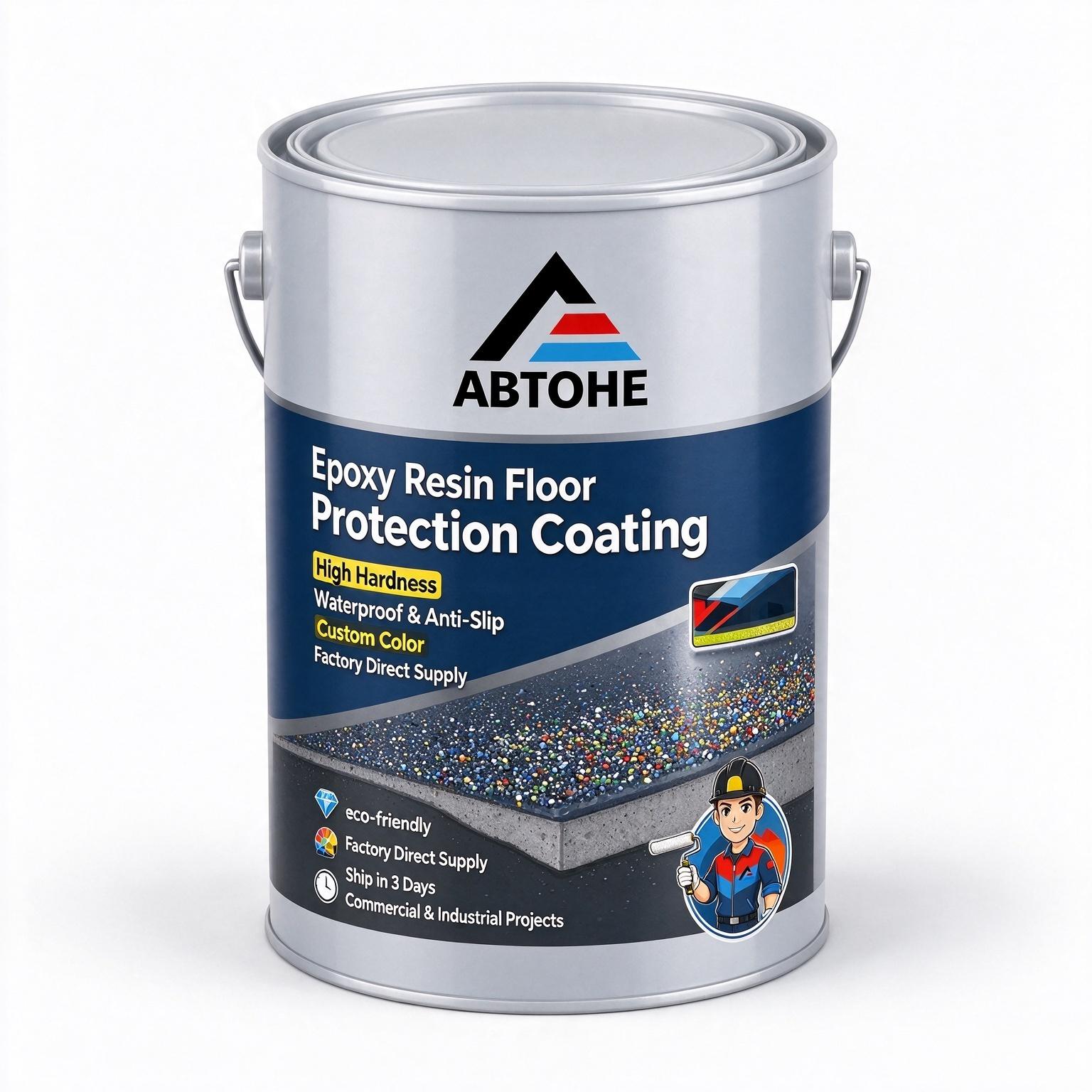
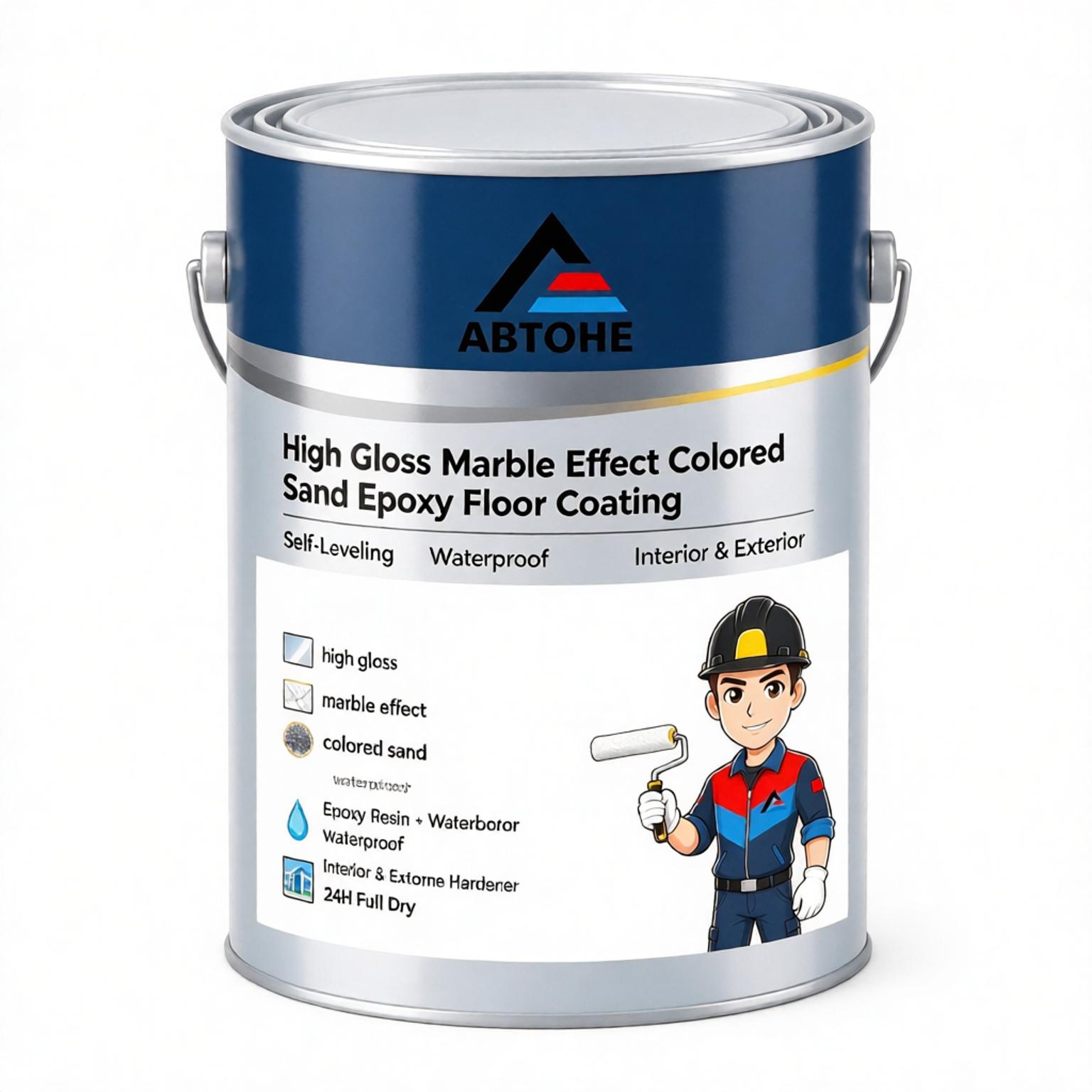
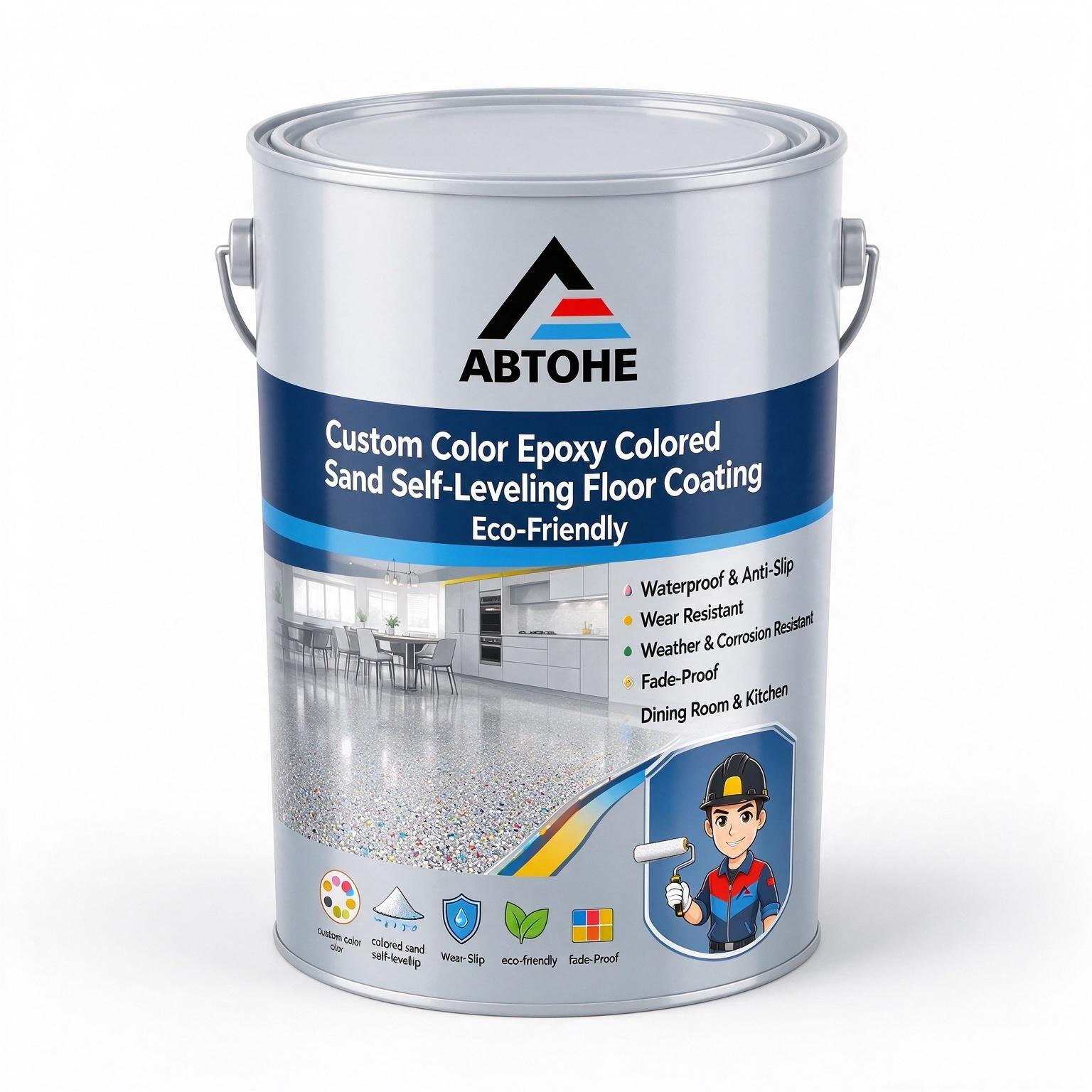
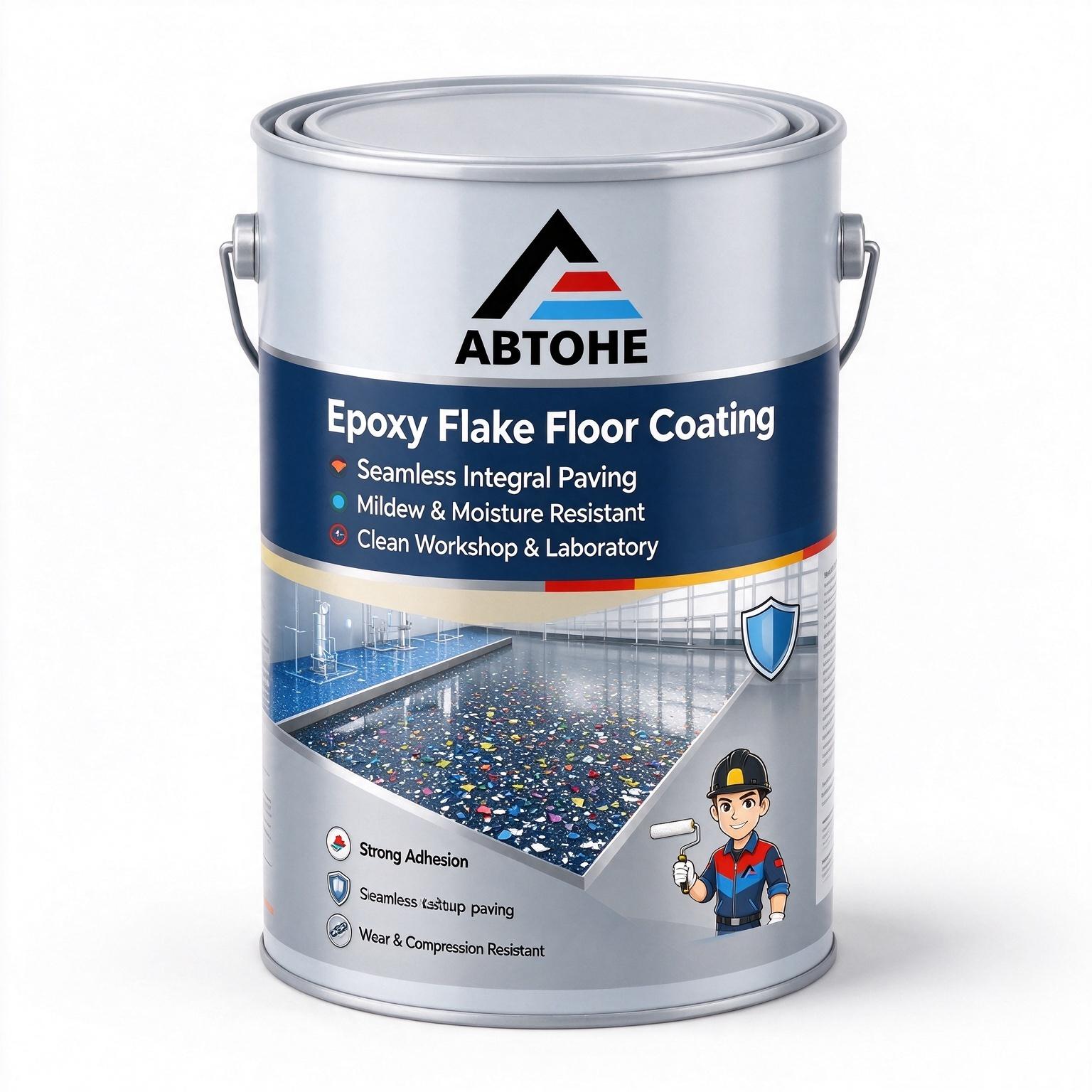
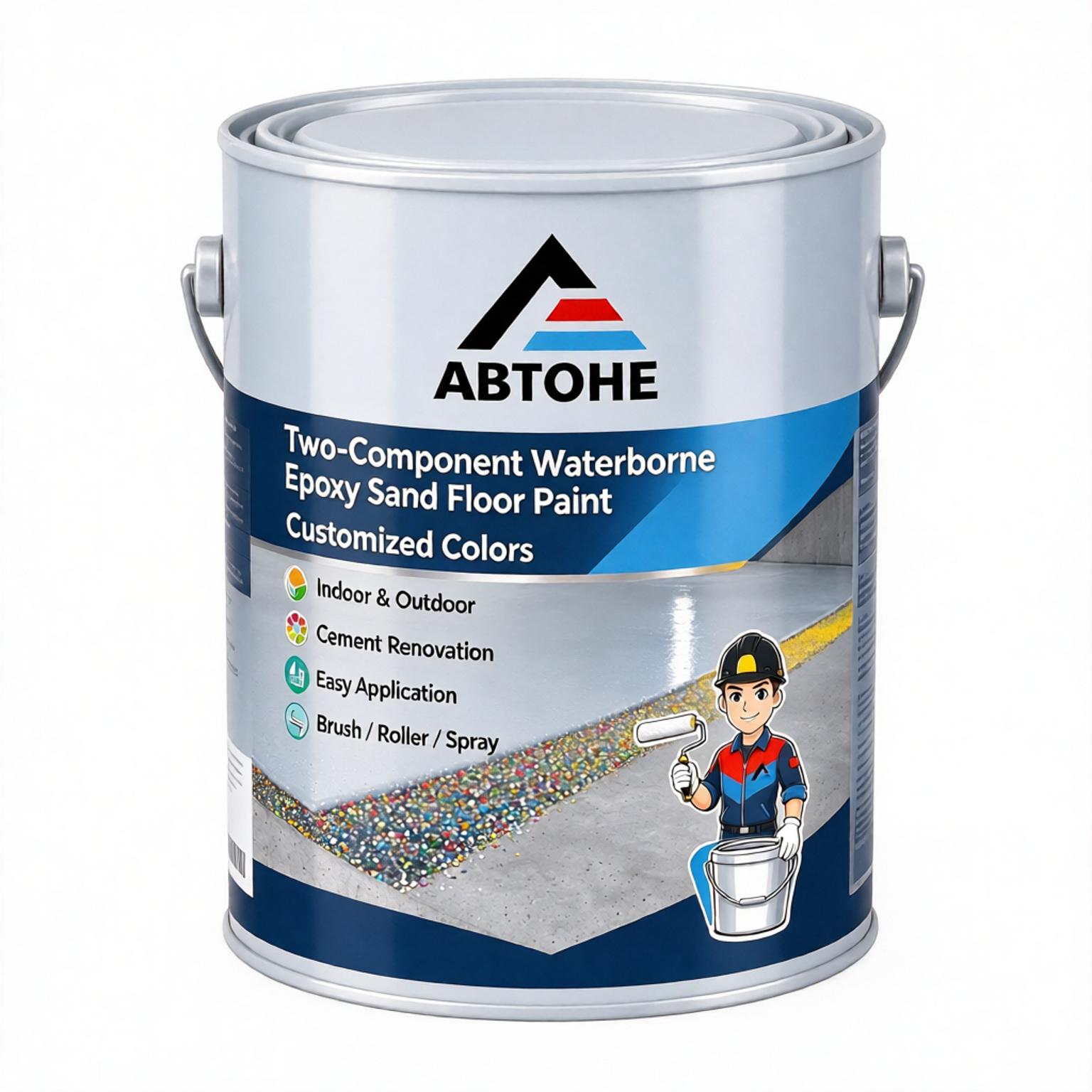
That friction is exactly why waterborne epoxy systems have moved from the margins of the coatings market to the center of renovation planning. ABTOHE’s customized two-component waterborne epoxy floor paint — supplied under the product name Epoxy Sand Floor Paint — is built for the renovation scenario rather than the new-build showroom: easy brush application, low-odor waterborne chemistry, customizable multicolor finishes, and a specification that works indoors, outdoors, on floors, staircases, and walls. It is a floor coating designed to be the least difficult part of a difficult project.
The Waterborne Difference: Chemistry That Fits Occupied Buildings
Traditional solvent-based epoxy coatings deliver excellent durability and a solvent odor that makes them impractical for occupied buildings, schools, hospitals, retail spaces, and residential renovations. The smell is not merely unpleasant; it signals VOC emissions that require ventilation, evacuation, and often a compliance conversation with the building’s environmental health team.
Waterborne epoxy chemistry changes that operating profile. By using water as the carrier rather than an organic solvent, the system substantially reduces odor and VOC content during application, allowing work to proceed in buildings that cannot be emptied. For renovation projects — the category where the building is usually still in use — this is the single most consequential property of the coating. It determines whether the project happens at all.
ABTOHE’s product is a two-component system, meaning the resin and hardener are supplied separately and mixed immediately before application. That format is what gives waterborne epoxies their performance: the crosslinking reaction that occurs after mixing produces a cured film with adhesion, water resistance, and wear properties that a single-component water-based paint cannot approach. The two-component architecture is the reason this product belongs in the epoxy category rather than the paint category — and the reason it can be specified for cement renovation rather than merely cosmetic refresh.
Easy Brush Application: The Specification That Saves the Project
Most industrial floor coatings are applied with specialized equipment: spray rigs, planetary grinders, trowels, squeegees. Each piece of equipment adds mobilization cost, requires trained operators, and creates a scheduling dependency. For a small renovation — a stairwell, a utility room, a residential garage, a back-of-house corridor — the equipment cost can exceed the material cost.
ABTOHE’s system is specified for brush application as its primary method, with roller coating and spray coating supported as alternatives. That single design decision opens the product to a much wider range of users: maintenance staff, small contractors, facility teams, and competent DIY renovators who can produce a professional result with tools they already own. The product is supplied in 1KG, 1.6KG, and 5KG specifications, which aligns the packaging with the scale of renovation work rather than forcing small projects to buy industrial volumes.
For larger projects, brush and roller application remain viable — they simply take longer — and spray application is available for high-throughput work. The flexibility means a single product can serve a stairwell touch-up and a warehouse floor program without changing formulation.
Coverage Math That Respects the Budget
Coatings are frequently mis-estimated, and the consequences are predictable: a job that runs short mid-application, a second order that arrives after the cure window has closed, or a surplus of material that sits in the storeroom until its shelf life expires.
ABTOHE publishes a theoretical dosage of approximately 1.6 kilograms per square meter, with the explicit caveat that consumption varies with substrate roughness. That caveat is important and honest. A smooth, well-prepared cement floor will consume close to the theoretical rate. A rough, porous, or heavily profiled substrate will absorb more material, and a proper estimate must account for it. For contractors, the practical approach is to measure the substrate, prepare it thoroughly, and add a roughness allowance — typically a meaningful percentage on old, weathered cement.
The 1KG, 1.6KG, and 5KG packaging aligns with the coverage math: 1.6 kg covers roughly one square meter at theoretical rate, making the small pack a natural sample-and-touch-up unit. Combined with a minimum order quantity of just one piece and available samples, the product is structured so that buyers can validate performance on their actual substrate before committing to a full project quantity. That is a meaningful risk reduction in a category where substrate variability is the leading cause of coating failure.
Indoor, Outdoor, Floor, Staircase, Wall: One System Across the Whole Renovation
Renovation projects rarely involve a single surface type. A typical building upgrade touches floors, stair treads, landings, walls, and exterior walkways — each with different exposure profiles. Specifying a separate product for each surface multiplies procurement complexity and creates color-matching problems at every transition.
ABTOHE’s system is specified for outdoor and indoor use across ground surfaces, staircases, and walls. That breadth is achieved through the waterborne epoxy platform: adequate adhesion to cementitious substrates, water resistance for exterior exposure, and a cured film that can be applied vertically on walls and stair risers without sagging when applied at appropriate film thickness. For renovation projects, the practical benefit is a single material, a single color specification, and a single supplier across the entire scope — which simplifies both the purchase order and the finished result.
The exterior application deserves emphasis because it is where waterborne coatings are often unfairly doubted. A properly formulated two-component waterborne epoxy cures to a film that resists moisture and weathering, making it suitable for exterior decoration on cement surfaces. The 12-month shelf life is a further practical advantage for phased renovation programs: material purchased for phase one remains usable in phase two if stored correctly.
Customized Multicolor: Because Renovation Is Also a Design Decision
The product supports customized colors, and the “multicolor” capability is more than a decorative feature. In renovation work, the floor is frequently the largest uninterrupted visual surface in the space, and its color determines whether the finished room reads as renovated or merely patched.
Customized color allows the coating to match existing finishes, brand palettes, wayfinding schemes, or architectural intent. For property managers, it allows a uniform standard across multiple buildings. For designers, it allows the floor to participate in the interior concept rather than defaulting to gray. For contractors, it removes the color-matching argument that arises when a stock shade does not match the client’s expectation.
The product is also available with customized packaging, which matters to distributors and brands building their own product lines. Combined with OEM capability, the platform supports private-label programs without requiring a formulation partner to build a new system for every customer.
The Practical Details That Determine Whether a Project Succeeds
A coating succeeds or fails on details that rarely appear in marketing copy but always appear in the submittal package.
Shelf life of 12 months gives contractors and facility teams a realistic inventory window for phased work. It also signals formulation stability — a poorly stabilized waterborne epoxy can settle, skin, or lose reactivity well before a year.
Two-component format requires correct mixing ratio discipline. The resin and hardener must be combined exactly as specified, mixed thoroughly, and used within the working window. Waterborne systems are less forgiving of sloppy mixing than solvent-based paints, and the applicator’s technique directly determines whether the cured film achieves its adhesion and water-resistance potential.
Surface preparation remains the largest single variable. Cement renovation always involves cleaning, degreasing, and profiling the substrate. The theoretical dosage of 1.6 kg/㎡ assumes a prepared surface; on a dusty, oily, or laitance-covered slab, no coating will perform. The waterborne chemistry is forgiving in odor and application, not in substrate tolerance.
Application method flexibility — brush, roller, or spray — gives the applicator options for different geometries. Brush application is best for edges, stair treads, and detail work; roller for broad floor areas; spray for large, open surfaces where throughput matters.
Packaging and logistics are structured for real orders: single-item selling units, a compact single package size of 11 × 11 × 13.8 cm, and a single gross weight of 1.12 kg for the small pack. That is a shippable, storable, sample-friendly configuration — not an industrial drum that requires a forklift and a dedicated storage bay.
The Manufacturer and the Supply Chain
ABTOHE’s waterborne epoxy system is manufactured in Gansu, China, and the product carries the technical identifiers that procurement and compliance teams require: CAS No. 79-10-7 and EINECS No. 201-177-9, with the molecular formula C3H4O2 reflecting the acrylic component chemistry that supports the waterborne formulation. For importers and industrial buyers, traceable identifiers matter as much as performance claims, because they determine whether a product can clear customs and satisfy project documentation requirements.
The brand’s broader flooring portfolio — self-leveling epoxy resins, wear-resistant floor paints, colored-sand decorative systems — positions this waterborne product within an integrated platform rather than as an isolated SKU. For a facility manager specifying a multi-zone renovation, that means a single supplier relationship can cover the warehouse floor, the stairwells, the exterior walkway, and the decorative front-of-house areas.
The Renovation That Finally Gets Done
The reason bad floors stay bad is rarely that the owner cannot afford the coating. It is that the project is too disruptive, too smelly, too equipment-intensive, or too risky to schedule. Waterborne epoxy removes each of those objections in turn: low odor makes occupied buildings viable, brush application removes the equipment barrier, flexible packaging and a one-piece minimum order lower the commitment threshold, samples and customizable color reduce the specification risk, and a broad surface scope consolidates the whole renovation into a single purchase.
ABTOHE’s two-component waterborne epoxy floor paint is not the most exotic product in the coatings market. It is something more useful: a coating designed around the actual conditions of renovation work — the occupied building, the small contractor, the mixed-surface scope, the color-sensitive client, the budget that cannot absorb a failed first attempt. It applies with a brush, cures to a waterproof, wear-resistant, customizable surface, and works indoors, outdoors, on floors, staircases, and walls.
That is what a renovation-grade coating looks like when it is designed by people who understand that the hardest part of the project is not the chemistry. It is everything that happens around it.