购物车里没有产品。
 fuyuhuaxue@iumrs.com
There is a line item that rarely appears on a capital expenditure request, yet quietly drains more operating budget than almost any piece of equipment on the plant floor: the surface beneath the forklifts, the pallets, the chemical totes, and the thousand daily impacts that no one photographs. Concrete dust. Coating failure. Repeated patch-and-recoat cycles. Each one looks like a maintenance decision. Together, they form a slow financial hemorrhage.
The global industrial floor epoxy coatings market is responding to this reality at scale—projected to expand from roughly USD 1.8 billion in 2025 toward USD 3.0 billion by 2034, a 6.6% compound annual growth rate. That growth is not driven by aesthetics. It is driven by facilities discovering that the right floor system changes the arithmetic of ownership. Within that shift, two ABTOHE systems—Self-leveling Dust-proof Epoxy Resin Floor Paint and Wear-resistant Epoxy Floor Paint—occupy complementary positions: one engineered for a seamless, dust-free, easily maintained surface; the other built for the mechanical punishment of heavy traffic. Understanding when to deploy each, and why the distinction matters, is the difference between a floor that performs and a floor that merely exists.
The Dust Problem Is a Cost Problem
Concrete dust is often treated as a cosmetic nuisance. It is not. Airborne particulate generated by forklift tires and foot traffic settles on product, contaminates clean zones, accelerates equipment wear, and triggers cleaning labor that never appears on a floor-coating quote. A UK food distribution hub that replaced failing concrete with a seamless epoxy resin system reported a 40% reduction in cleaning time after installation, with dust contamination eliminated across 3,000 square metres. The coating did not simply look better. It removed a recurring labor burden from the operating budget.
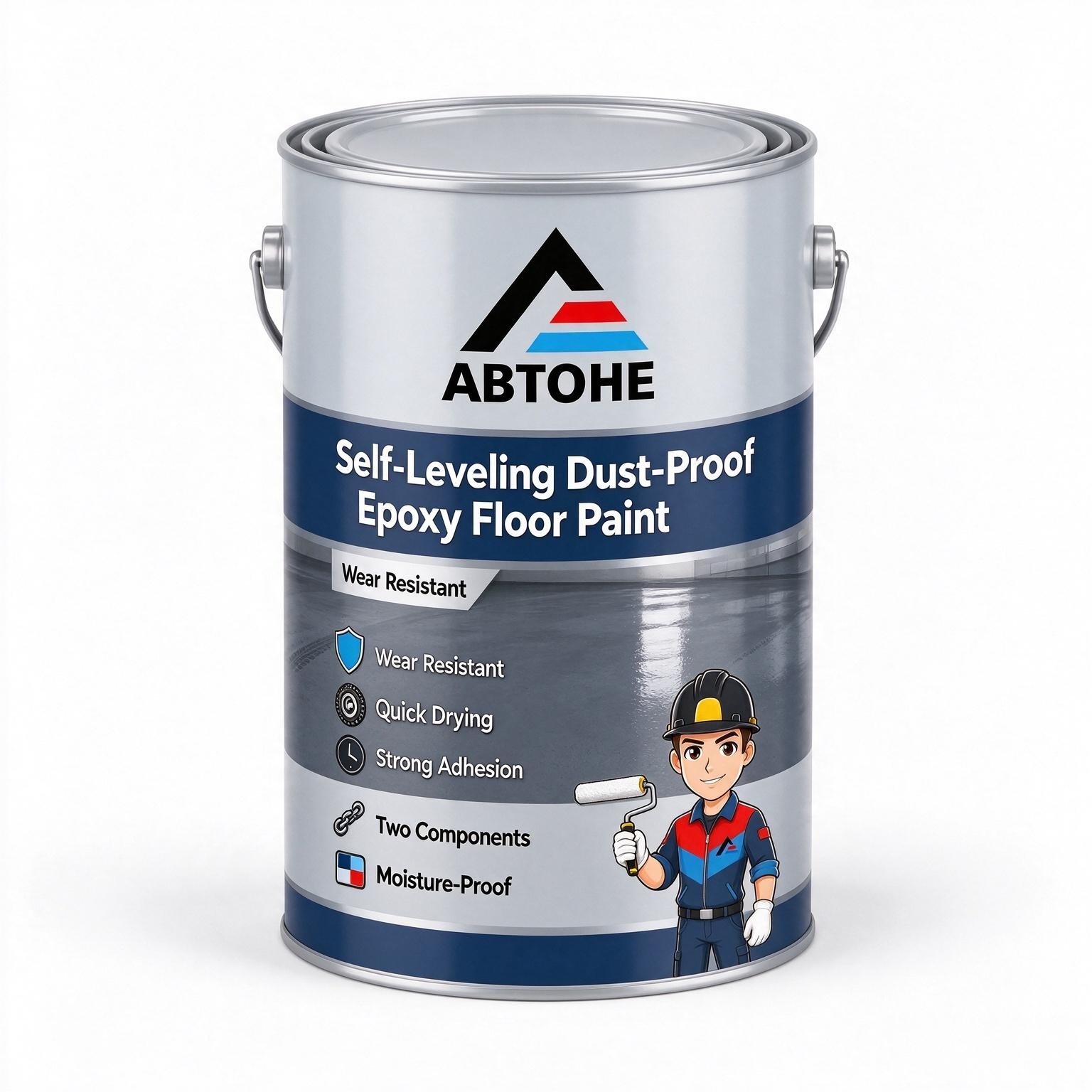
Self-leveling epoxy addresses this by forming a continuous, mirror-smooth membrane that leaves no seams for dust to accumulate and no porous surface for concrete particles to escape. ABTOHE’s self-leveling formulation flows and levels under its own weight after application, producing a dense, non-porous film that is impervious to water and liquids. For electronics workshops, precision instrument rooms, cleanrooms, and logistics facilities where particulate control is non-negotiable, this is not a premium feature—it is the baseline requirement. The floor stops shedding. The cleaning regimen simplifies. The hidden cost of “just living with” concrete dust disappears.
Two Systems, Two Distinct Jobs
A common specification error is treating “epoxy floor” as a single product category. Self-leveling and wear-resistant systems solve different problems, and conflating them produces either over-engineering or premature failure.
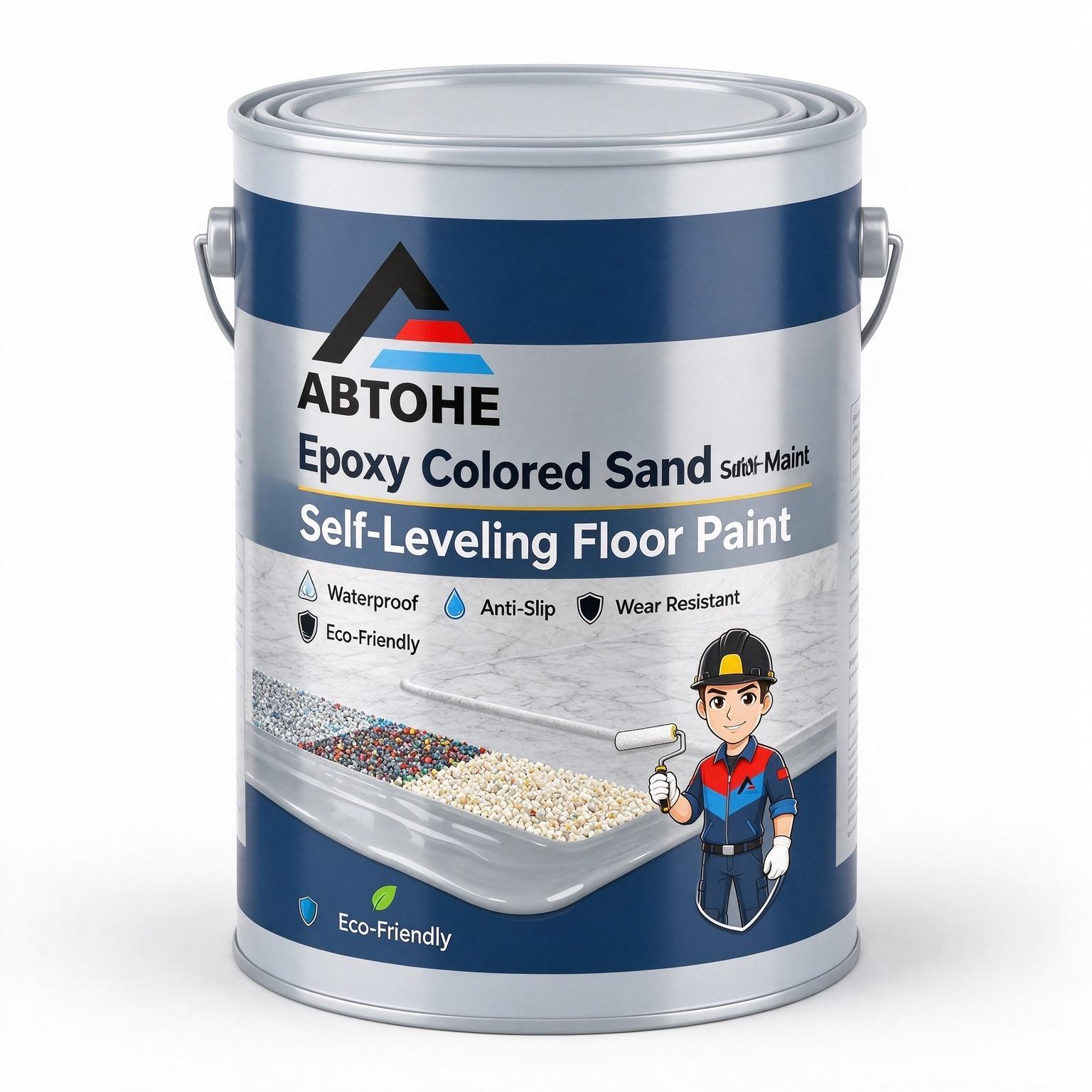
Self-leveling epoxy is the surface-quality specialist. Applied at 2–3 mm, it delivers a seamless, high-gloss finish with excellent chemical resistance and compressive strength, while significantly reducing application time and allowing areas to be returned to service quickly. Its value proposition is cleanliness, hygiene, and a uniform surface that is easy to clean and sanitize. It suits environments where the floor must look and behave like a controlled surface: laboratories, electronics manufacturing, commercial retail, and clean logistics zones.
Wear-resistant epoxy floor paint is the mechanical workhorse. Formulated for high-build, high-impact performance, it prioritizes abrasion resistance, impact strength, and adhesion under repeated loading. Solvent-free wear-resistant epoxy coatings are specified for chemical plants, food processing floors, automotive manufacturing, and dock areas where moisture, chemical exposure, and forklift traffic converge. Where self-leveling optimizes surface continuity, wear-resistant systems optimize surface survival.
The practical distinction is not a hierarchy—it is a routing decision. Put self-leveling where cleanliness and finish integrity drive the operation. Put wear-resistant epoxy where the floor is a load-bearing, abrasion-exposed asset. Many facilities need both, zone by zone.
The Arithmetic of Durability
Epoxy flooring carries a reputation for higher upfront cost than bare concrete or thin-film paints. That comparison is misleading because it ignores the denominator: time. Epoxy systems run approximately $0.20 to $0.50 per square foot annually in maintenance, with recoat cycles of 5 to 10 years depending on traffic intensity. A well-specified epoxy floor can extend floor life by more than a decade, reducing long-term refurbishment costs and delivering a compelling return on investment. Facilities that invest in advanced curing and coating systems report a 19% reduction in maintenance downtime and a corresponding lift in operational uptime.
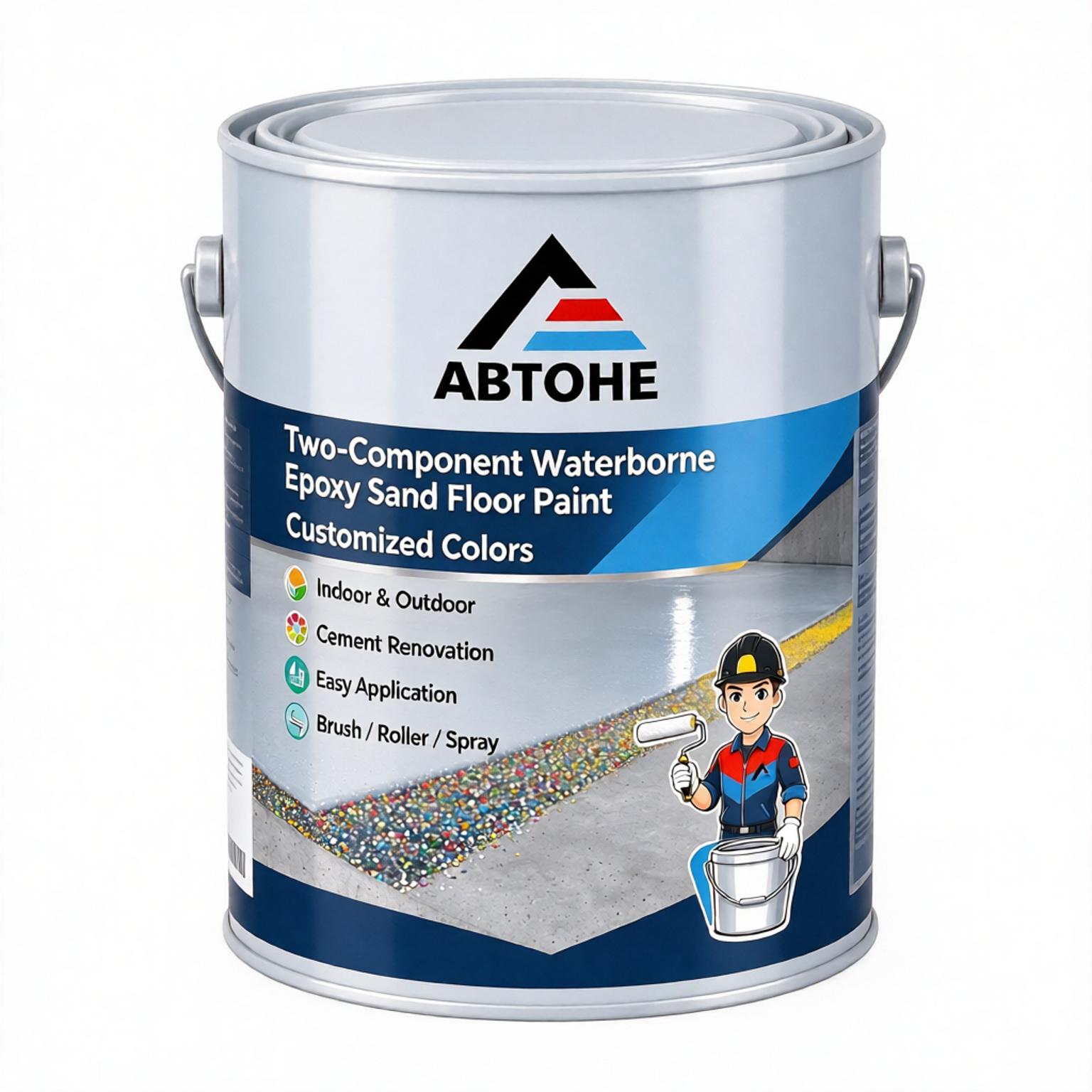
ABTOHE’s systems are designed around this lifecycle logic. The two-component formulation delivers strong adhesion to prepared substrates, quick drying characteristics, and ease of application by brush or roller—properties that reduce labor intensity and allow recoating within practical windows. The water-based variant further lowers VOC content and odor, aligning with LEED and other green-building criteria that increasingly shape procurement decisions in chemical, food, and pharmaceutical sectors. The coating is not an expense to be minimized. It is an asset that compounds its return every year it stays intact.
Where ABTOHE Fits: Guangdong Manufacturing, Global Delivery Logic
ABTOHE operates from Guangdong, China—a region that has become a dense cluster of epoxy resin and floor coating manufacturing, with established export infrastructure serving Southeast Asia, the Middle East, Europe, and beyond. That geographic position matters less as a marketing claim and more as a supply-chain fact: proximity to raw material integration, curing-agent production, and mature coating formulation expertise compresses lead times and supports consistent batch quality for export customers.
The product configuration reflects practical field requirements. Two-component packaging in 20 kg buckets, a 100 kg minimum order quantity, and brush-or-painting application compatibility mean the system can be specified for projects ranging from a single cleanroom retrofit to a multi-zone warehouse program without reformulation. Color matching against a standard chart allows facilities to maintain visual consistency across zones while routing self-leveling and wear-resistant systems to the areas that need each. The CAS and EINECS references—24969-06-0 and 231-072-3—provide the regulatory traceability that industrial buyers and import compliance teams require before a drum is opened.
Choosing the Surface That Chooses You Back
The most expensive floor in a facility is rarely the one with the highest installation quote. It is the one whose maintenance program cannot be sustained—the coating that fails in a high-traffic forklift zone eighteen months after a budget specification, forcing a replacement that costs three times the original bid. Conversely, a self-leveling system installed in a restaurant kitchen or a thermally demanding environment can fail just as predictably when the application does not match the exposure.
ABTOHE’s two systems offer a way to stop guessing. Self-leveling Dust-proof Epoxy Resin Floor Paint for the zones where dust control, hygiene, and seamless finish are the operating mandate. Wear-resistant Epoxy Floor Paint for the zones where abrasion, impact, and heavy traffic define the duty cycle. Both are liquid coatings, both are two-component, both are applied by brush or roller, and both are built on the same formulation discipline: strong adhesion, quick drying, and ease of application without sacrificing film integrity.
The floor beneath the operation is not passive infrastructure. It is the largest continuous asset in the building, and it either protects the operation or taxes it. The facilities that understand this distinction are not buying paint. They are buying years of uptime, reduced cleaning labor, and a surface that refuses to become the next line item on the maintenance backlog. ABTOHE manufactures the systems that make that choice concrete—literally and financially.