

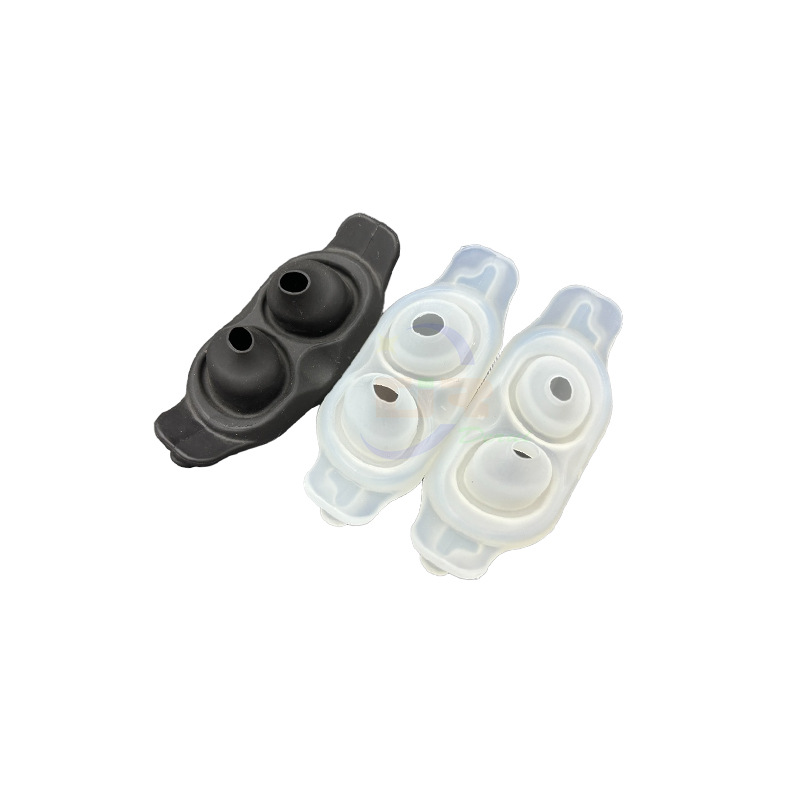
In the quiet moments of medical care—a child breathing steadily through a nebulizer, a patient resting comfortably with supplemental oxygen, a sleep apnea user experiencing their first restful night in years—an unassuming component plays a critical role. The nasal mask cushion, that soft interface between rigid medical equipment and sensitive human skin, determines not just comfort, but therapeutic efficacy.
For continuous positive airway pressure (CPAP) therapy, oxygen delivery systems, and respiratory care devices, the seal must be perfect. Too loose, and pressure escapes, rendering treatment ineffective. Too tight, and skin breakdown occurs, leading to discomfort and non-compliance. The solution lies in precision-engineered liquid silicone components, custom-molded to exacting specifications by specialized manufacturers who understand that every millimeter matters.
CIODC, a Dongguan-based manufacturer dedicated to liquid silicone rubber products, stands at the intersection of advanced materials science, precision tooling, and medical-grade quality assurance. With capabilities spanning mold design, CNC machining, and liquid silicone injection molding, the company delivers custom nasal cushions and masks that meet the rigorous demands of modern respiratory care.
The Science of Comfort: Why Liquid Silicone Excels in Facial Interfaces
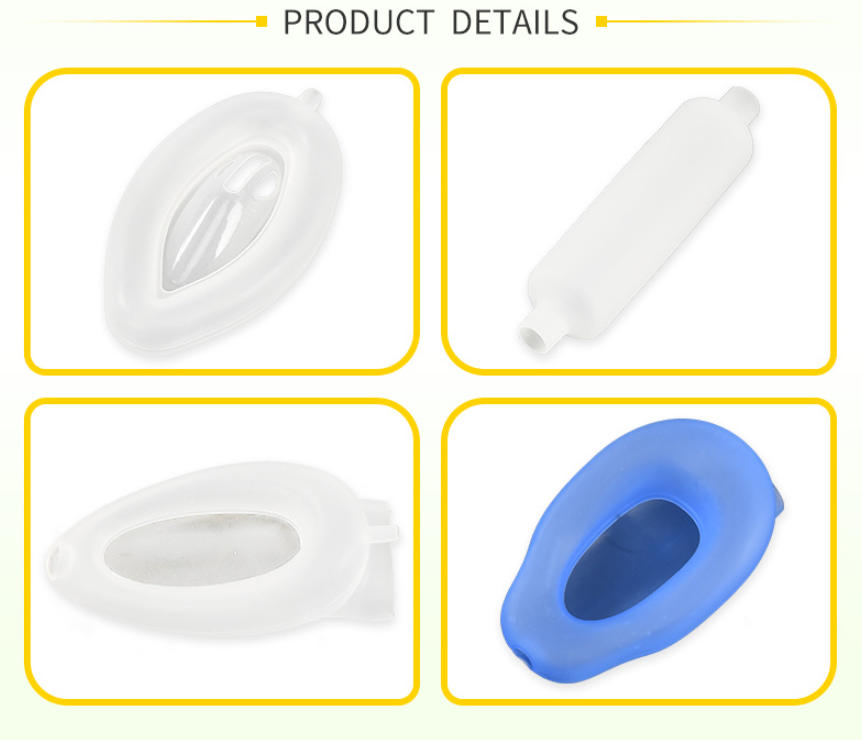
The human face presents a complex sealing surface—curved, mobile, and infinitely variable. Materials used in facial interfaces must accommodate this complexity while maintaining performance across diverse conditions. Liquid silicone rubber (LSR) has emerged as the material of choice for these demanding applications due to its unique property profile.
Material Purity and Safety
Medical-grade liquid silicone is formulated without the plasticizers, stabilizers, or additives that can leach from other materials over time. This inherent purity translates directly to patient safety. For nasal masks and cushions that contact skin continuously—often throughout entire nights of sleep—this biocompatibility is essential.
Leading LSR formulations undergo rigorous testing against international standards. Materials used in medical applications typically comply with ISO 10993 for biocompatibility, USP Class VI for plastic safety, and FDA 21 CFR 177.2600 for food and drug contact. These certifications provide medical device manufacturers with confidence that components will not provoke adverse reactions, even in sensitive populations.
Mechanical Excellence
Beyond safety, liquid silicone offers mechanical properties ideally suited to respiratory interfaces:
- Exceptional Tear Strength: Nasal cushions must withstand repeated installation, removal, and cleaning without tearing at stress points. High-performance LSR grades deliver tear strength that ensures longevity.
- Elastic Rebound: The material returns to its original shape after deformation, maintaining sealing force over thousands of use cycles. This “memory” ensures that cushions continue to perform long after initial installation.
- Temperature Stability: With an operating range of -40°C to 200°C [citation:product attributes], LSR components maintain flexibility across extremes—from cold storage to sterilization temperatures.
- Clarity and Aesthetics: High-transparency LSR grades allow for visually appealing designs, while pigmentation options enable color coding for different sizes or patient populations.
The Platinum-Cured Advantage
Medical-grade liquid silicone employs platinum-catalyzed addition curing, a process that produces no byproducts during vulcanization. This “addition curing” mechanism differs fundamentally from peroxide-cured systems, offering:
- No measurable shrinkage (typically ≤0.1% linear shrinkage)
- No byproducts requiring post-curing
- Consistent physical properties throughout the component
- Suitability for applications requiring the highest purity standards
As noted by industry leaders like Wacker Chemie, whose ELASTOSIL® and SILPURAN® product lines serve medical applications worldwide, these materials are developed specifically for “manufacturing silicone components in sensitive baby-care and medical applications” where exceptional purity is paramount.
Engineering the Interface: Nasal Mask Design Considerations
Designing an effective nasal cushion requires balancing competing demands. The component must:
- Create an effective pneumatic seal at therapeutic pressures (typically 4-20 cmH₂O for CPAP)
- Distribute contact pressure to avoid skin irritation
- Accommodate anatomical variation across patient populations
- Interface reliably with mask frames and headgear
- Survive cleaning and sterilization without degradation
The Double-Seal Advantage
Advanced nasal cushion designs often incorporate multiple sealing surfaces. A primary seal contacts the facial skin directly, while secondary sealing features provide redundancy and pressure distribution. These complex geometries are achievable only through precision molding, with liquid silicone’s low viscosity allowing it to fill intricate cavity details completely.
Materials specifically developed for mask applications, such as Wacker’s ELASTOSIL® LR 3078, create “a soft cushion that adapts perfectly to the contours of the face, ensuring a tight fit”. This adaptation capability is essential for maintaining seal integrity through positional changes during sleep.
Anatomical Accommodation
Facial anatomy varies significantly between individuals. Custom nasal cushion manufacturers address this through:
- Multiple size options (small, medium, large) within standardized product lines
- Adjustable geometries that accommodate different nasal bridge heights and philtrum lengths
- Soft durometer formulations (typically 30-50 Shore A) that conform to individual contours -5
For specialized applications, fully custom geometries can be developed from patient scans or anatomical models, ensuring optimal fit for unusual anatomies or specific clinical requirements.
The CIODC Manufacturing Advantage
Located in Dongguan, a global hub for precision manufacturing, CIODC brings comprehensive capabilities to custom nasal cushion production. The company’s manufacturing philosophy centers on “按需定制” (customization according to demand)—producing exactly what each customer requires, whether that means adapting existing designs or developing entirely new components from concept to production.
Precision Tooling: The Foundation of Quality
Every exceptional silicone component begins with an exceptional mold. CIODC’s tooling capabilities include:
- CNC Precision Machining: High-speed CNC equipment produces mold cavities with micron-level accuracy, ensuring that every cushion meets dimensional specifications.
- EDM (Electrical Discharge Machining): For complex geometries and fine details, EDM capabilities enable the creation of intricate mold features that define sealing surfaces and attachment points.
- Grinding and Surface Finishing: Critical sealing surfaces require mirror finishes to produce components with smooth, skin-friendly surfaces. Precision grinding equipment achieves the required surface quality.
- Mold Flow Analysis: Before steel is cut, advanced simulation software optimizes gate locations, runner systems, and venting to ensure consistent filling and defect-free production.
Liquid Silicone Injection Molding
LSR injection molding differs fundamentally from traditional rubber compression molding. The process involves:
- Precise Metering and Mixing: Two-component liquid silicone (A and B) is metered in exact 1:1 ratio by specialized pumping systems, with accuracy typically within ±0.5%. Color pigments or functional additives can be introduced at this stage.
- Cold Decompression: The mixed material is maintained at low temperature (typically 20-40°C) in the injection unit to prevent premature curing.
- High-Pressure Injection: Material is injected into heated molds (typically 150-200°C), where it flows into every cavity detail before heat triggers rapid curing.
- In-Mold Curing: Curing occurs in seconds to minutes, depending on part thickness. The platinum-catalyzed addition reaction produces no byproducts, eliminating the need for post-curing in most applications.
- Automated Demolding: Finished parts are ejected, often by robotic systems that ensure consistent handling and prevent damage.
This process yields components with excellent dimensional accuracy, no flash or parting lines (or minimally visible ones), and consistent physical properties throughout.
Equipment Infrastructure
CIODC’s manufacturing floor features specialized equipment for LSR processing:
- Liquid Silicone Injection Molding Machines: Purpose-built machines with LSR-specific screw designs, shut-off nozzles, and temperature control systems.
- Metering and Mixing Systems: Precision pumps that maintain exact mix ratios and deliver consistent material to the injection unit.
- Chilling Units: For maintaining material temperature in the injection barrel.
- Automated Handling: Robotic systems for insert placement (if required) and part removal.
As equipment specialists note, modern LIM (Liquid Injection Molding) systems enable “clean production, reduced waste, and economical high-volume production with consistent quality”.
Quality Systems and Regulatory Compliance
For medical device manufacturers, supplier quality is non-negotiable. CIODC’s operations align with the rigorous standards required for medical component production.
Material Traceability
Every batch of liquid silicone carries complete documentation, including:
- Certificate of analysis from material suppliers
- Batch-specific test results
- Storage and handling records
- Expiration date tracking
This traceability extends through production, with each component lot linked to the specific material batch, molding machine, and production shift.
Process Validation
Critical processes undergo formal validation to demonstrate consistent capability:
- Installation Qualification (IQ): Verifying that equipment is correctly installed and calibrated
- Operational Qualification (OQ): Demonstrating that processes operate within specified parameters
- Performance Qualification (PQ): Confirming that processes consistently produce conforming product
In-Process and Final Inspection
Quality control occurs throughout production:
- Dimensional Inspection: Critical sealing surfaces and interface dimensions are verified against specifications, often using optical comparators or coordinate measuring machines (CMM).
- Visual Examination: Parts are inspected for surface defects, contamination, or cosmetic issues.
- Functional Testing: Where applicable, finished cushions may undergo leak testing or compression force measurement.
- Batch Sampling: Representative samples from each production lot are retained for reference.
Customization Capabilities: From Concept to Production
CIODC’s core strength lies in its ability to translate customer requirements into production-ready components. The company supports multiple pathways to customization:
Design Collaboration
For customers with concept ideas but incomplete specifications, CIODC’s engineering team provides design support:
- Material selection guidance based on application requirements
- Design for manufacturability (DFM) feedback
- Prototype development for fit and function testing
- Iterative refinement based on testing results
Tooling Development
Once designs are finalized, CIODC’s toolroom produces production molds with attention to:
- Gate Location Optimization: Ensuring complete filling without flow marks or knit lines
- Venting Design: Preventing trapped air that could cause surface defects
- Ejection System Engineering: Clean part release without distortion
- Cooling Channel Layout: Uniform temperature distribution for consistent curing
- Modular Construction: Facilitating maintenance and repair
Production Scaling
From prototype quantities through high-volume production, CIODC scales to meet demand:
- Low-Volume Production: For clinical trials, market testing, or specialty applications
- Medium-Volume Runs: For established products with predictable demand
- High-Volume Capacity: For mature products requiring millions of units annually
Applications Across Respiratory Care
Custom liquid silicone nasal components serve diverse applications throughout healthcare:
Sleep Apnea Therapy
Continuous Positive Airway Pressure (CPAP) devices represent the largest market for nasal cushions. These components must maintain seal integrity through nights of movement while remaining comfortable enough for daily use. Advanced designs incorporate:
- Minimal-contact geometries that reduce facial coverage
- Ventilation features that prevent CO₂ rebreathing
- Quick-release mechanisms for nighttime bathroom visits
- Compatibility with heated humidification systems
Oxygen Therapy
For patients requiring supplemental oxygen, nasal cushions deliver flow while accommodating nasal cannulas or direct connections. Requirements include:
- Lightweight construction for wearing comfort
- Secure attachment preventing dislodgment during sleep
- Material compatibility with high-flow oxygen (non-flammable, non-reactive)
- Easy cleaning between uses
Non-Invasive Ventilation
In hospital settings, non-invasive ventilation (NIV) masks support patients with respiratory failure. These applications demand:
- Reliable seals at higher pressures
- Quick application for emergency use
- Compatibility with monitoring equipment
- Sterilization resistance for reusable devices
Anesthesia Delivery
Operating room masks require:
- Transparency for patient monitoring
- Compatibility with various gas mixtures
- Secure attachment to anesthesia circuits
- Single-use or sterilizable options
Innovation in Material and Design
The field of liquid silicone respiratory components continues to evolve, driven by advancing technology and increasing expectations.
Self-Adhesive LSR Grades
Recent material innovations include self-adhesive liquid silicone formulations that bond directly to thermoplastic substrates during overmolding. These materials eliminate the need for primers or surface treatments, simplifying production and improving bond reliability. Applications include:
- Mask frames with integrated soft cushions
- Hard-soft combinations for attachment features
- Multi-durometer components with graduated firmness
Conductive Silicones
Emerging applications incorporate electrically conductive LSR grades for:
- Integrated sensors monitoring seal integrity
- Heating elements for conditioned airflow
- Anti-static properties in explosive environments
Sustainability Considerations
As healthcare systems prioritize sustainability, liquid silicone offers advantages:
- Durability enabling long service life for reusable devices
- Chemical stability allowing effective cleaning and sterilization
- Material purity facilitating recycling at end-of-life
The CIODC Partnership Model
Working with CIODC means more than purchasing components—it means accessing a partnership built on technical expertise and responsive service.
Customer Support
- Technical Consultation: Engineering support for design and material decisions
- Sample Provision: Prototype and pre-production samples for testing
- Transparent Communication: Regular updates throughout development and production
- Responsive Problem-Solving: Rapid addressing of any quality or delivery concerns
Supply Chain Reliability
- Capacity Planning: Production scheduling aligned with customer demand
- Inventory Management: Safety stock options for critical components
- Logistics Coordination: Shipping arrangements tailored to customer requirements
Continuous Improvement
CIODC maintains focus on ongoing enhancement of processes, products, and service:
- Regular quality metric review
- Customer feedback integration
- Technology adoption for improved capabilities
- Staff training and development
Conclusion: Precision Where It Matters Most
The interface between respiratory equipment and human skin represents one of the most demanding applications in medical device manufacturing. Success requires materials of exceptional purity, designs that accommodate infinite anatomical variation, and production processes capable of replicating complex geometries with absolute consistency.
CIODC delivers on all fronts. With comprehensive capabilities spanning mold design, precision machining, liquid silicone injection molding, and quality assurance, the company produces nasal cushions and masks that meet the highest standards of medical performance.
For medical device manufacturers seeking partners who understand the stakes—who recognize that every component carries responsibility for patient outcomes—CIODC offers the perfect combination of technical capability, manufacturing reliability, and customer focus.
The next generation of respiratory care devices will demand even greater performance: thinner sealing films, more comfortable geometries, integrated smart features. CIODC stands ready to meet these challenges, applying decades of combined experience to the problems of tomorrow.
When patient comfort and therapeutic efficacy depend on the perfect fit, choose components engineered for excellence. Choose CIODC for custom liquid silicone that performs where it matters most—at the gentle interface between technology and human need.

Contact me for custom procurement.:silicone@silic0ne.com


