

In the quiet intensity of an operating room, a surgeon performs a minimally invasive procedure through incisions no larger than a fingertip. The patient’s abdomen is insufflated with carbon dioxide, creating working space for delicate instruments. A laparoscope transmits high-definition images to a monitor while specialized tools maneuver through tiny ports. Throughout the procedure, one critical requirement must be maintained above all others: pneumoperitoneum—the pressurized gas environment that makes minimally invasive surgery possible.
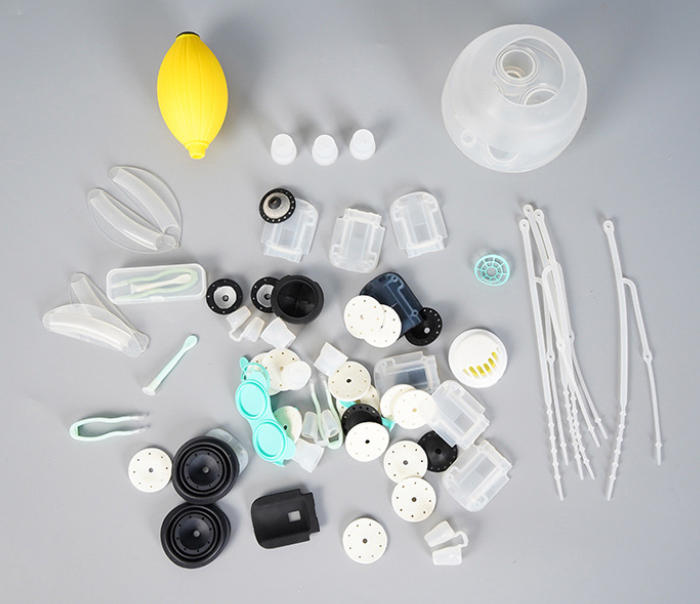
The loss of this pressure, even briefly, can compromise visualization, reduce working space, and jeopardize patient safety. Preventing such loss falls to a component so small it often goes unnoticed: the silicone rubber sealing system within the trocar assembly. These precision-molded seals—comprising sealing gaskets, O-rings, and instrument seals—form the invisible barrier that maintains insufflation while allowing surgical instruments to pass freely.
For medical device manufacturers seeking trocar sealing components that meet the rigorous demands of modern laparoscopic surgery, CIODC delivers precision-engineered solutions. Based in Dongguan, China’s premier manufacturing hub, CIODC specializes in custom silicone rubber components for medical applications, combining advanced material science with comprehensive in-house production capabilities.
The Critical Role of Trocar Seals in Minimally Invasive Surgery
Understanding the Trocar Assembly
A laparoscopic trocar serves as the portal through which surgical instruments access the abdominal cavity. The typical assembly includes:
- Cannula (Sleeve): The hollow tube that remains in the abdominal wall
- Obturator (Puncture Needle): The sharp or blunt tip used for initial insertion
- Housing: The handle assembly containing sealing components
- Insufflation Valve: For introducing and maintaining carbon dioxide pressure
- Sealing System: Multiple elastomeric components that prevent gas leakage
The sealing system typically comprises multiple elements working in concert:
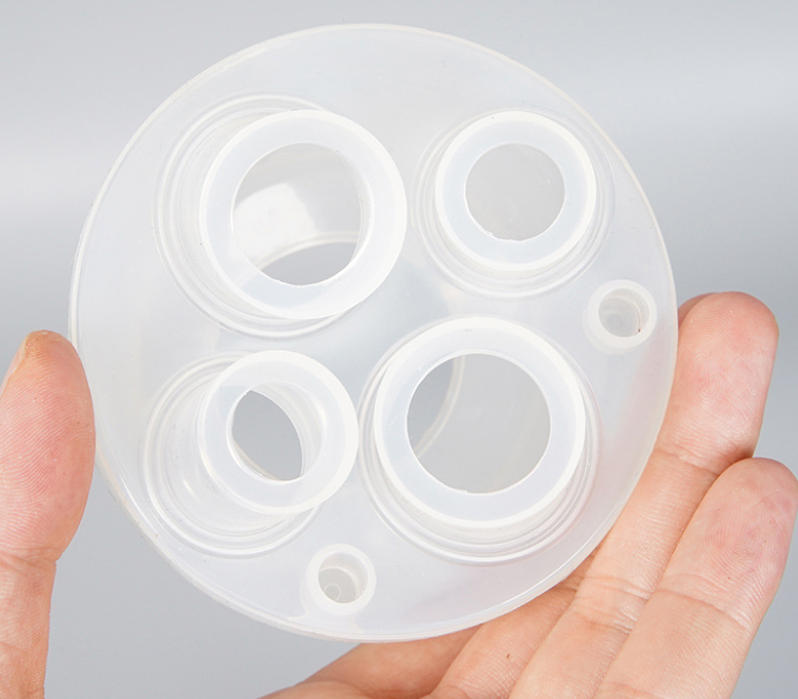
Primary Instrument Seal: A flexible diaphragm or duckbill valve that seals around inserted instruments of varying diameters. This component must accommodate instruments from 3mm to 12mm while maintaining an airtight seal.
Zero-Closure Seal: A secondary seal that closes completely when no instrument is present, preventing gas escape during instrument changes.
Gaskets and O-rings: Static seals that prevent leakage at housing interfaces and connections.
The Sealing Challenge
Trocar seals face extraordinary demands:
- Wide Instrument Range: Seals must accommodate instruments from 3mm to 12mm diameter while maintaining airtight contact
- Multiple Insertion Cycles: A single procedure may involve dozens of instrument exchanges
- Dynamic Loading: Instruments articulate, rotate, and move within the seal during manipulation
- Pressure Differentials: Seals must maintain integrity against intra-abdominal pressures of 12-15 mmHg
- Biocompatibility: All tissue-contacting surfaces must meet rigorous safety standards
As documented in surgical literature, maintaining pneumoperitoneum is essential for successful laparoscopic outcomes. Modern trocar designs achieve remarkable performance—with 12mm instruments removed, some sealing systems re-establish complete closure in just 0.7 seconds.
Material Science: The Foundation of Sealing Performance
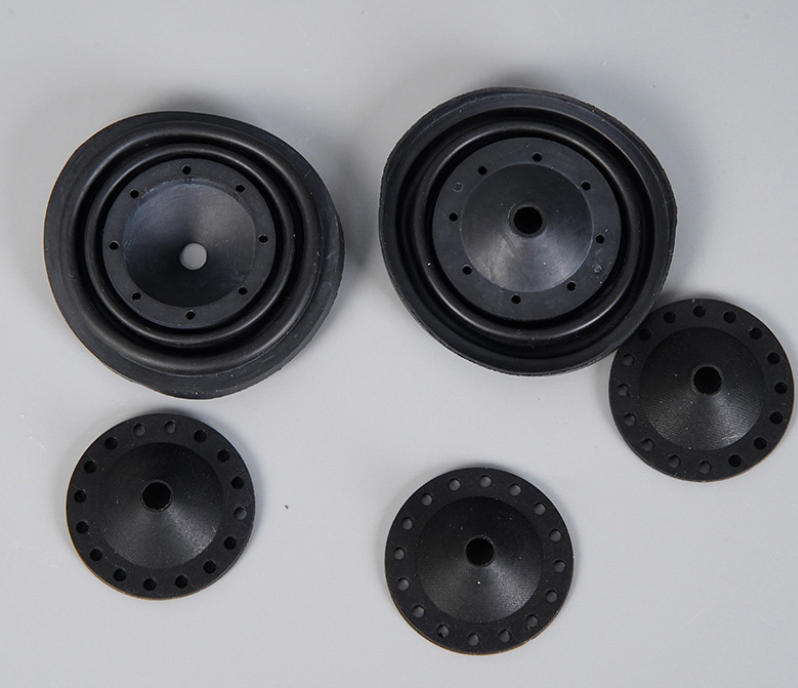
CIODC’s trocar sealing components utilize medical-grade silicone rubber formulations engineered for the specific demands of laparoscopic applications.
Medical-Grade Silicone (VMQ)
Silicone rubber (VMQ—vinyl methyl silicone) offers the optimal balance of properties for trocar seals:
- Exceptional Elasticity: Silicone conforms intimately to instrument surfaces, maintaining seal integrity across varying diameters
- Low Compression Set: Seals return to original shape after deformation, ensuring consistent performance through repeated instrument passes
- Biocompatibility: Medical-grade formulations meet ISO 10993 and USP Class VI requirements for tissue contact
- Sterilization Resistance: Silicone withstands repeated autoclaving, ethylene oxide, and gamma irradiation without degradation
- Transparency: Clear grades enable visual confirmation of seal function
CIODC’s silicone components operate across an extraordinary temperature range of -40°C to 240°C [citation:product attributes], maintaining flexibility in cold storage and integrity through sterilization cycles.
Specialized Material Options
For applications requiring enhanced performance, CIODC offers alternative formulations:
Fluorosilicone (FVMQ): Combines silicone’s temperature stability with fluorocarbon’s chemical resistance. Ideal for applications involving lipid exposure or aggressive cleaning agents.
Platinum-Cured LSR: Liquid silicone rubber produced via addition curing offers exceptional purity, no volatile byproducts, and superior dimensional accuracy for complex geometries.
Performance Characteristics
CIODC’s medical-grade silicone components deliver verified performance metrics:
- Working Pressure: 0.6 MPa (87 psi)—far exceeding typical insufflation requirements [citation:product attributes]
- Dielectric Strength: 10 KV—ensuring electrical safety for electrocautery applications [citation:product attributes]
- Flame Resistance: UL94 V-0 rating—self-extinguishing within 10 seconds, critical for OR safety [citation:product attributes]
- Chemical Resistance: Excellent stability against cleaning agents, disinfectants, and bodily fluids
- Tear Strength: Formulations achieve tear strengths exceeding 25 kN/m, resisting propagation of nicks or cuts
Design Excellence: Engineering the Perfect Seal
Multi-Layer Sealing Systems
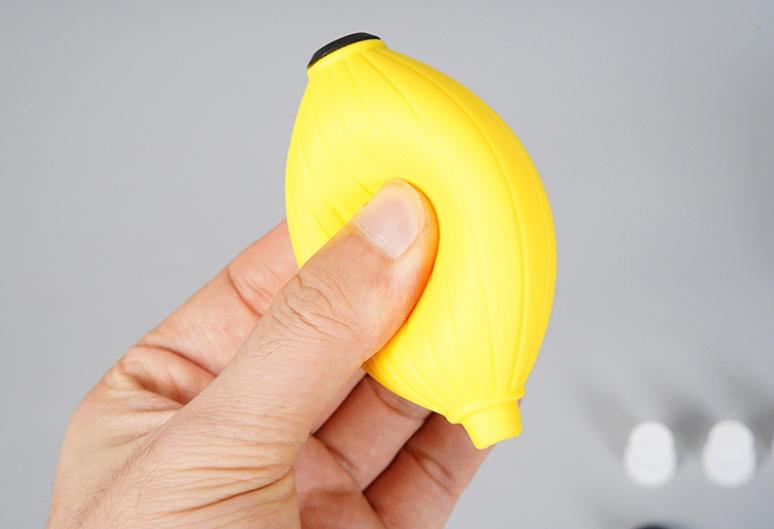
Modern trocar designs incorporate multiple sealing elements working in harmony. CIODC’s components support various configurations:
Duckbill Valves: Collapsible slit valves that seal when no instrument is present. The preferred one-piece design features first and second collapsed sections defining a curved slit that conforms to instrument surfaces while resisting eversion during withdrawal.
Instrument Seals: Flexible diaphragms with precision apertures that stretch to accommodate passing instruments while maintaining circumferential contact.
Gaskets and O-rings: Static seals at housing interfaces, often incorporating 锥形座 (tapered seats) and compression features for enhanced sealing.
Optimized Geometry
CIODC’s engineering team optimizes seal geometry for:
- Low Insertion Force: Reduced resistance during instrument introduction minimizes tissue disturbance and improves surgeon ergonomics. Optimized silicone seals achieve insertion/extraction resistance of just 0.3-0.5N for instruments of varying diameters.
- Eversion Resistance: Seal design prevents the lip from turning inside-out during instrument withdrawal, maintaining sealing surfaces for subsequent insertions.
- Uniform Wall Thickness: Consistent material distribution ensures predictable deformation and reliable performance across the seal’s operating range.
CIODC’s Custom Manufacturing Capability
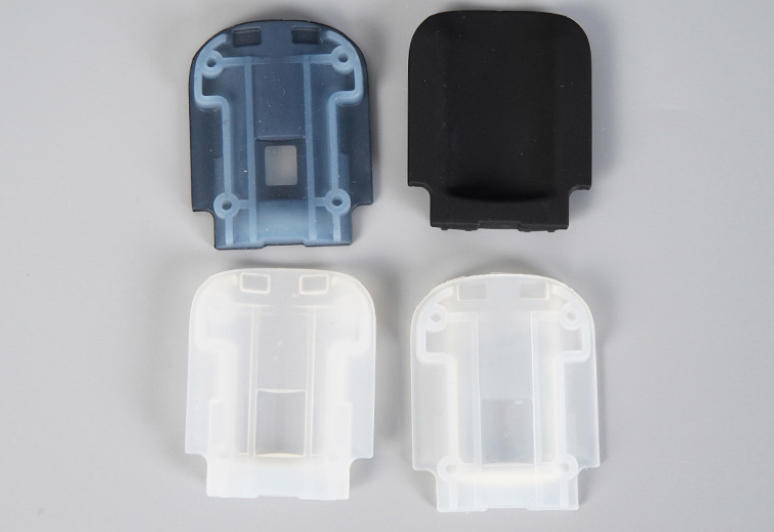
Comprehensive In-House Tooling
CIODC’s Dongguan facility features state-of-the-art equipment for every stage of component production [citation:product attributes]:
Precision Tooling:
- 磨床 (Grinding machines) for achieving exacting surface finishes on mold components
- 铣床 (Milling machines) for creating complex mold geometries
- CNC精雕机 (CNC precision engraving machines) for micron-level accuracy in mold cavity creation
This in-house tooling capability ensures that molds are produced to exact specifications, with dimensional accuracy verified before production begins. By controlling the entire mold-making process, CIODC maintains quality consistency and accelerates development timelines.
Advanced Molding Equipment
CIODC’s production floor features specialized machinery for silicone processing:
- 液态硅胶注射成型机 (Liquid silicone injection molding machines) for high-precision LSR processing
- 硅胶注塑机 (Silicone injection molding machines) for both liquid and high-consistency rubber applications
Injection Molding Excellence
CIODC employs 注塑成型 (injection molding) as its primary processing method, offering decisive advantages for medical applications:
- Precision Replication: Liquid silicone’s low viscosity fills intricate mold cavities completely, reproducing fine details essential for sealing surfaces
- Consistency: Automated injection ensures that every part matches the first, critical for devices where performance variability cannot be tolerated
- Efficiency: Rapid cycle times support both prototype development and high-volume production
- Cleanliness: Enclosed processing minimizes contamination risk
Customization Philosophy
CIODC’s core strength lies in “非标定制” (non-standard customization)—producing components tailored to each customer’s exact requirements [citation:product attributes]:
- 尺寸定制 (Size Customization): Precise dimensions matched to specific trocar designs
- 颜色定制 (Color Customization): Components available in any color for size coding or brand differentiation
- 硬度定制 (Hardness Customization): Durometer selection optimized for specific sealing requirements
- 几何定制 (Geometry Customization): Complex shapes accommodating unique design features
Whether working from customer drawings (来图定制) or physical samples (来样定制), CIODC’s engineering team collaborates closely with clients to develop components that meet exact specifications.
Quality Assurance and Regulatory Compliance
Material Traceability
Every batch of medical-grade silicone carries complete documentation:
- Certificate of analysis from material suppliers
- Batch-specific test results
- Storage and handling records
- Expiration date tracking
This traceability extends through production, with each component lot linked to the specific material batch, molding machine, and production shift.
Process Validation
Critical processes undergo formal validation to demonstrate consistent capability:
- Installation Qualification (IQ): Verifying equipment installation and calibration
- Operational Qualification (OQ): Demonstrating process operation within specified parameters
- Performance Qualification (PQ):) Confirming consistent production of conforming product
In-Process and Final Inspection
Quality control occurs throughout production:
- Dimensional Inspection: Critical sealing surfaces verified against specifications using precision measurement equipment
- Visual Examination: Parts inspected for surface defects, contamination, or cosmetic issues
- Functional Testing: Seals may undergo leak testing, insertion force measurement, or cycle testing
Safety Certifications
CIODC’s components meet critical safety standards:
- 阻燃等级 UL94 V-0 (Flame Rating): Self-extinguishing within 10 seconds, critical for operating room safety [citation:product attributes]
- 耐电压 10KV (Voltage Withstand): Ensuring electrical safety during electrocautery [citation:product attributes]
- 耐高温 (High Temperature Resistance): Reliable performance through sterilization cycles [citation:product attributes]
Applications Beyond Trocars
While trocar seals represent a flagship application, CIODC’s silicone components serve diverse medical devices:
Laparoscopic Instruments
- Seals for additional ports and access devices
- Gaskets for instrument handles and controls
- O-rings for insufflation connections
Endoscopic Equipment
- Biopsy port seals
- Valve components for irrigation/suction
- Bending section covers
Surgical Energy Devices
- Insulating components for electrocautery
- Seals for ultrasonic shears
- Gaskets for vessel sealing instruments
Robotic Surgery Systems
- Instrument interface seals
- Cannula seals for robotic trocars
- Draping components
The CIODC Advantage
Technical Expertise
With decades of combined experience in silicone processing, CIODC’s engineering team provides comprehensive support:
- Material selection guidance based on application requirements
- Design for manufacturability (DFM) feedback
- Prototype development for fit and function testing
- Iterative refinement based on testing results
Production Reliability
CIODC’s manufacturing systems ensure consistent supply:
- Capacity planning aligned with customer demand
- Inventory management with safety stock options
- Scalable production from prototype through high volume
- Rigorous quality control at every stage
Cost-Effective Excellence
Based in Dongguan, a global center for precision manufacturing, CIODC combines technical capability with competitive economics. This enables medical device manufacturers to achieve quality objectives while managing costs—essential in the competitive surgical device market.
Conclusion: The Seal of Confidence
In laparoscopic surgery, where patient outcomes depend on maintaining pneumoperitoneum, the silicone seals within trocar assemblies perform a function far beyond their modest appearance. They enable the precision manipulation of instruments, maintain the pressurized environment essential for visualization, and protect patients from the consequences of gas loss.
CIODC’s medical-grade silicone components deliver the performance that these critical applications demand. Through advanced material science, precision manufacturing, and unwavering commitment to quality, the company provides sealing solutions that surgeons trust and patients depend upon.
For medical device manufacturers seeking partners who understand the stakes—who recognize that every seal carries responsibility for surgical success—CIODC offers the perfect combination of technical capability, manufacturing reliability, and customer focus.
The next generation of laparoscopic instruments will demand even greater performance: thinner sealing lips, lower insertion forces, faster re-sealing times. CIODC stands ready to meet these challenges, applying decades of combined experience to the problems of tomorrow.
When surgical success depends on reliable sealing, choose components engineered for excellence. Choose CIODC for custom silicone rubber seals that perform where it matters most—at the critical interface where technology enables minimally invasive healing
Contact me for custom procurement.:silicone@faqiuqigmail-com


