
In the delicate landscape of modern medicine, few interventions are as intimate or as essential as those that sustain nutrition and manage gastrointestinal function. For patients unable to swallow, for premature infants requiring feeding support, for individuals recovering from gastrointestinal surgery, the medical devices that interface with the human body become literal lifelines. At the heart of these life-sustaining systems lie components so critical that their failure is simply not an option: gastric tube connectors, feeding tube adapters, esophageal seals, and enteral feeding accessories.
These components must navigate an extraordinary set of demands. They must be soft enough to avoid tissue trauma yet durable enough to withstand repeated use. They must remain chemically inert in the aggressive environment of the gastrointestinal tract. They must form perfect seals to prevent leakage while allowing precise delivery of nutrition and medication. They must be manufacturable in complex geometries that accommodate the infinite variability of human anatomy. And they must meet the most rigorous regulatory standards in existence.
For medical device manufacturers seeking partners capable of meeting these extraordinary demands, CIODC stands as a trusted ally. Based in Dongguan, China’s precision manufacturing heartland, CIODC specializes in custom liquid silicone components for medical applications, with particular expertise in gastrointestinal and enteral feeding devices. Through comprehensive in-house capabilities spanning mold design, precision tooling, and liquid silicone injection molding, the company delivers components that meet the exacting requirements of modern gastroenterology.
The Gastrointestinal Interface: Why Component Quality Matters

The gastrointestinal tract presents one of the most challenging environments for medical devices. Components intended for GI applications must contend with:
Chemical Aggression: Gastric acid with pH as low as 1.5, digestive enzymes, bile salts, and varying osmotic pressures create an environment that degrades many materials. Components must maintain integrity despite continuous chemical exposure.
Mechanical Demands: Peristalsis creates constant motion; tube insertion and removal generate friction; patient movement applies torsional and tensile forces. Components must withstand these mechanical stresses without failure.
Biological Interaction: Materials in contact with GI tissues must not provoke inflammatory responses, support bacterial adhesion, or leach harmful compounds. Biocompatibility is not optional—it is fundamental.
Sterilization Resistance: Medical devices must withstand sterilization—whether by steam autoclave, ethylene oxide, or gamma irradiation—without degradation. This requirement eliminates many materials from consideration.
Regulatory Scrutiny: GI devices face intensive regulatory review. Every material, every process, every quality control measure must be documented and validated.
Liquid silicone rubber (LSR) has emerged as the material of choice for these demanding applications precisely because it addresses every requirement simultaneously.
Material Excellence: Medical-Grade Liquid Silicone for Gastrointestinal Applications

The foundation of every great medical component is the material from which it is made. CIODC’s medical-grade liquid silicone products utilize formulations specifically developed for healthcare applications.
Inherent Purity and Biocompatibility
Medical-grade liquid silicone is formulated without the plasticizers, stabilizers, or additives that can leach from other materials over time. This inherent purity translates directly to patient safety. For gastrointestinal components that contact mucosal tissues for extended periods, this biocompatibility is essential.
Leading LSR formulations undergo rigorous testing against international standards. Materials used in GI applications must comply with ISO 10993 for biocompatibility (including cytotoxicity, sensitization, irritation, and systemic toxicity), USP Class VI for plastic safety, and relevant pharmacopeial standards. These certifications provide medical device manufacturers with confidence that components will not provoke adverse reactions.
As documented in medical device literature, liquid silicone exhibits “minimal reactivity with human tissue, reducing the risk of foreign body reaction and inflammation”. This biological inertness makes it ideal for long-term contact with gastrointestinal mucosa.
Platinum-Cured Purity
Medical-grade applications demand platinum-cured silicone systems rather than peroxide-cured alternatives. Platinum-cured materials offer decisive advantages:
- No measurable shrinkage, ensuring dimensional stability for precision sealing surfaces
- No byproducts requiring post-curing, eliminating potential contaminants
- Consistent physical properties throughout each component
- Suitability for applications requiring the highest purity standards
This “addition curing” mechanism differs fundamentally from peroxide-cured systems, producing no byproducts during vulcanization and enabling the exceptional purity that gastrointestinal applications require.
Performance Characteristics for GI Applications
CIODC’s medical-grade silicone components deliver properties specifically suited to gastrointestinal devices:
Temperature Resilience: With an operating range spanning extreme conditions, these components maintain flexibility and sealing force whether in refrigerated storage or undergoing steam autoclave sterilization. They are “sterilisable with ethylene oxide, steam and gamma radiation”.
Chemical Compatibility: Medical-grade silicone resists degradation from gastric acid, digestive enzymes, and enteral feeding formulas. This chemical inertness ensures that components do not contaminate feeding solutions or degrade during device service life.
Mechanical Durability: High tear strength and compression set resistance ensure that seals maintain integrity through repeated insertion and removal cycles. Components remain “soft, elastic, resistant to kinks, and maintain their shape without deformation”.
Transparency and Clarity: High-transparency LSR grades allow clinicians to visualize flow and detect potential issues. Good transparency is explicitly noted as a key feature for medical devices where visual monitoring is essential.
Tear Resistance: With tear strength ratings of 18.0 kN/m or higher, components withstand the rigors of clinical use without failure.
Applications: Silicone Components in Gastrointestinal Medicine

CIODC’s custom liquid silicone capabilities serve diverse applications throughout gastrointestinal medicine.
Enteral Feeding Systems
For patients unable to maintain oral nutrition, enteral feeding tubes provide essential nourishment. Silicone components critical to these systems include:
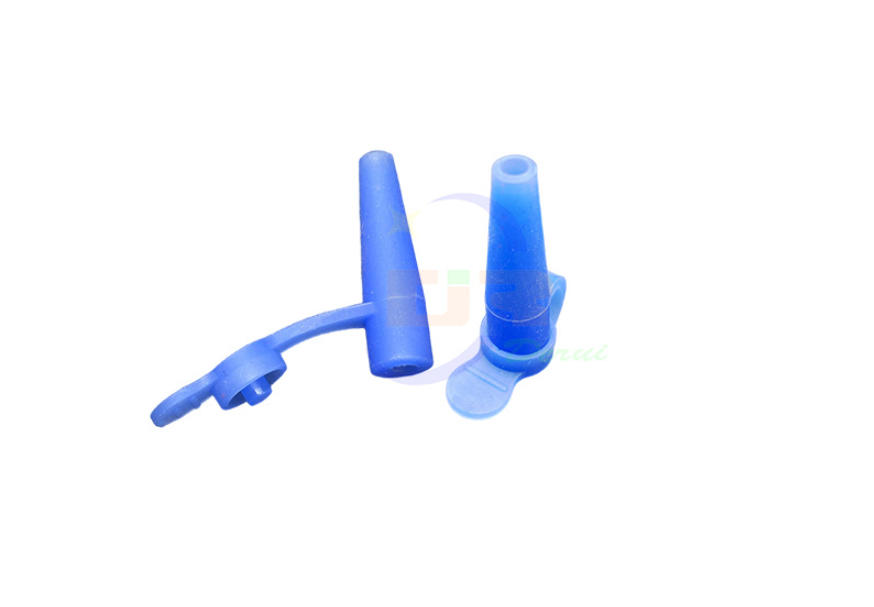
Gastric Tube Connectors: These interfaces between feeding tubes and delivery systems must create reliable, leak-proof connections while remaining easy for clinicians to manipulate. Custom geometries accommodate specific tube diameters and connection standards.
Feeding Tube Adapters: Converting between different connector types or accommodating specialized delivery systems requires precision-molded adapters with exacting dimensional tolerances.
Y-Ports and Injection Sites: Medication administration through feeding tubes requires access ports that self-seal after needle withdrawal. Silicone’s elastic memory ensures repeated closure without leakage.
Tube Retention Mechanisms: Balloons, discs, or other retention features must maintain position without traumatizing tissues. Silicone’s softness and conformability are essential.
Gastrointestinal Access Devices
Percutaneous endoscopic gastrostomy (PEG) tubes, nasogastric tubes, and other access devices incorporate multiple silicone components:
Internal Bumpers and Retention Discs: These components hold tubes in position against the stomach or abdominal wall. They must be soft enough for comfortable placement yet strong enough to resist dislodgment.
Feeding Tube Tips: The terminal ends of feeding tubes require careful design to facilitate insertion while preventing tissue trauma. Soft, rounded silicone tips achieve both objectives.
Balloons and Inflation Channels: Some retention systems use inflatable balloons that must maintain pressure without leaking. Silicone’s impermeability and elastic consistency are essential.
Airway and Esophageal Devices
While primarily focused on gastrointestinal applications, CIODC’s capabilities extend to related devices that interface with the upper gastrointestinal tract:
Esophageal Stethoscope Covers: These monitoring devices require soft, acoustically transparent covers that protect sensitive electronics from bodily fluids.
Esophageal Manometry Catheters: Pressure monitoring in esophageal motility studies requires precise, multi-lumen silicone extrusions with consistent mechanical properties.
Laryngeal Mask Airways: As described in medical device literature, these devices “open and seal the upper larynx during anesthesia surgery, providing a gas channel for the patient”. They share material requirements with GI devices—softness, biocompatibility, and durability.
The CIODC Manufacturing Advantage

Located in Dongguan, a global hub for precision manufacturing, CIODC brings comprehensive capabilities to custom medical component production. The company’s manufacturing philosophy centers on “图样定制代工” (customization based on drawings and samples)—producing exactly what each customer requires, whether that means adapting existing designs or developing entirely new components from concept to production [citation:product attributes].
Precision Tooling: The Foundation of Quality
Every exceptional silicone component begins with an exceptional mold. CIODC’s in-house tooling capabilities include:
CNC Precision Machining: High-speed CNC equipment produces mold cavities with micron-level accuracy, ensuring that every component meets dimensional specifications.
EDM (Electrical Discharge Machining): For complex geometries and fine details, EDM capabilities enable the creation of intricate mold features that define sealing surfaces and attachment points.
Grinding and Surface Finishing: Critical sealing surfaces require mirror finishes to produce components with smooth, tissue-friendly surfaces. Precision grinding equipment achieves the required surface quality.
Mold Flow Analysis: Before steel is cut, advanced simulation software optimizes gate locations, runner systems, and venting to ensure consistent filling and defect-free production.
This comprehensive tooling capability—encompassing磨床 (grinding machines), 铣床 (milling machines), and CNC精雕机 (CNC precision engraving machines)—ensures that molds are produced to exact specifications, with dimensional accuracy verified before production begins [citation:product attributes].
Liquid Silicone Injection Molding
LSR injection molding differs fundamentally from traditional rubber compression molding. CIODC’s process, employing 注射成型 (injection molding) technology, offers decisive advantages [citation:product attributes]:
Precision Metering and Mixing: Two-component liquid silicone (A and B) is metered in exact ratio by specialized pumping systems, with accuracy typically within ±0.5%. Color pigments or functional additives can be introduced at this stage.
Cold Decompression: The mixed material is maintained at low temperature in the injection unit to prevent premature curing.
High-Pressure Injection: Material is injected into heated molds, where it flows into every cavity detail before heat triggers rapid curing.
In-Mold Curing: Curing occurs in seconds to minutes, depending on part thickness. The platinum-catalyzed addition reaction produces no byproducts, eliminating the need for post-curing in most applications.
Automated Demolding: Finished parts are ejected, often by robotic systems that ensure consistent handling and prevent damage.
This process yields components with excellent dimensional accuracy, no flash or parting lines, and consistent physical properties throughout. As industry literature confirms, liquid silicone injection molding enables “complex structures and fine dimensional control” while maintaining “high purity, biocompatibility, and excellent sealing performance” .
Multi-Grade Capability
CIODC’s product等级 (grade) offerings span 食品级,医疗级,光学级 (food grade, medical grade, optical grade), reflecting the company’s versatility in addressing diverse application requirements [citation:product attributes]. For gastrointestinal applications, medical grade is standard, but the ability to produce components across multiple quality tiers demonstrates comprehensive material expertise.
Quality Systems and Regulatory Compliance
For medical device manufacturers, supplier quality is non-negotiable. CIODC’s operations align with the rigorous standards required for medical component production.
Clean Manufacturing Environment
Gastrointestinal components demand production environments that minimize contamination risk. CIODC maintains appropriate cleanroom facilities, aligning with industry standards that recognize “the importance of clean, contamination-free production environments” for medical devices. As documented in medical manufacturing literature, facilities serving medical applications typically operate “dust-free cleanrooms (ISO Class 7 or better)” to ensure product purity.
Material Traceability
Every batch of medical-grade silicone carries complete documentation, including:
- Certificate of analysis from material suppliers
- Batch-specific test results
- Storage and handling records
- Expiration date tracking
This traceability extends through production, with each component lot linked to the specific material batch, molding machine, and production shift—essential information for regulatory submissions and post-market surveillance.
Process Validation
Critical processes undergo formal validation to demonstrate consistent capability:
Installation Qualification (IQ): Verifying that equipment is correctly installed and calibrated
Operational Qualification (OQ): Demonstrating that processes operate within specified parameters
Performance Qualification (PQ): Confirming that processes consistently produce conforming product
Certification Alignment
While CIODG’s customers may hold formal certifications such as ISO 13485, the company’s quality practices support these requirements through comprehensive documentation and control systems. Medical device manufacturers require suppliers who understand the regulatory landscape and can provide the documentation necessary for submissions and audits.
Customization Pathway: From Concept to Production
CIODC’s “图样定制代工” (drawing and sample-based customization) capability provides multiple pathways for customers to specify their requirements [citation:product attributes].
Design Collaboration
For customers with concept ideas but incomplete specifications, CIODC’s engineering team provides design support:
- Material selection guidance based on application requirements (considering durometer, tear strength, compression set, and chemical resistance)
- Design for manufacturability (DFM) feedback to optimize part geometry for injection molding
- Prototype development for fit and function testing
- Iterative refinement based on testing results
As industry best practices document, effective design collaboration includes “in-depth analysis of product manufacturability (DFM), optimizing part structure to ensure mold design meets production requirements while minimizing costs and maximizing efficiency” .
Tooling Development
Once designs are finalized, CIODC’s toolroom produces production molds with attention to:
- Gate location optimization for complete filling without flow marks or knit lines
- Venting design preventing trapped air that could cause surface defects
- Ejection system engineering for clean part release without distortion
- Cooling channel layout for uniform temperature distribution during curing
- Modular construction facilitating maintenance and repair
Production Scaling
From prototype quantities through high-volume production, CIODC scales to meet demand:
- Sample Development: 7-10 days for initial samples, allowing rapid design validation
- Low-Volume Production: For clinical trials, market testing, or specialty applications
- High-Volume Capacity: For mature products requiring millions of units annually
The company’s extensive equipment infrastructure—including specialized liquid silicone injection molding machines and comprehensive finishing capabilities—supports production at any scale [citation:product attributes].
Applications Across Industries
While CIODC specializes in medical applications, particularly gastrointestinal devices, the company’s capabilities extend across multiple sectors [citation:product attributes]:
Medical
- Enteral feeding components
- Respiratory interfaces
- Surgical device seals
- Diagnostic instrument parts
###母婴 (Maternal and Infant)
- Feeding bottle nipples
- Pacifiers and teethers
- Breast pump components
- Baby bottle seals
Automotive
- Sealing systems
- Vibration dampers
- Fluid handling components
- Electrical connector seals
Electronics
- Waterproof seals
- Keypad membranes
- Sensor encapsulation
- Cable strain relief
家电 (Household Appliances)
- Appliance seals and gaskets
- Valve components
- Vibration isolation mounts
- Food contact parts
This multi-industry capability reflects CIODC’s comprehensive material expertise and processing versatility.
The Science of Gastrointestinal Device Design
Creating effective gastrointestinal devices requires understanding the unique demands of the application environment.
Anatomical Considerations
The gastrointestinal tract varies significantly along its length—esophageal mucosa differs from gastric lining, which differs from intestinal epithelium. Devices must be designed for their specific anatomical destination:
Esophageal Components: Must accommodate peristaltic motion while maintaining position. Soft durometer materials (typically 30-50 Shore A) minimize trauma during insertion and removal.
Gastric Devices: Must resist acidic environments while providing secure retention. Components may incorporate radiopaque fillers for imaging visibility.
Intestinal Access: Longer-term placement requires materials that resist biofilm formation and maintain flexibility at body temperature.
Sterilization Compatibility
Gastrointestinal devices must withstand sterilization without degradation. Liquid silicone excels in this regard, maintaining properties after:
- Steam Autoclave: Multiple cycles at 121-134°C
- Ethylene Oxide (EtO): Common for heat-sensitive devices
- Gamma Radiation: Increasingly common for single-use devices
This sterilization versatility simplifies device design and manufacturing, as a single material can serve multiple sterilization requirements.
Patient Comfort and Compliance
For devices that remain in place for extended periods—weeks, months, or longer—patient comfort directly impacts clinical outcomes. Silicone’s softness and flexibility minimize irritation, while its inertness prevents sensitization. As medical literature notes, silicone components cause “no deformation, no allergic reactions; excellent toughness and elasticity”.
Economic Value: Precision at Scale
CIODC’s custom silicone components deliver exceptional value through:
- Efficient Processing: Injection molding automation minimizes labor content
- Material Optimization: Precise metering eliminates waste
- Tooling Longevity: Quality molds produce millions of parts over their service life
- Quality Yield: Process control minimizes scrap and rework
For medical device manufacturers, this combination of precision and value supports competitive product pricing while maintaining the quality that gastrointestinal applications demand.
The CIODC Partnership Model
Working with CIODC means more than purchasing components—it means accessing a partnership built on technical expertise and responsive service.
Customer Support
- Technical Consultation: Engineering support for design and material decisions
- Sample Provision: Prototype and pre-production samples for testing
- Transparent Communication: Regular updates throughout development and production
- Responsive Problem-Solving: Rapid addressing of any quality or delivery concerns
Supply Chain Reliability
- Capacity Planning: Production scheduling aligned with customer demand
- Inventory Management: Safety stock options for critical components
- Logistics Coordination: Shipping arrangements tailored to customer requirements
Continuous Improvement
CIODC maintains focus on ongoing enhancement of processes, products, and service:
- Regular quality metric review
- Customer feedback integration
- Technology adoption for improved capabilities
- Staff training and development
Conclusion: Precision Where Life Depends on It
The gastrointestinal devices that sustain patients through critical illness, support premature infants, and enable nutrition when natural feeding is impossible deserve components engineered for excellence. Behind every successful outcome, every complication avoided, every patient who receives essential nutrition, precision silicone components perform their essential functions—sealing, connecting, delivering, protecting.
CIODC delivers this precision through comprehensive custom manufacturing capabilities, medical-grade material expertise, and unwavering commitment to quality. From initial concept through production validation, the company partners with medical device manufacturers to create components that meet the exacting demands of modern gastroenterology.
For manufacturers seeking suppliers who understand the stakes—who recognize that every component carries responsibility for patient outcomes—CIODC offers the perfect combination of technical capability, manufacturing reliability, and customer focus.
The next generation of gastrointestinal devices will demand even greater performance: thinner sealing films, more comfortable geometries, integrated smart features, enhanced biocompatibility. CIODC stands ready to meet these challenges, applying decades of combined experience to the problems of tomorrow.
When patient nutrition depends on component performance, when clinical outcomes rest on device reliability, choose excellence. Choose CIODC for custom medical-grade silicone that performs where it matters most—at the life-sustaining interfaces where technology serves human health.
Contact me for custom procurement.:silicone@silic0ne.com