 silicone@silic0ne.com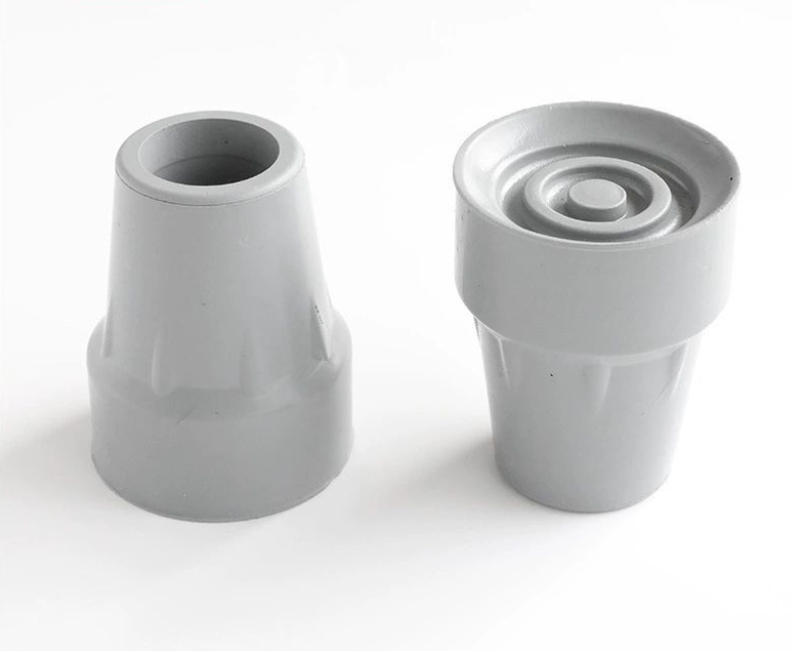
In the journey of recovery and mobility assistance, few devices are as universally recognized as the humble crutch. For millions of individuals worldwide—whether recovering from surgery, managing chronic conditions, or navigating permanent disabilities—crutches represent independence, freedom, and the ability to engage with the world. Yet, beneath the aluminum frames and ergonomic handgrips lies a component so critical that it literally bears the weight of the user’s entire body: the crutch tip.
Often overlooked until it fails, the rubber tip at the base of every crutch is the sole point of contact between the user and the ground. It is the interface where stability meets motion, where weight transfers from body to floor, and where safety is either ensured or compromised. This article explores the engineering, material science, and design philosophy behind high-performance crutch accessories, with a specific focus on the CIODC brand’s premium rubber crutch tips—products engineered to transform a simple mobility aid into a reliable partner for daily living.
The Critical Role of the Crutch Tip: More Than Just a Cap
To understand the importance of a quality crutch tip, one must first appreciate the physics of assisted walking. During a typical gait cycle with crutches, the user’s entire body weight—often amplified by the forces of motion—is transmitted through the crutch frame and concentrated onto a surface area roughly the size of a small saucer. This creates immense pressure on the tip, requiring it to perform multiple functions simultaneously:
- Weight Distribution: The tip must spread the concentrated load over a wider area to prevent sinking into soft ground and to reduce pressure points.
- Friction Management: It must provide sufficient grip to prevent slipping on smooth surfaces while allowing controlled movement during the swing phase of walking.
- Shock Absorption: Each step generates impact forces that travel up through the crutch into the user’s arms and shoulders. The tip must dampen these forces to protect joints and soft tissues.
- Acoustic Damping: The contact between crutch and floor should be quiet, allowing users to move without announcing their presence with distracting clicks or thuds.
- Durability: The tip must withstand repeated compression, abrasion from various floor surfaces, and exposure to weather, chemicals, and cleaning agents.
Given these demanding requirements, the selection of crutch tips is a matter of medical necessity, not mere convenience. This is where specialized manufacturers like CIODC have invested significant research and development resources.
Introducing CIODC: Engineering Excellence in Mobility Accessories
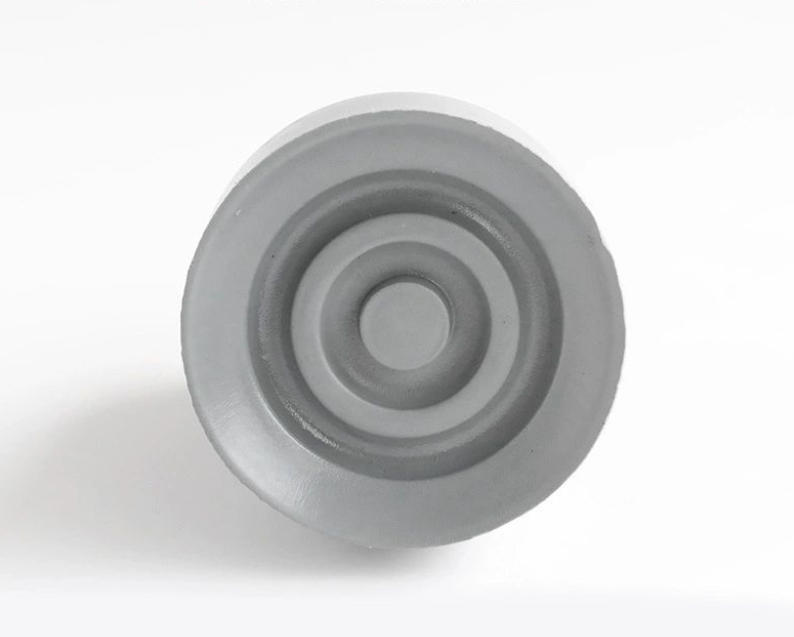
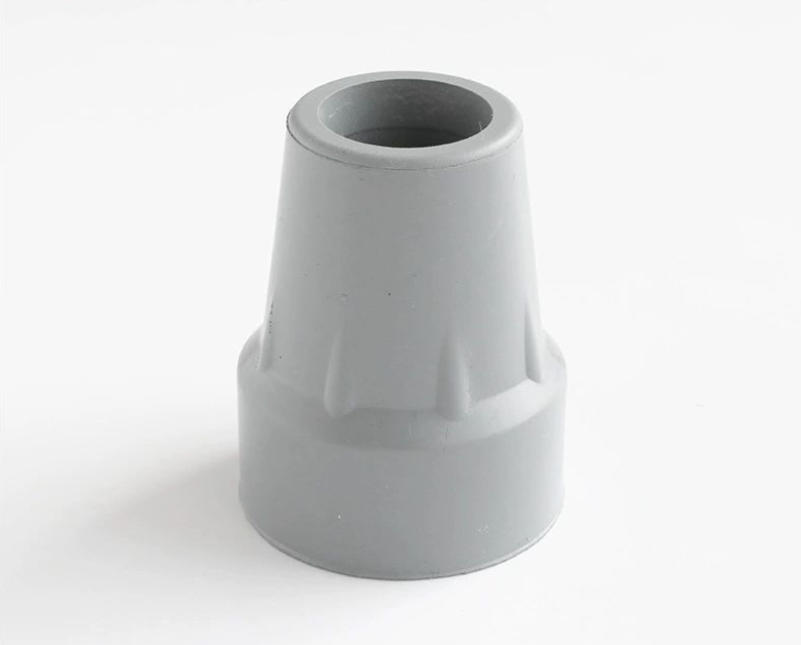
CIODC has established itself as a trusted name in medical silicone and rubber products, bringing the same precision and quality control used in medical testing instrument components to the field of mobility aids. Their range of crutch accessories, particularly the axillary crutch rubber pads and tips, reflects a deep understanding of both material science and user needs.
Manufactured in China to international standards, CIODC products combine cost-effectiveness with premium performance characteristics. The company’s philosophy centers on customization and quality assurance, offering specifications ranging from standard sizes to fully customized molds designed for specific applications. With an operating temperature range of -40°C to 120°C, these components are engineered to perform reliably in environments from freezing winter sidewalks to sun-baked summer pavement.
The Science of Grip: Tire-Inspired Tread Technology
One of the most innovative features of CIODC’s crutch tips is the incorporation of rubber tire tread patterns—a design philosophy borrowed directly from the automotive industry. Just as a car tire must maintain contact with the road under varying conditions, a crutch tip must provide consistent traction across diverse surfaces.
Three-Layer Deepened Traction Pattern
CIODC has developed a proprietary three-layer enlarged tire tread design that addresses the fundamental challenge of mobility aid stability. This isn’t merely aesthetic texturing; it is a carefully engineered system of channels, sipes, and contact patches:
- Primary Contact Layer: The outermost tread pattern features deep, wide channels that efficiently disperse water, mud, and debris. On wet surfaces, these channels prevent hydroplaning by allowing fluid to escape from beneath the tip, maintaining direct rubber-to-floor contact.
- Intermediate Flex Zone: Beneath the primary tread lies a transitional layer designed to deform under load. As weight is applied, this zone compresses, increasing the surface area in contact with the ground—a phenomenon known as “contact patch expansion.” This adaptive behavior ensures that the tip grips more firmly as pressure increases.
- Base Stability Layer: The innermost structure provides a solid foundation that prevents the tip from collapsing or deforming unevenly. This ensures that the tread pattern maintains its geometry even under the highest loads.
The result of this engineering is a tip that combines soft, resilient rebound—allowing it to conform to uneven surfaces—with the abrasion resistance necessary for long-term durability. Users report that CIODC tips feel “planted” on tile, wood, concrete, and carpet alike, significantly reducing the anxiety associated with walking on challenging surfaces.
Built to Last: The Anti-Compression Metal Washer System
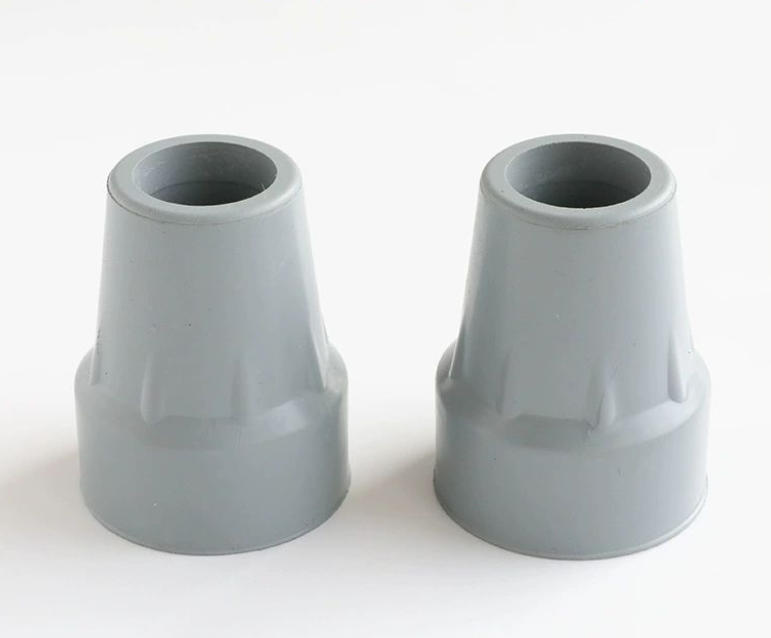
Perhaps the most common failure mode in standard crutch tips is compression failure. Over time, the constant impact of the crutch leg against the interior of the rubber tip causes the material to deform, allowing the metal crutch tube to sink deeper into the tip. This “bottoming out” not only reduces the effective length of the crutch but also creates a hard, uncomfortable contact point that transmits shock directly to the user.
CIODC has addressed this vulnerability through a sophisticated engineering solution: the integrated metal washer assembly.
Engineering the Interface
Inside every CIODC crutch tip, a precision-engineered metal washer or plate is embedded within the rubber compound. This component serves multiple critical functions:
- Load Distribution: The washer spreads the concentrated force from the circular crutch tube across the entire cross-section of the rubber tip. Rather than allowing the tube to dig into the center of the tip, the washer ensures that pressure is distributed uniformly to the surrounding rubber walls.
- Corrosion Resistance: The washer is treated or manufactured from materials resistant to rust and corrosion. This is particularly important for users who may encounter wet environments or who need to clean their crutches with chemical disinfectants.
- Structural Integrity: By providing a rigid backing plate, the washer prevents the progressive compression that leads to tip failure. Even after thousands of steps, the distance between the crutch end and the ground remains constant, ensuring consistent gait biomechanics.
- Shock Transmission Management: The washer acts as a mediator between the rigid metal crutch and the elastic rubber. It helps to tune the damping characteristics, ensuring that impact energy is absorbed by the rubber rather than transmitted to the user’s upper body.
This attention to the internal structure of the tip demonstrates CIODC’s commitment to holistic design. While many manufacturers focus solely on the external appearance or tread pattern, CIODC recognizes that true durability comes from engineering every component, including those the user never sees.
The Comfort Factor: Thickened Design for Noise Reduction and Joint Protection
Walking with crutches is inherently more demanding than unassisted ambulation. The upper body—shoulders, arms, and wrists—must absorb forces that are typically managed by the legs and hips. Prolonged use of poorly designed crutches can lead to secondary injuries including nerve compression, joint pain, and repetitive strain conditions.
CIODC’s thickened rubber construction directly addresses these concerns through three mechanisms:
1. Acoustic Damping
The thickened rubber wall acts as an acoustic barrier, absorbing the vibrations and impact sounds that occur when the tip contacts the floor. Users report that CIODC-equipped crutches produce a muted, solid “thump” rather than a sharp “click” or hollow “tap.” This reduction in noise pollution is not merely a matter of aesthetics—it represents the absorption of high-frequency vibration energy that would otherwise travel up the crutch column.
2. Shock Attenuation
The additional rubber mass provides a cushioning effect during heel strike—or in crutch terms, “tip strike.” When the user plants the crutch forward, the thickened tip compresses slightly, extending the deceleration time and reducing the peak force transmitted to the user’s armpit (via axillary crutches) or hands (via forearm crutches). This is particularly important for individuals with arthritis, neuropathy, or fragile bones, where repetitive impact can cause significant discomfort or injury.
3. Extended Service Life
Thicker rubber simply means more material to wear through. CIODC’s generous wall thickness ensures that even after months of daily use, sufficient rubber remains to maintain performance characteristics. This longevity translates to cost savings for users and healthcare systems alike, reducing the frequency of replacements and the associated logistical burden.
Material Science: Why Rubber Excels in Mobility Applications
While silicone has gained prominence in medical applications requiring biocompatibility and extreme temperature resistance, natural and synthetic rubber compounds remain the material of choice for crutch tips due to their unique combination of properties.
The Rubber Advantage
CIODC selects premium rubber compounds optimized for the specific demands of mobility aids:
- Elasticity and Rebound: Rubber’s molecular structure allows it to deform under load and rapidly return to its original shape. This resilience ensures that the tip maintains its geometry and tread pattern over millions of cycles.
- Coefficient of Friction: Rubber exhibits high friction against most common flooring materials without being sticky or grabby. This allows for controlled movement—the tip grips when weight is applied but slides easily during the swing phase.
- Abrasion Resistance: Quality rubber compounds resist the abrasive wear caused by concrete, asphalt, and grit. CIODC’s formulations are tested to ensure that the tread pattern remains effective even as the surface gradually wears.
- Environmental Stability: With an operating range of -40°C to 120°C, CIODC rubber maintains its properties across extreme temperature variations. Unlike some plastics that become brittle in cold or soften in heat, these tips remain consistently functional.
Temperature Resilience in Practice
Consider the real-world implications of this temperature range:
- Winter Conditions: At -40°C, many materials become glass-hard and lose their grip. CIODC rubber retains sufficient flexibility to conform to icy surfaces, and the deep tread pattern provides channels for snow compression.
- Summer Conditions: On pavement that can exceed 50°C in direct sunlight, the rubber resists softening and deformation, maintaining stable support even when the user is standing still in hot environments.
Customization: Tailoring Solutions to Individual Needs
One of CIODC’s standout capabilities is its commitment to customization. Recognizing that no two users or applications are identical, the company offers extensive options for tailoring products:
Mold Customization
For medical equipment manufacturers or large healthcare facilities with specific requirements, CIODC can develop custom molds to produce tips with unique:
- Dimensions (for non-standard crutch tube diameters)
- Tread patterns (optimized for specific floor types or environments)
- Hardness durometers (softer for indoor use, firmer for outdoor durability)
- Colors (for coding by size, department, or user)
Specification Flexibility
The “specifications齐全” (complete specifications) approach means that CIODC maintains tooling for a wide range of standard sizes, ensuring that users with virtually any crutch model can find a compatible replacement tip. This includes:
- Standard adult crutch sizes
- Pediatric and bariatric sizes
- Specialty tips for walkers, canes, and other mobility aids
- Tips designed for specific crutch brands and models
Aesthetic Options
While safety remains paramount, CIODC recognizes that mobility aids are personal items. Custom color options allow users to match tips to their crutches or express individual style—a small but meaningful contribution to the psychological aspect of mobility assistance.
Quality Assurance and Testing
Behind every CIODC product lies a rigorous quality assurance process. The company’s manufacturing facilities employ advanced testing protocols to verify:
- Dimensional Accuracy: Ensuring that tips fit securely without being loose or requiring excessive force to install.
- Material Consistency: Verifying that rubber batches meet specifications for hardness, tensile strength, and elongation.
- Adhesion Integrity: For tips incorporating metal washers, confirming that the rubber-to-metal bond exceeds requirements for pull-out strength.
- Abrasion Simulation: Using accelerated wear testing to predict real-world service life.
- Slip Resistance: Measuring coefficient of friction across standard floor surfaces under wet and dry conditions.
The Economic and Healthcare Impact
From a healthcare system perspective, the quality of crutch tips has implications beyond individual user satisfaction. Consider the following:
Fall Prevention
Falls among mobility aid users represent a significant source of secondary injury, emergency department visits, and healthcare costs. A tip that fails—whether by slipping, collapsing, or wearing through—can precipitate a fall with consequences far exceeding the cost of the component. Investing in premium tips like those from CIODC is a cost-effective fall prevention strategy.
Equipment Longevity
Crutches themselves are durable goods, often reused across multiple patients in clinical settings or serving a single user for years. Quality tips protect the crutch tube from wear and impact, extending the useful life of the entire device. The replaceable tip acts as a sacrificial component, absorbing wear that would otherwise damage the more expensive metal frame.
User Independence
For individuals with permanent mobility impairments, the reliability of their equipment directly impacts quality of life. A crutch tip that provides consistent, predictable performance allows users to navigate their environments with confidence, maintaining independence and community participation.
Installation and Maintenance
Proper installation and care maximize the performance and longevity of CIODC crutch tips:
Installation Tips
- Ensure the crutch tip is the correct size for the tube diameter—a snug fit is essential.
- Clean the crutch tube end to remove any dirt or debris that could interfere with seating.
- Push the tip firmly onto the tube until it seats fully against the metal washer or internal stop.
- For stubborn installations, a small amount of soapy water can lubricate the rubber, allowing easier insertion. (Allow to dry completely before use.)
Maintenance Guidelines
- Inspect tips regularly for signs of wear, particularly tread depth reduction or sidewall damage.
- Clean tips with mild soap and water to remove embedded grit that could accelerate wear.
- Replace tips when tread depth becomes shallow or if the rubber shows cracking or permanent deformation.
- Consider seasonal rotation—softer compounds for indoor winter use, more durable compounds for summer outdoor use—if multiple tip sets are available.
Conclusion: Small Component, Significant Impact
The rubber tip at the end of a crutch is a masterpiece of practical engineering—a component that must balance conflicting demands of grip and glide, comfort and durability, simplicity and sophistication. CIODC has elevated this humble accessory through thoughtful design, premium materials, and a commitment to customization that recognizes the unique needs of every user.
From the tire-inspired tread patterns that provide reliable traction on varied surfaces to the integrated metal washers that prevent premature failure, every aspect of CIODC crutch tips reflects an understanding that mobility is fundamental to human dignity and independence. The thickened construction that dampens noise and absorbs shock transforms the experience of crutch use from a necessary inconvenience to a manageable part of daily life.
For healthcare providers selecting equipment for patients, for facilities managers maintaining assistive devices, and for individuals seeking the most reliable components for their personal mobility aids, CIODC represents a standard of quality that justifies the investment. In a world where the difference between a secure step and a dangerous slip can be measured in millimeters of rubber, choosing the right crutch tip is not merely a purchasing decision—it is a commitment to safety, comfort, and the fundamental human right to move through the world with confidence.
As the population ages and the demand for mobility assistance continues to grow, the importance of these small but critical components will only increase. CIODC stands ready to meet that demand, combining Chinese manufacturing efficiency with global quality standards to produce components that quite literally support millions of people, one step at a time.
Contact me for custom procurement.:silicone@silic0ne.com