 silicone@silic0ne.com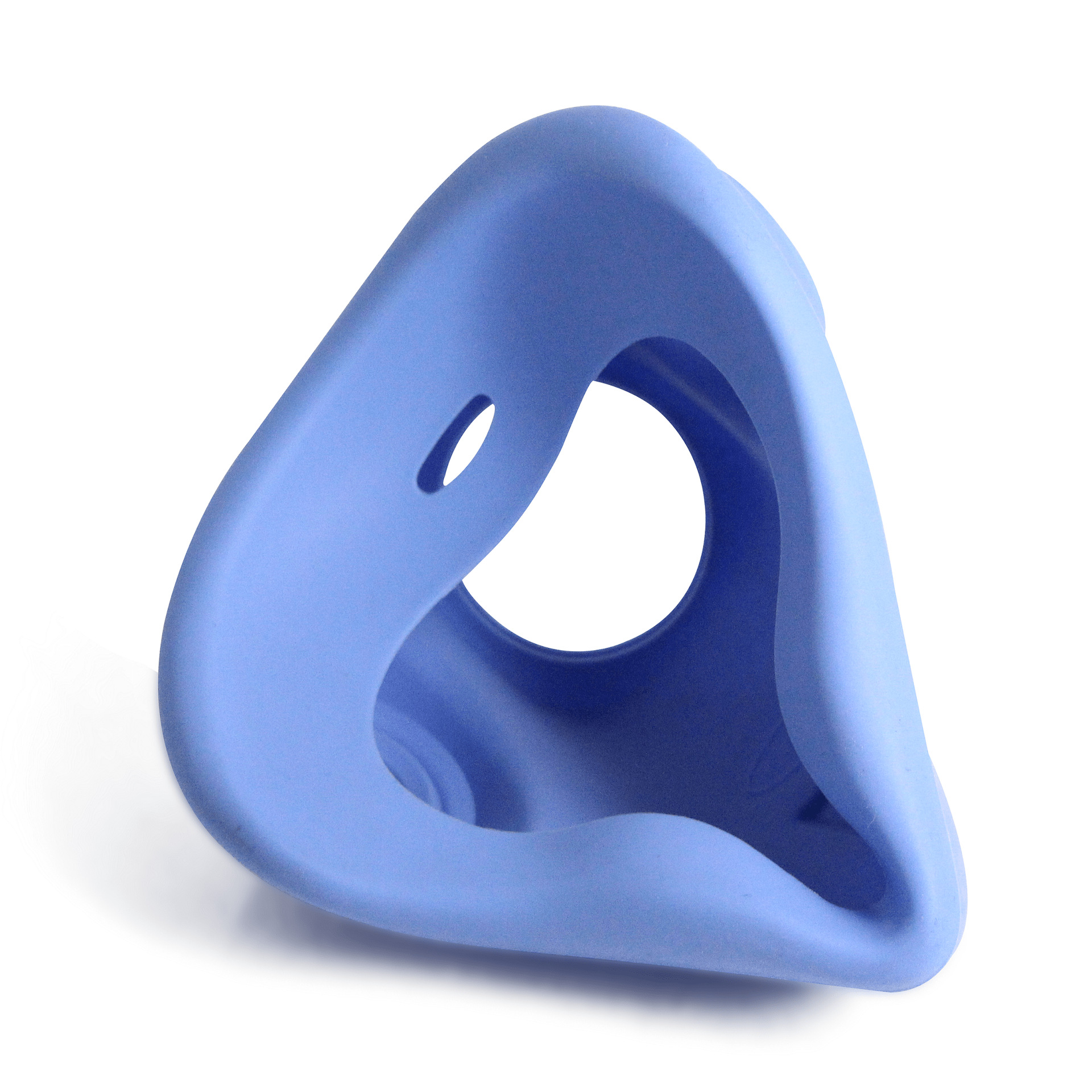
In the critical world of healthcare, where every breath can signify a battle between vulnerability and recovery, the margin for error is zero. Respiratory support devices, from non-invasive ventilators and CPAP machines to emergency resuscitation masks, stand as silent guardians of this fragile frontier. At the very heart of these life-sustaining interfaces—where the device meets the patient—lies a component so small, so seemingly simple, yet so profoundly vital: the silicone seal or gasket for the mask mouthpiece. Its performance dictates comfort, efficacy, and safety. This is not a commodity part; it is a precision-crafted key to reliable therapy. For medical device manufacturers, the journey from concept to a flawless, compliant seal is one of partnership with experts in custom mold manufacturing and processing of medical-grade silicone rubber.
The Unseen Hero: Why the Seal is Everything

Imagine a respiratory mask. The design of the shell, the clarity of the viewport, the quality of the straps—all are important. But if the seal that creates an airtight closure around the mouthpiece or against the patient’s face fails, the entire system fails. Leaks compromise the prescribed air pressure or oxygen concentration, rendering therapy ineffective. Discomfort from poor-fitting or irritating materials leads to patient non-compliance, a major hurdle in long-term treatment. In worst-case scenarios, material degradation could introduce particulates or leach harmful substances.
Therefore, the mouthpiece seal is more than a piece of rubber; it is a critical functional barrier. It must be:
- Consistently Airtight: Maintaining a perfect seal across a variety of facial anatomies and pressures.
- Biocompatibly Safe: In continuous, intimate contact with mucous membranes.
- Durable yet Soft: Withstanding repeated cleaning, sterilization (autoclaving, gamma, ETO), and long-term use without tearing or losing elasticity.
- Hypoallergenic and Odorless: Ensuring patient comfort and tolerance.
Only one family of materials consistently meets this rigorous checklist: platinum-cured, medical-grade silicone rubber.
The Gold Standard: Medical-Grade Silicone Rubber

Not all silicones are created equal. “Medical-grade” is a designation earned through rigorous compliance with international pharmacological and biocompatibility standards. For respiratory applications, this typically means silicones conforming to USP Class VI, ISO 10993, and FDA 21 CFR 177.2600 regulations.
Why platinum-cured? Unlike peroxide-cured silicones, platinum catalysis leaves no by-products that can cause odor, taste, or potential irritation. It results in the purest, most inert form of silicone elastomer, characterized by:
- Exceptional Biocompatibility: Minimal risk of causing tissue reaction or allergy.
- High-Temperature Resistance: Withstands repeated autoclave sterilization (up to 135°C+) without degradation.
- Superior Elasticity and Tear Strength: Maintains sealing force and longevity over millions of flex cycles.
- Clarity and Stability: Remains stable, non-yellowing, and easy to clean.
Selecting the right durometer (softness, e.g., Shore A 20-50 for seals) and specific compound (with enhanced oil resistance or specific bonding capabilities) is the first critical step in the custom manufacturing process.
From Blueprint to Breath: The Custom Tooling and Molding Journey

Creating a perfect custom silicone seal is a symphony of engineering and craftsmanship. It begins long before the first part is molded.
1. Collaborative Design for Manufacturability (DFM):
A skilled custom manufacturer doesn’t just accept a CAD file; they partner with the client to optimize it. This phase is crucial. Engineers analyze the part geometry, undercuts, wall thickness uniformity, and draft angles. They advise on:
- Gate and Vent Placement: Ensuring complete cavity fill and minimizing knit lines in critical sealing areas.
- Shrinkage Compensation: Precisely scaling the mold design to account for silicone’s predictable shrinkage.
- Tolerance Stack-Up: Ensuring the final part fits perfectly within the assembly’s dimensional tolerances.
This collaborative DFM prevents costly mold reworks and ensures the part is not only functional but also optimized for high-yield, cost-effective production.
2. Precision Toolmaking: The Heart of Quality
The mold (or tool) is the inverse masterpiece of the final part. For medical silicone, molds are typically crafted from hardened, polished stainless steel (e.g., 420 or 304 SS). This ensures:
- Mirror-Finish Cavities: For a flawlessly smooth sealing surface that is easy to clean and demold.
- Exceptional Durability: Withstanding hundreds of thousands of molding cycles.
- Corrosion Resistance: Vital for withstanding the cleaning and sterilization protocols of a medical manufacturing environment.
Modern toolmaking utilizes CNC machining, and often Electrical Discharge Machining (EDM), to achieve micron-level precision, especially for complex features like micro-sealing lips or intricate locking mechanisms.
3. The Molding Process: Liquid Silicone Rubber (LSR) vs. High-Consistency Rubber (HCR)
For small-to-medium, complex parts like mouthpiece seals, Liquid Silicone Rubber (LSR) Injection Molding is often the preferred technology.
- LSR Processing: A two-component liquid (A&B) is metered, mixed, and injected cold into a heated mold where it rapidly vulcanizes (cures). This process is ideal for:
- High Volume Production: Fast cycle times (often 20-60 seconds).
- Exceptional Precision and Consistency: Automated systems ensure shot-to-shot accuracy.
- Flash-Free Parts: Can be designed with precision parting lines, minimizing secondary trimming.
- Excellent Hygiene: The closed, automated system minimizes human handling.
For larger or simpler seals, High-Consistency Rubber (HCR) Compression or Transfer Molding may be used, though it is less common for high-volume, small medical seals.
4. Post-Molding Excellence: Deflashing, Curing, and QC
Freshly demolded parts undergo critical post-processing:
- Deflashing: Any microscopic flash (excess material at the parting line) is removed via cryogenic deflashing (tumbling with media at ultra-low temperatures) or precise manual trimming to ensure a perfect, burr-free seal edge.
- Post-Curing: Some specifications require a post-cure oven cycle to maximize physical properties and eliminate any residual volatiles.
- 100% Quality Inspection: Every single part, from the first shot to the last, is subject to rigorous checks. This includes visual inspection for defects, dimensional verification with CMMs or laser scanners, and functional testing of sealing force. Statistical Process Control (SPC) charts monitor critical dimensions throughout the production run.
5. Cleanroom Manufacturing and Packaging
Medical silicone seals for respiratory applications are often manufactured in a controlled ISO Class 7 or 8 cleanroom environment. This prevents contamination by dust or particulates. Parts are then bagged in clean polyethylene bags, and can be supplied sterile (via validated gamma or ETO sterilization cycles) upon request, ready for direct integration into the final medical device assembly.
The Value of Partnership: Beyond Manufacturing

Choosing a specialist in custom medical silicone molding brings strategic advantages:
- Regulatory Support: A knowledgeable partner maintains a Quality Management System certified to ISO 13485, the medical device standard. They provide essential documentation like material certifications, Device Master Records (DMR), and validation reports (IQ/OQ/PQ) for your regulatory submissions (FDA, CE MDR).
- Supply Chain Security: They manage the entire supply chain, from certified medical-grade raw material procurement to validated logistics, ensuring traceability and reliability.
- Innovation and Problem-Solving: Their expertise can help innovate next-generation seal designs—softer, thinner, more adhesive, or with integrated features—enhancing your product’s competitive edge.
Conclusion: Sealing the Promise of Care
In the equation of respiratory care, the silicone mouthpiece seal is a critical variable. Its perfection is non-negotiable. By investing in custom-molded, medical-grade silicone seals through a dedicated specialist, medical device manufacturers do more than just source a component. They secure a partnership that guarantees precision, safety, and reliability. They ensure that the promise of every breath delivered by their device is perfectly sealed—in comfort, in efficacy, and in unwavering trust.
It’s not just about making a part. It’s about enabling every breath to be a step toward healing. When lives depend on the integrity of a seal, there is no room for compromise. Trust the art and science of custom medical silicone molding to deliver nothing less than perfection.